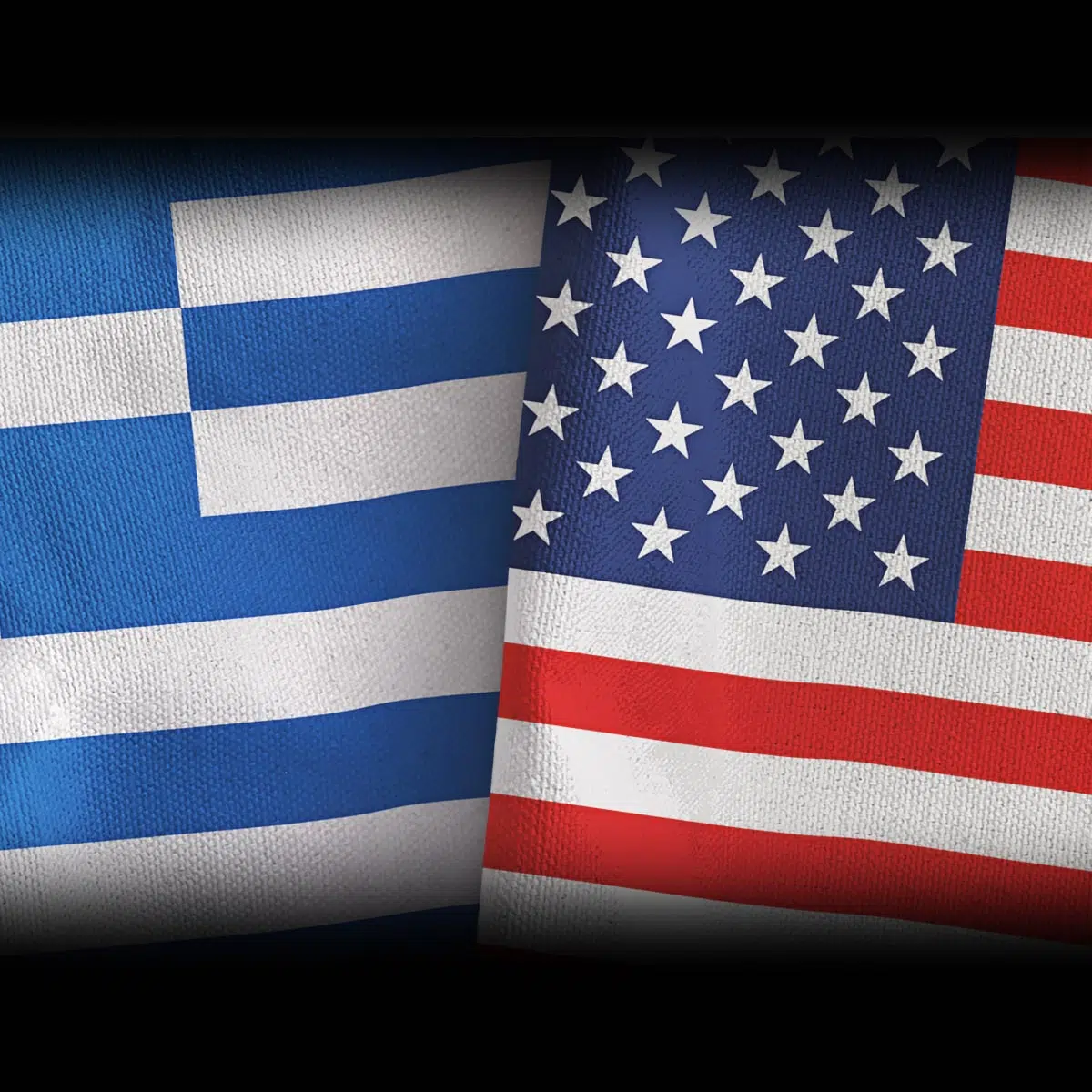
Greek American Heritage Month, also known as Hellenic Heritage Month, takes place in March. The commemoration of Greek American history is on March 25, the same day as Greece’s National Greek Independence Day. In the late 1800s, a large number of Greeks immigrated to the United States, and now, over 2.5 million Americans are of Greek origin. Humanism, the pursuit of knowledge, arts, and civic responsibility are examples of Hellenism, which is the imitation of ancient Greek culture. Across the United States, organizations are working to preserve and educate others about the contributions of the Greek language and culture.
History of Greek-American Heritage Month
Don Doroteo Teodoro, a sailor who landed in Boca Ciega Bay with the Narváez expedition in 1528 at the Jungle Prada site in present-day St. Petersburg, Florida, is the first Greek recorded to have visited what is now the United States. Captured by natives sailing along the shoreline of the Gulf coast, Teodoro was presumably murdered by the natives and was never sighted again.
In search of the fabled Northwest Passage, Greek captain Juan de Fuca sailed across the Pacific coast under the Spanish banner in 1592. He claimed to have discovered a body of water, a strait that retains his name today: the Strait of Juan de Fuca, which is now part of the Canada–United States boundary.
In 1768, approximately 500 Greeks from Crete, Smyrna, and Mani arrived in New Smyrna Beach, Florida. After the colony failed, the people relocated to St. Augustine in 1776.
A riot against the Greek population of South Omaha occurred in 1909 which displaced a number of the Greek Town population. The early 1920s events also sparked the formation of the first permanent national Greek American civic and religious organizations. The American Hellenic Educational Progressive Association was created in 1922 in response to the anti-Greek campaign, to organize and Americanize Greek immigrants in America.
After 1945, considerable numbers of Greeks began to return, escaping the economic devastation wrought by World War II and the Greek Civil War. Approximately 211,000 Greeks came to the United States between 1945 and 1982. Later immigrants were less influenced by the overwhelming assimilation pressures of the 1920s and 1930s, revitalizing Greek American identity, particularly in sectors like Greek-language media.
Greek-American Heritage Month timeline
500 Greeks immigrate to New Smyrna Beach, Florida.
The Greek War of Independence takes place and is a success.
The Greek community establishes a Greek consulate and the United States' first official Greek Orthodox Church.
The American Hellenic Educational Progressive Association is created.
Greek-American Heritage Month FAQs
What religion do Greeks follow?
Greeks are predominantly Orthodox Christians.
Where is the largest American Greek community?
The state of New York is home to the largest community of Greeks in America.
What do the Greeks call themselves?
“Hellenes” is how Greeks refer to themselves.
Greek-American Heritage Month Activities
Donate to the Hellenic American Project
The Hellenic American Project (HAP) is a non-profit organization dedicated to documenting the existence of Greek Americans in the United States. Making donations to this organization is one way to celebrate Greek American Heritage Month.
Read and watch films about Greek Americans
Collect books, videos, and films about Greek Americans for the entire month. To discuss your findings, host frequent movie nights and book clubs.
Prepare authentic Greek cuisine
Include Greek foods in your everyday meals for the entire month. You can purchase a Greek recipe book or search the internet for Greek cuisine that you can prepare at home.
5 Amazing Facts About Greek Americans
Largest American diaspora community
The Greek diaspora community in the United States is the world's largest.
The Greek Parthenon replica
In Nashville, Greek Americans have a full-scale replica of the Parthenon.
American Greek Towns
In the United States, there are over eight Greek Towns.
Americans with Greek ancestry
Over 2.5 million people in the United States are of Greek ancestry.
Pap test inventor
The well-known Pap test was invented by Georgios Papanicolaou, a Greek-American.
Why We Love Greek-American Heritage Month
It celebrates Greek culture
It honors the Greek people's extensive history, culture, accomplishments, and experiences. It is a means by which generations of Greek-Americans have worked to preserve their culture, religion, and language.
It highlights the contributions of Greek-Americans
Greek American Heritage Month is significant because it honors the cultural diversity and significant achievements that Greek Americans have made in the United States. It's also a method to inform others about different Greek-American histories and contributions to American history.
It has a long history
With a cultural legacy and history that dates back over 430 years, Greek-Americans have been vital to America's development. There are many historic sites to attest to this such as the Parthenon in Nashville.
Greek-American Heritage Month dates
| Year | Date | Day |
|---|---|---|
| 2026 | March 1 | Sunday |
| 2027 | March 1 | Monday |
| 2028 | March 1 | Wednesday |
| 2029 | March 1 | Thursday |
| 2030 | March 1 | Friday |