- Categories:
- Special Interest
- Tags:
- AppreciationBooksEducational
- Where:
- United States
- Date change rule:
- Every October 16
- Holiday emoji:
- 📚
Dictionary Day celebrates the birth of Noah Webster every October 16, honoring the American writer and lexicographer. Webster’s groundbreaking work in compiling and expanding the first American dictionary transformed language. Dive into the world of words, learn new vocabulary, and appreciate the resource that shapes our communication.
Want to sponsor Dictionary Day? Learn how
Expected Dictionary Day Deals
As a Recognition holiday, Dictionary Day typically inspires educational initiatives and special offers on literary resources. While we await official 2027 promotions, history shows that retailers like Barnes & Noble and Amazon often feature discounts on dictionaries, thesauruses, and reference books. Online learning platforms such as Coursera and MasterClass may offer promotions on language and writing courses. Educational software companies like Merriam-Webster itself might highlight digital subscriptions. Local bookstores often host special reading events or vocabulary challenges. We will update this page with confirmed live deals as October 16 approaches.
Platform Guide for Dictionary Day
Tag National Today (linkedin.com/company/nationaltoday) and use #DictionaryDay. Share insights on the importance of clear communication in the workplace.
X/Twitter
Mention @NatlToday and use #DictionaryDay. Participate in word-of-the-day challenges or share interesting etymologies.
Tag @nationaltoday_ and use #DictionaryDay. Post visually appealing graphics with new words, their definitions, and usage examples.
Dictionary Day Hero
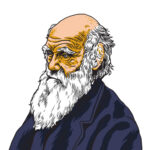
Noah Webster
History of Dictionary Day
The man who would someday become the father of the dictionary as we know it today, Noah Webster, was born on October 16, 1758, in Hartford, Connecticut. His father, a farmer and craftsman, and his mother, who stayed at home, headed a very middle-class and typical colonial family. When scholarly young Noah was 16, he set off for Yale — the first college in Connecticut. Since law was too expensive of a career path, Noah chose to go into teaching.
It was in teaching that he first felt compelled to reform the burgeoning American academic system and language. His first textbook was issued in 1783 and covered the grammar of the English language. Due to its blue cover, it came to be known as the “Blue-Backed Speller.” This little blue book became the most popular book in America in the day and age.
Refining teaching English and the education system wasn’t enough for Noah. After marrying Rebecca Greenleaf in 1789, he set about in 1801 to define many of the terms that set apart American English from the way the language was spoken in England. He also moved to Amherst, Massachusetts for the purpose of founding Amherst College, then later moved back to New Haven.
Many of us are familiar with the spelling differences between English and American English words like ‘color.’ Much of that can be credited to Webster, who, in his first edition of the American English dictionary in 1806, took time to correct English spellings to American English ones. Another example: Webster re-spelled ‘musick’ as ‘music.’ Though this bestselling dictionary defined no less than 37,000 words, he was unsatisfied. The next 22 years of his life would be dedicated to editing and adding new words. Eventually, at the old age of 70, Webster published his new dictionary in 1828. The book defined over 65,000 words.
After Webster died in 1843 as an American hero who pioneered the dictionary and supported both the abolition of slavery and universal education, G & C Merriam, Co. purchased the rights to his “An American Dictionary of the English Language”. The Merriam brothers behind the company, George and Charles, continued to refine Webster’s dictionary, eventually giving us the Merriam-Webster dictionary we know today.
Dictionary Day timeline
Webster is born to an average colonial family — his father is a craftsman and farmer, while his mother stays at home in their Hartford, C.T. house.
Webster begins to work on definitions and listing the words used by Americans, rather than the English — helping to define the emerging and uniquely American vocabulary.
Webster’s first edit of an American English dictionary, titled “A Compendious Dictionary of the English Language,” is published and defines 37,000 words.
Over the course of 22 years, Webster edits the first edition of his dictionary to create the “American Dictionary of the English Language” — this new edition defines 65,000 words.
At the ripe old age of 84, Noah Webster passes away — he is survived by five of his eight children, and his wife, Rebecca.
How Businesses Can Celebrate Dictionary Day
Local businesses can celebrate Dictionary Day by promoting literacy and language. Bookstores can host vocabulary contests or offer discounts on dictionaries and thesauruses. Cafes might feature a ‘word of the day’ on their chalkboards, encouraging patrons to learn new terms. Educational centers could organize workshops on effective communication or writing skills, highlighting the importance of precise language in business. Businesses can also engage employees with word games or internal challenges to boost team vocabulary.
Dictionary Day FAQs
When is Dictionary Day?
Dictionary Day 2026 falls on Friday, October 16, honoring the birth of American lexicographer Noah Webster. It’s a perfect day to delve into the fascinating world of words.
How many words are in the English language?
While difficult to pinpoint precisely, the Oxford English Dictionary contains over 600,000 words, with new words being added constantly. Noah Webster’s 1828 dictionary had 70,000 entries.
How many people use dictionaries regularly?
Millions of students, writers, and professionals globally rely on dictionaries daily, both in print and digital formats. Online dictionary platforms report hundreds of millions of monthly users.
What is the difference between a dictionary and a thesaurus?
A dictionary provides definitions, pronunciations, and etymologies for words, explaining what they mean. It’s a tool for understanding language and its usage.
Dictionary Day Activities
Play word games like Scrabble
A word-based game like Scrabble is one of the best ways to honor the dictionary! You couldn’t play ‘whiz-bang’ for 77 devastating points without the dictionary to help you get there.
Crack open a dictionary
How long has it been since you’ve held a dictionary in your hands? We think it was probably in grade school. With so much accessible information online, we miss the physical book — the smell of the pages, the sound of them turning. Grab and open a dictionary and rifle through it to learn something new!
Post #NationalDictionaryDay
Noah Webster deserves all the credit for making such a fantastically useful resource book. Post #NationalDictionaryDay, and maybe someone in your circle will learn a new word in his honor.
5 Interesting Facts About Noah & The Dictionary
He learned 26 languages
In order to write his uniquely American first dictionary, Noah Webster learned 26 new languages!
It cost $6
After the Merriam brothers revised Webster’s work in the mid-1800s, they sold the dictionaries for $6 apiece.
Webster created a newspaper
Noah Webster is credited with setting up New York City’s first daily newspaper, “American Minerva,” to later become “Commercial Advertiser.”
Webster was highly involved in social issues
From being one of the earliest opponents of slavery (and secretary of the Hartford Anti-Slavery Society) to examining evidence and debating the existence of global warming, Webster was very involved in the important social issues of the day.
Webster had a great poet in his family
T.S. Eliot, the renowned poet, was the great-nephew of Noah Webster — seems like a great command of the English language and literature ran in the family.
Why We Love Dictionary Day
It teaches new words
Most obviously, the dictionary is a fantastic resource for new words. For centuries now, it’s been used to define the English language, and given us a common rulebook for communication. Practically any time you flip to a new page in the dictionary, you learn something new!
It honors an important pioneer
If you don’t know the history of the dictionary, today is a great day to do some research. Noah Webster was a prolific author and textbook pioneer who ultimately left his impact upon the English language. This is the best day to honor his memory and learn his history.
It defines our language
Besides adding words to the standard English language, Noah Webster helped define and change spellings of old English words that needed to be adapted for the new era. He actively pruned and grew the English language that we know today!
Dictionary Day dates
| Year | Date | Day |
|---|---|---|
| 2026 | October 16 | Friday |
| 2027 | October 16 | Saturday |
| 2028 | October 16 | Monday |
| 2029 | October 16 | Tuesday |
| 2030 | October 16 | Wednesday |







Social Media Tips for Dictionary Day
Individuals
Creators
Brands