- Today
- Holidays
- Birthdays
- Reminders
- Cities
- Atlanta
- Austin
- Baltimore
- Berwyn
- Beverly Hills
- Birmingham
- Boston
- Brooklyn
- Buffalo
- Charlotte
- Chicago
- Cincinnati
- Cleveland
- Columbus
- Dallas
- Denver
- Detroit
- Fort Worth
- Houston
- Indianapolis
- Knoxville
- Las Vegas
- Los Angeles
- Louisville
- Madison
- Memphis
- Miami
- Milwaukee
- Minneapolis
- Nashville
- New Orleans
- New York
- Omaha
- Orlando
- Philadelphia
- Phoenix
- Pittsburgh
- Portland
- Raleigh
- Richmond
- Rutherford
- Sacramento
- Salt Lake City
- San Antonio
- San Diego
- San Francisco
- San Jose
- Seattle
- Tampa
- Tucson
- Washington
USS Gerald R. Ford Breaks Record for Longest Post-Cold War Carrier Deployment
The aircraft carrier's 300-day stint at sea raises concerns about the impact on sailors' mental health and equipment maintenance.
Apr. 17, 2026 at 1:23pm
Got story updates? Submit your updates here. ›
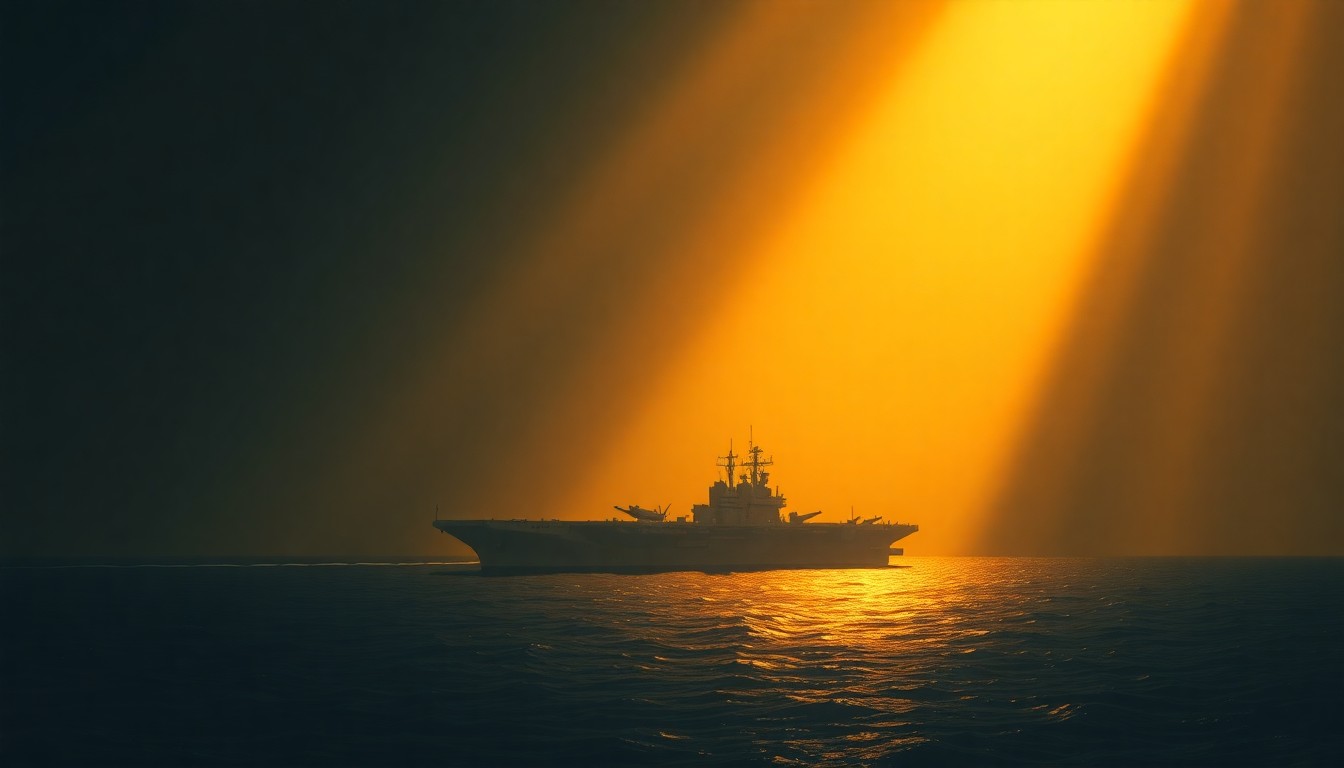 The extended deployment of the USS Gerald R. Ford has raised concerns about the toll on sailors and equipment, as the carrier navigates logistical challenges far from its usual ports.Norfolk Today
The USS Gerald R. Ford has broken the record for the longest post-Cold War deployment for a U.S. aircraft carrier, surpassing 300 days at sea. This extended deployment has raised concerns from Senator Tim Kaine about the toll it has taken on sailors' well-being and the maintenance of the ship. The carrier has faced challenges such as a fire and being rerouted to different regions, leading to logistical issues around fuel, food, and ammunition resupply.
Why it matters
The USS Gerald R. Ford's record-breaking deployment highlights the strain that prolonged naval operations can have on both personnel and equipment. As the U.S. Navy faces increased global commitments, managing the sustainability of carrier strike groups is crucial for maintaining readiness and morale. This story raises questions about the long-term impacts of such extended deployments on sailor retention and the Navy's ability to effectively support its ships.
The details
The USS Gerald R. Ford began its deployment in June 2025, initially heading to the Mediterranean Sea before being rerouted to the Caribbean and then the Middle East as part of the military operation against Venezuela and the conflict with Iran. The carrier has faced challenges during its deployment, including a fire that temporarily left 600 sailors without sleeping berths. Logistical issues around fuel, food, and ammunition resupply have also arisen due to the carrier's extended time at sea and the inability to access some of its usual ports in the Middle East.
- The USS Gerald R. Ford began its deployment on June 24, 2025.
- On Wednesday, April 16, 2026, the carrier broke the record for the longest post-Cold War deployment for a U.S. carrier, surpassing 295 days at sea.
- The carrier is expected to remain deployed until the end of May 2026, which would make its total deployment around 11 months.
The players
USS Gerald R. Ford
The world's largest aircraft carrier, which has broken the record for the longest post-Cold War deployment for a U.S. carrier.
Senator Tim Kaine
A Democratic senator from Virginia and the ranking member of the Senate Armed Services Subcommittee on Seapower, who has expressed concerns about the impact of the USS Gerald R. Ford's lengthy deployment on sailors' mental health and well-being.
Mark Cancian
A retired U.S. Marine colonel and senior adviser at the Center for Strategic and International Studies (CSIS), who commented on the challenges of extended carrier deployments.
Bryan Clark
A naval expert and senior fellow at the Hudson Institute, who discussed the logistical issues faced by the U.S. Navy's presence in the Middle East due to the USS Gerald R. Ford's extended deployment.
What they’re saying
“The sailors of USS Gerald R. Ford said goodbye to their families in Norfolk last June thinking they would be back before the holidays.”
— Senator Tim Kaine, Democratic senator from Virginia
“They've been gone for a long time and the ship hasn't helped.”
— Mark Cancian, Retired U.S. Marine colonel and senior adviser at the Center for Strategic and International Studies (CSIS)
“The more important logistical challenges are fuel, food, and ammunition. Normally, U.S. ships get fuel at sea from oilers that would be refueled in Kuwait. Since they cannot get to Kuwait now, oilers are having to go to other ports that can provide jet fuel for airplanes and ship turbine engines.”
— Bryan Clark, Naval expert and senior fellow at the Hudson Institute
What’s next
The Navy has not provided a specific timeline for when the USS Gerald R. Ford will return to port, but it is expected to remain deployed until the end of May 2026, completing an 11-month deployment.
The takeaway
The USS Gerald R. Ford's record-breaking deployment highlights the significant strain that prolonged naval operations can have on both personnel and equipment. As the U.S. Navy faces increasing global commitments, managing the sustainability of carrier strike groups will be crucial for maintaining readiness and morale. This story raises important questions about the long-term impacts of such extended deployments on sailor retention and the Navy's ability to effectively support its ships.
Norfolk top stories

Norfolk events

Apr. 18, 2026
The Magic of Motown
Apr. 18, 2026
Virginia International Tattoo
Apr. 19, 2026
Virginia International Tattoo