- Today
- Holidays
- Birthdays
- Reminders
- Cities
- Atlanta
- Austin
- Baltimore
- Berwyn
- Beverly Hills
- Birmingham
- Boston
- Brooklyn
- Buffalo
- Charlotte
- Chicago
- Cincinnati
- Cleveland
- Columbus
- Dallas
- Denver
- Detroit
- Fort Worth
- Houston
- Indianapolis
- Knoxville
- Las Vegas
- Los Angeles
- Louisville
- Madison
- Memphis
- Miami
- Milwaukee
- Minneapolis
- Nashville
- New Orleans
- New York
- Omaha
- Orlando
- Philadelphia
- Phoenix
- Pittsburgh
- Portland
- Raleigh
- Richmond
- Rutherford
- Sacramento
- Salt Lake City
- San Antonio
- San Diego
- San Francisco
- San Jose
- Seattle
- Tampa
- Tucson
- Washington
Fine Arts Panel Approves Trump's 'Triumphal Arch' with Design Revisions
The 250-foot-tall monument proposed for the National Mall faces concerns over size, symbolism, and impact on historic views.
Apr. 17, 2026 at 1:09am
Got story updates? Submit your updates here. ›
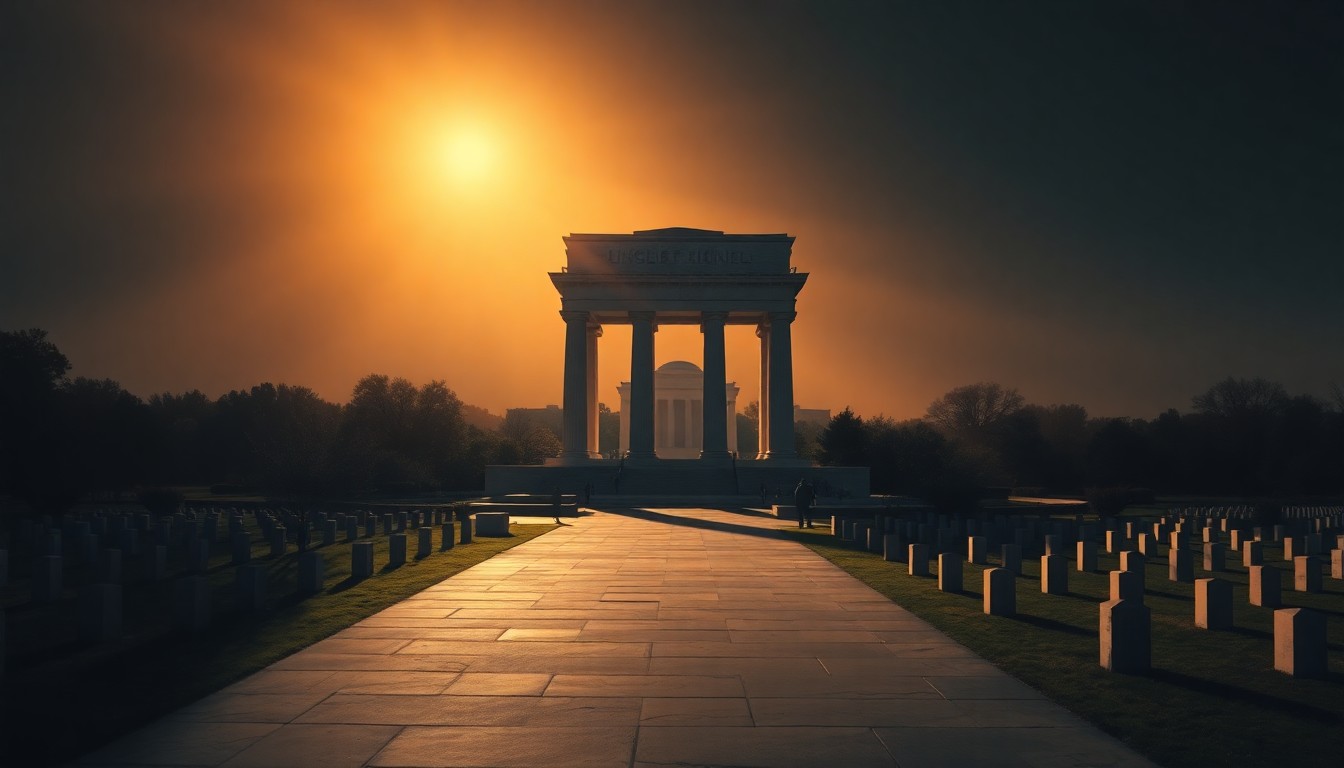 The proposed 'triumphal arch' looms over the National Mall, raising concerns about its impact on the historic landscape and views of revered landmarks.Arlington Today
The Commission of Fine Arts, a federal agency, has given initial approval to former President Donald Trump's plan to build a massive 250-foot-tall 'triumphal arch' near Arlington National Cemetery in Washington, D.C. However, the panel has requested design revisions to address concerns over the arch's size, symbolism, and potential impact on historic views and landmarks.
Why it matters
The proposed arch has sparked significant public opposition, with many arguing it would be an inappropriate and disruptive addition to the National Mall's landscape, obstructing views of revered landmarks like the Lincoln Memorial and Arlington National Cemetery. The commission's decision to move forward with the project, despite the overwhelming public backlash, raises questions about the influence of politics in shaping the nation's capital.
The details
The Commission of Fine Arts, now composed entirely of Trump appointees, voted 5-0 to approve the initial design for the arch, which would stand more than twice as tall as the Lincoln Memorial. However, the panel requested revisions to address concerns raised by its members and the public. Commission Vice Chair James McCrery opposed plans for a 250-foot underground pathway for visitors, arguing it was unnecessary, and criticized the proposed lion statues at the base as not being culturally American symbols. The commission also called for the architects to 'open these arches and air them out' to avoid obstructing views of other landmarks.
- The Commission of Fine Arts hearing took place on April 15, 2026.
- The commission received nearly 1,000 public comments, all of which opposed the project.
The players
Donald Trump
The former president who proposed the construction of the 250-foot-tall 'triumphal arch' on the National Mall.
James McCrery
The vice chair of the Commission of Fine Arts and the initial architect behind Trump's massive White House ballroom project, who voiced concerns about the arch's design and impact.
Thomas Luebke
The secretary of the Commission of Fine Arts, who reported that all 1,000 public comments submitted were against the arch project.
Zachary Burt
The community outreach manager for the D.C. Preservation League, who voiced opposition to the arch, arguing it would threaten the 'solemn vista' between Arlington National Cemetery and the Lincoln Memorial.
Lisa Fuller
A lifelong Washington-area resident who grew emotional recounting crossing the Arlington Memorial Bridge as a child and arguing the arch would obstruct views of the cemetery.
What they’re saying
“Sometimes it's absolutely necessary. Here, I think it's not absolutely necessary at all.”
— James McCrery, Vice Chair, Commission of Fine Arts
“They're not of this continent. They're noble, they're courageous, and they're strong, they're all those things, but maybe there are alternatives.”
— James McCrery, Vice Chair, Commission of Fine Arts
“I first walked across that bridge with my dad after John Kennedy died. We started at the Lincoln Memorial. My father told me all about it, and then we walked across, and we saw the Eternal Flame.”
— Lisa Fuller, Lifelong Washington-area resident
What’s next
The architects behind the 'triumphal arch' project will need to address the design concerns raised by the Commission of Fine Arts, including the size and placement of the arch, the use of lion statues, and the impact on historic views, before the project can move forward.
The takeaway
The Commission of Fine Arts' initial approval of the 'triumphal arch' project, despite overwhelming public opposition and concerns about its impact on the National Mall's historic landscape, highlights the ongoing tension between political influence and preserving the integrity of the nation's capital. The decision raises questions about the role of federal agencies in shaping the future of Washington, D.C., and the need for a more inclusive, community-driven approach to major development projects.