- Today
- Holidays
- Birthdays
- Reminders
- Cities
- Atlanta
- Austin
- Baltimore
- Berwyn
- Beverly Hills
- Birmingham
- Boston
- Brooklyn
- Buffalo
- Charlotte
- Chicago
- Cincinnati
- Cleveland
- Columbus
- Dallas
- Denver
- Detroit
- Fort Worth
- Houston
- Indianapolis
- Knoxville
- Las Vegas
- Los Angeles
- Louisville
- Madison
- Memphis
- Miami
- Milwaukee
- Minneapolis
- Nashville
- New Orleans
- New York
- Omaha
- Orlando
- Philadelphia
- Phoenix
- Pittsburgh
- Portland
- Raleigh
- Richmond
- Rutherford
- Sacramento
- Salt Lake City
- San Antonio
- San Diego
- San Francisco
- San Jose
- Seattle
- Tampa
- Tucson
- Washington
Fine Arts Commission Approves Trump's Massive Victory Arch for National Mall
The 250-foot structure would be the largest monumental arch in the world, obstructing views of the Lincoln Memorial.
Apr. 16, 2026 at 9:50pm
Got story updates? Submit your updates here. ›
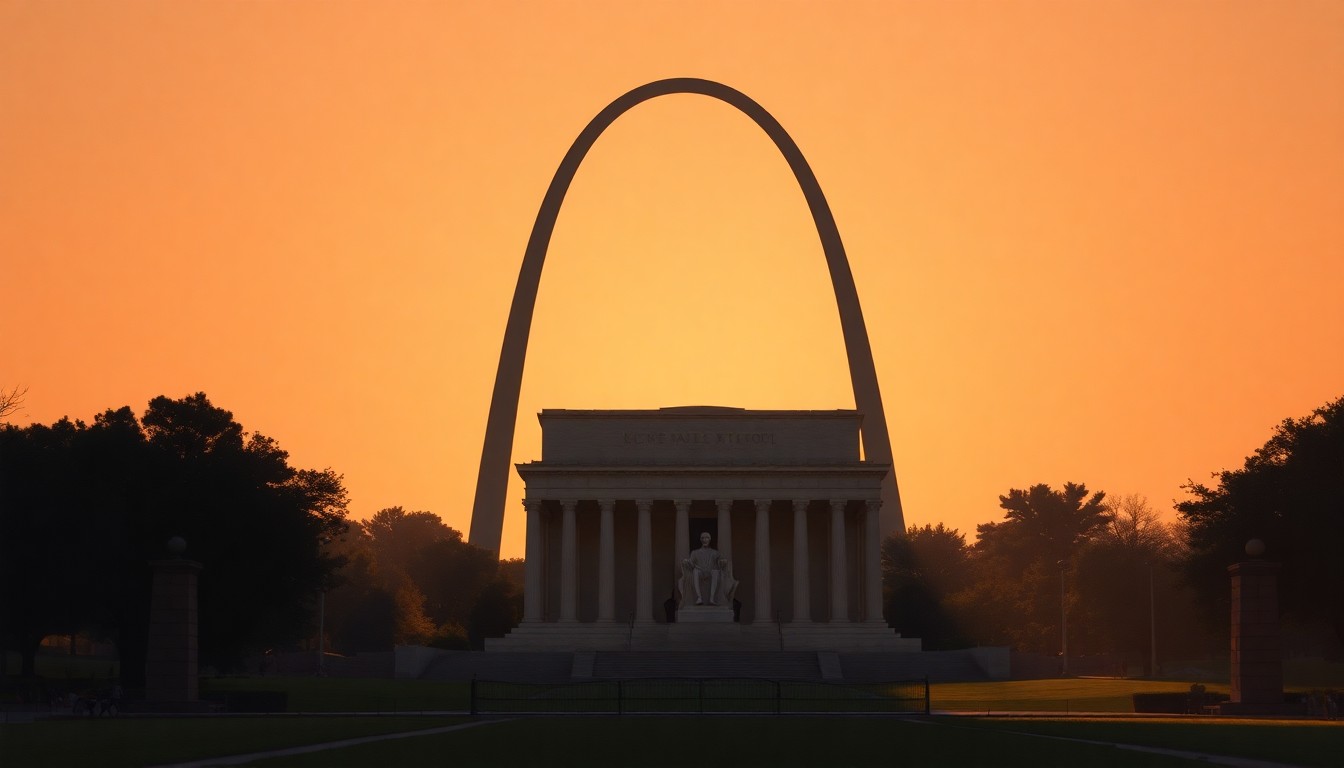 The Commission of Fine Arts' approval of a towering 'victory arch' on the National Mall has sparked concerns about the project's impact on the historic landscape and its nationalist messaging.Arlington Today
The Commission of Fine Arts voted on Thursday to approve former President Donald Trump's plan to build a 250-foot 'victory arch' at the National Mall in Washington, D.C. The arch, which would be the largest of its kind globally, has drawn criticism from some veterans groups who argue it requires Congressional approval and will negatively impact the visitor experience at nearby Arlington National Cemetery.
Why it matters
The decision to greenlight the controversial arch project, which includes multiple Trump appointees on the commission, highlights the former president's continued influence over federal agencies and public spaces in the nation's capital, even after leaving office. The arch's massive scale and prominent placement on the National Mall have raised concerns about its impact on the historic landscape and visitor experience.
The details
The arch's design is modeled after the Arc de Triomphe in Paris, but it would be nearly 100 feet taller. The architectural plans show the structure topped with two eagles and a winged, crowned figure. One side would display the phrase 'One Nation Under God,' while the other would say 'With Liberty and Justice for All.' The arch is planned to be built in Memorial Circle on Columbia Island, a human-made island in the Potomac River between Washington, D.C., and Arlington, Virginia.
- The Commission of Fine Arts voted to approve the arch project on April 16, 2026.
- Former President Trump first proposed the arch project earlier this year.
The players
Commission of Fine Arts
The federal commission that advises the president, Congress, and local governments on the aesthetics of construction within Washington, D.C.
Donald Trump
The former president who proposed the construction of the 250-foot 'victory arch' on the National Mall.
Doug Bergum
The Secretary of the Interior who told the Commission of Fine Arts that the arch 'will embody American freedom, American unity, American strength and the American dream.'
Nicolas Charbonneau
The lead architect at Harrison Design, the firm that designed the arch.
Thomas Luebke
The secretary of the Commission of Fine Arts, who said about 1,000 public comments were submitted before the vote, and nearly all were negative.
What they’re saying
“'It's going to be really beautiful. I think it's going to be fantastic.'”
— Donald Trump
“'Carefully designed, thoughtfully placed, such a structure will enrich Washington's historic fabric, adding a new chapter to the infinitely rich history of our nation's capital.'”
— Doug Bergum, Secretary of the Interior
“'Great nations build beautiful structures and works of art that cultivate national pride and love of country. In this tradition, the United States Triumphal Arch will be a project of which all Americans will be proud of.'”
— Doug Bergum, Secretary of the Interior
What’s next
A group of Vietnam War veterans has filed a lawsuit to block the construction of the arch, arguing that Congressional approval is needed. The judge is expected to rule on the case before the planned completion date of July 4, 2026.
The takeaway
The approval of Trump's massive arch project on the National Mall highlights the former president's continued influence over federal agencies and public spaces, even after leaving office. The arch's scale and prominent placement have raised concerns about its impact on the historic landscape and visitor experience, sparking legal challenges that could delay or halt the construction.