- Today
- Holidays
- Birthdays
- Reminders
- Cities
- Atlanta
- Austin
- Baltimore
- Berwyn
- Beverly Hills
- Birmingham
- Boston
- Brooklyn
- Buffalo
- Charlotte
- Chicago
- Cincinnati
- Cleveland
- Columbus
- Dallas
- Denver
- Detroit
- Fort Worth
- Houston
- Indianapolis
- Knoxville
- Las Vegas
- Los Angeles
- Louisville
- Madison
- Memphis
- Miami
- Milwaukee
- Minneapolis
- Nashville
- New Orleans
- New York
- Omaha
- Orlando
- Philadelphia
- Phoenix
- Pittsburgh
- Portland
- Raleigh
- Richmond
- Rutherford
- Sacramento
- Salt Lake City
- San Antonio
- San Diego
- San Francisco
- San Jose
- Seattle
- Tampa
- Tucson
- Washington
Fine Arts Panel Approves Trump's Triumphal Arch, But Requests Design Changes
The Commission of Fine Arts voted to move forward with the controversial 250-foot monument, but raised concerns over its size and symbolism.
Apr. 16, 2026 at 10:09pm
Got story updates? Submit your updates here. ›
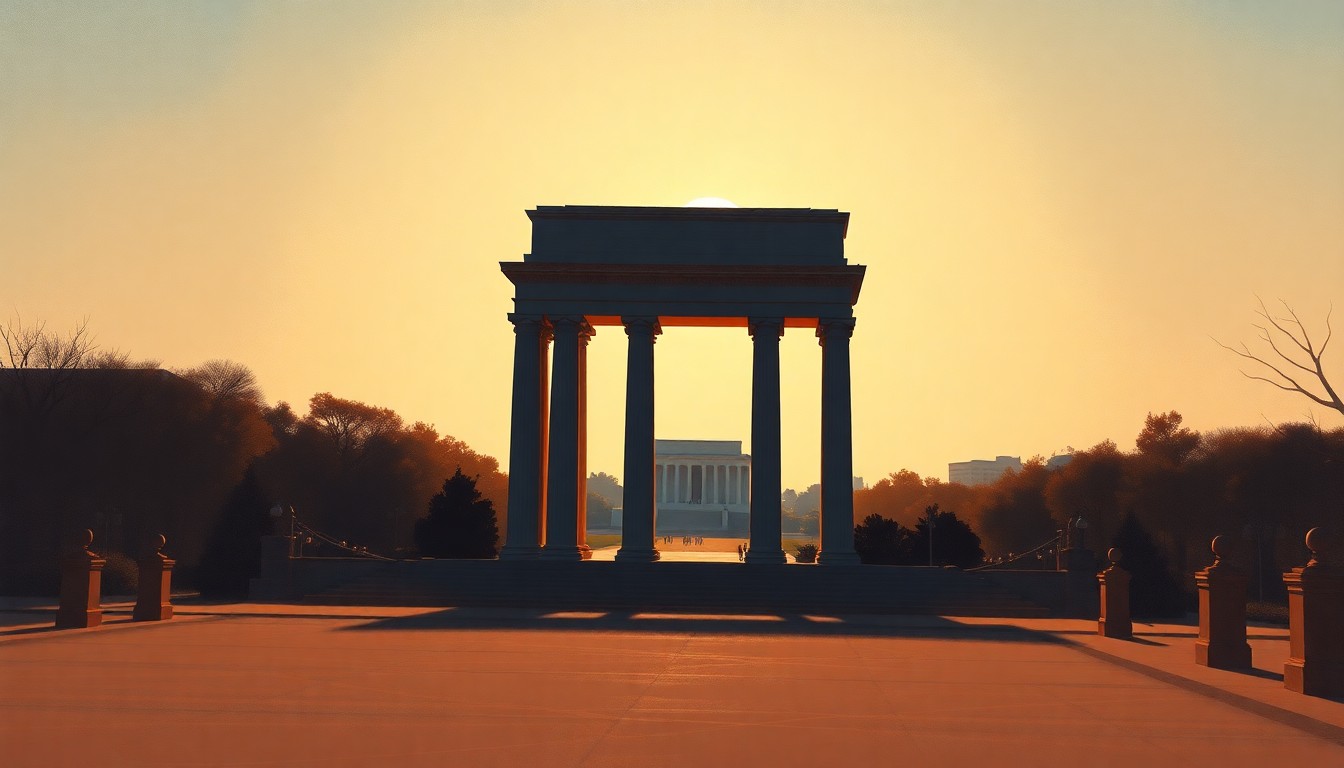 The proposed triumphal arch, if approved, would loom over the National Mall, raising concerns about its impact on the historic landscape and views of revered landmarks.Arlington Today
The Commission of Fine Arts has given initial approval for President Donald Trump's proposed 250-foot-tall 'triumphal arch' on the National Mall in Washington, D.C., but requested design revisions to address the panel's concerns. The commission, now made up entirely of Trump appointees, voted 5-0 in favor of the project, despite nearly 1,000 public comments opposing it. The panel's vice chair, James McCrery, voiced a number of issues he wants the architects to address, including the planned 250-foot underground pathway, the use of lion statues, and the arch's potential to obstruct views of other landmarks.
Why it matters
The triumphal arch proposal has sparked significant controversy, with critics arguing it would be an inappropriate use of public funds, disrupt historic views, and represent unwanted political symbolism. The commission's approval, despite public opposition, highlights the influence of Trump's appointees and the ongoing debate over the appropriate use of public spaces in the nation's capital.
The details
The towering arch Trump wants to build near Arlington National Cemetery would be more than twice as tall as the Lincoln Memorial and taller than France's Arc de Triomphe. Protesters gathered outside the National Building Museum, where the commission has its office, holding signs that read: 'Stop Arch Insanity,' 'No Trump Arch,' and 'No Vanity Arch.' The commission's secretary, Thomas Luebke, said nearly 1,000 public comments were submitted online, and '100% of the comments were against the project.' Many comments characterized the project as 'a waste of money and misuse of funds' and said 'it would obstruct historic views and disrupt the landscape, it was inappropriate imperial or political symbolism, that the design was gaudy, oversized, incompatible, and that it was disrespectful to Arlington National Cemetery and military sacrifice.'
- The commission's vote took place on April 15, 2026.
The players
Karoline Leavitt
White House press secretary.
Thomas Luebke
Secretary of the Commission of Fine Arts.
James McCrery
Vice chair of the Commission of Fine Arts and the initial architect behind Trump's massive White House ballroom project.
Nicolas Charbonneau
The architect behind the triumphal arch design.
Zachary Burt
Community outreach manager for the D.C. Preservation League.
What they’re saying
“Sometimes it's absolutely necessary. Here, I think it's not absolutely necessary at all.”
— James McCrery, Vice chair of the Commission of Fine Arts
“They're not of this continent. They're noble, they're courageous, and they're strong, they're all those things, but maybe there are alternatives.”
— James McCrery, Vice chair of the Commission of Fine Arts
“I first walked across that bridge with my dad after John Kennedy died. We started at the Lincoln Memorial. My father told me all about it, and then we walked across, and we saw the Eternal Flame.”
— Lisa Fuller, Lifelong Washington-area resident
What’s next
The architects of the triumphal arch will need to address the design concerns raised by the Commission of Fine Arts, including the underground pathway, the use of lion statues, and the arch's potential to obstruct views of other landmarks. The commission will likely need to review and approve any revised designs before the project can move forward.
The takeaway
The Commission of Fine Arts' initial approval of Trump's triumphal arch, despite widespread public opposition, highlights the influence of the former president's appointees and the ongoing debate over the appropriate use of public spaces in Washington, D.C. The requested design changes suggest the commission recognizes the need to balance the arch's scale and symbolism with the preservation of the capital's historic landscape and landmarks.