- Today
- Holidays
- Birthdays
- Reminders
- Cities
- Atlanta
- Austin
- Baltimore
- Berwyn
- Beverly Hills
- Birmingham
- Boston
- Brooklyn
- Buffalo
- Charlotte
- Chicago
- Cincinnati
- Cleveland
- Columbus
- Dallas
- Denver
- Detroit
- Fort Worth
- Houston
- Indianapolis
- Knoxville
- Las Vegas
- Los Angeles
- Louisville
- Madison
- Memphis
- Miami
- Milwaukee
- Minneapolis
- Nashville
- New Orleans
- New York
- Omaha
- Orlando
- Philadelphia
- Phoenix
- Pittsburgh
- Portland
- Raleigh
- Richmond
- Rutherford
- Sacramento
- Salt Lake City
- San Antonio
- San Diego
- San Francisco
- San Jose
- Seattle
- Tampa
- Tucson
- Washington
Columbus Police Tactics Inspire NYPD Rethink on Protest Control
New York City officials visit Ohio capital to study de-escalation-focused approach to managing large demonstrations.
Apr. 13, 2026 at 2:01pm
Got story updates? Submit your updates here. ›
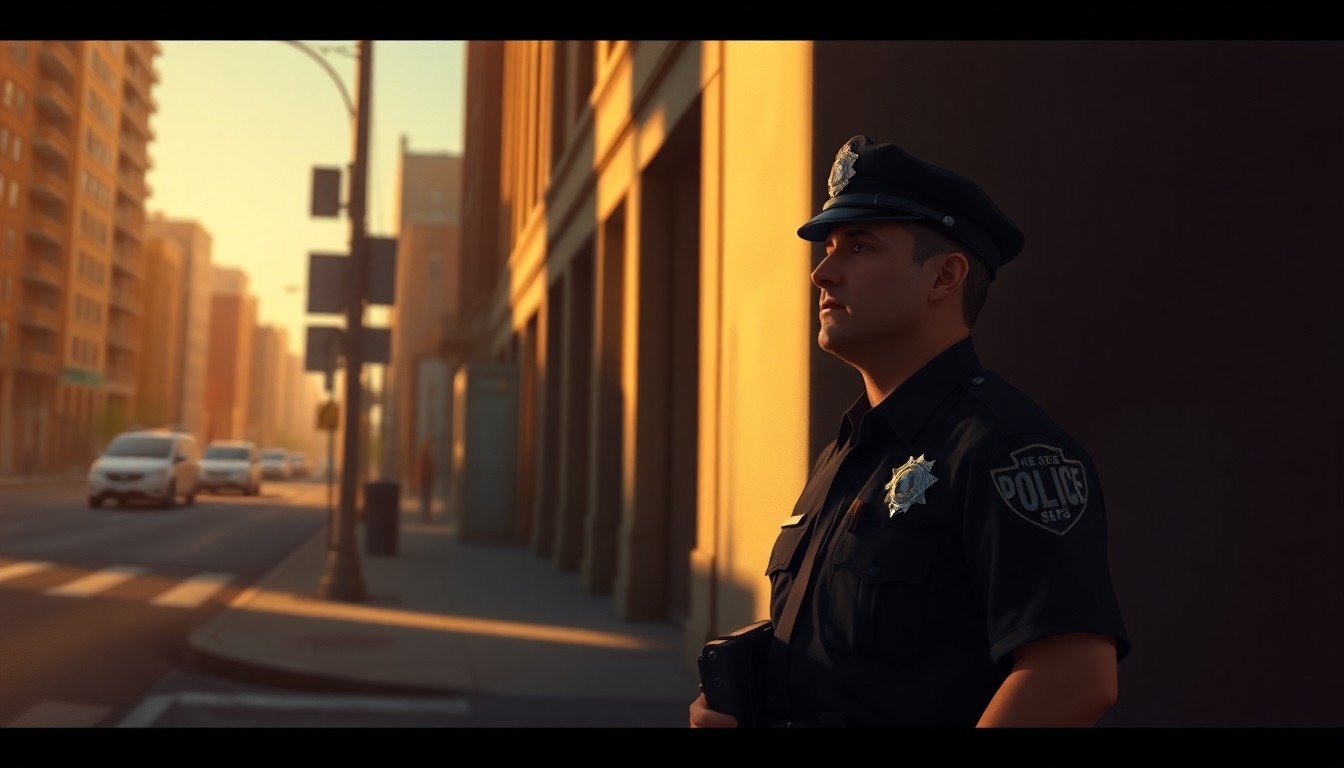 As the NYPD explores new approaches to protest policing, the department looks to the example of Columbus, Ohio, where a focus on open dialogue and de-escalation has yielded positive results.Columbus Today
After the chaotic protests of 2020, the New York Police Department is looking to the city of Columbus, Ohio for lessons on how to better manage large crowds during demonstrations. A delegation of NYPD and City Hall officials recently traveled to Columbus to study the Ohio capital's protest policing model, which emphasizes open communication, relationship-building, and de-escalation over aggressive force and mass arrests.
Why it matters
The NYPD has faced criticism over its response to protests in recent years, particularly during the 2020 Black Lives Matter demonstrations. The department's specialized Strategic Response Group (SRG) unit has been accused of using heavy-handed tactics. Mayor Zohran Mamdani has pledged to 'decouple' the policing of First Amendment activity from counterterrorism functions, a move that could impact the SRG. The Columbus approach, which puts dialogue-focused officers on the frontlines, offers a potential model for the NYPD to consider as it seeks to reform its protest management strategies.
The details
The Columbus protest policing model places 'dialogue officers' in regular uniforms with distinct blue vests at the forefront of demonstrations. Their role is to engage with organizers before, during and after events, building trust and relaying real-time information to commanders. More heavily armed tactical teams are held back until needed, rather than being deployed upfront. Over two years and more than 60 events, this approach has resulted in only three arrests and two minor uses of force, according to an Ohio State University study.
- The NYPD delegation visited Columbus last week to observe the city's protest policing tactics.
- At a recent budget hearing, NYPD officials said the SRG unit was only deployed to around 6% of the city's 4,255 protests in 2025, and participated in protest arrests roughly 1% of the time.
The players
Zohran Mamdani
The mayor of New York City who has pledged to 'decouple' the policing of First Amendment activity from counterterrorism functions, a move that could impact the NYPD's specialized Strategic Response Group (SRG) unit.
Anthony Raganella
A retired NYPD deputy inspector who was instrumental in creating the SRG unit. He cautioned that while open dialogue is important, the police must also be prepared to take action and control situations if violence breaks out.
Russell Hassan
A professor at Ohio State University who has studied the Columbus Police Department's protest policing model, describing the 'dialogue officers' as the 'tip of the spear' for protest interaction.
Keechant Sewell
The NYPD Commissioner who has defended the SRG unit, saying it is not deployed to the majority of protests and only participates in protest arrests about 1% of the time.
Elle Bisgaard-Church
The chief of staff to Mayor Zohran Mamdani, who praised the techniques used by Columbus police and their commitment to 'transparent knowledge-sharing' and 'de-escalating' during protests.
What they’re saying
“We want to strategize on how to facilitate peaceful protests rather than how to control it.”
— Anthony Raganella, Retired NYPD Deputy Inspector
“The key to success is essentially when you have people who are pushing this from internally, rather than it is imposed from top down.”
— Russell Hassan, Professor, Ohio State University
“It's a commitment on the scene to really transparent knowledge-sharing — what's going on at a protest — to de-escalating. Just an overall embedded nature of their dialogue teams with community groups.”
— Elle Bisgaard-Church, Chief of Staff to Mayor Zohran Mamdani
What’s next
The NYPD will continue to observe the Columbus protest policing model in action to evaluate whether the department can adopt similar tactics focused on de-escalation and community engagement. Mayor Mamdani and his administration will also closely monitor the NYPD's response to future protests as they consider reforms to the department's specialized units like the SRG.
The takeaway
The NYPD's visit to Columbus highlights a growing recognition that traditional 'command and control' approaches to protest policing may not be the most effective or community-oriented strategy, especially in a city as large and diverse as New York. By studying alternative models that prioritize open communication and de-escalation, the NYPD has an opportunity to rebuild trust and improve its response to First Amendment activity.
Columbus top stories


Columbus events

Apr. 14, 2026
Columbus Blue Jackets vs. Washington Capitals
Apr. 14, 2026
You're a Good Man Charlie Brown
Apr. 14, 2026
Columbus Clippers vs. Iowa Cubs