- Today
- Holidays
- Birthdays
- Reminders
- Cities
- Atlanta
- Austin
- Baltimore
- Berwyn
- Beverly Hills
- Birmingham
- Boston
- Brooklyn
- Buffalo
- Charlotte
- Chicago
- Cincinnati
- Cleveland
- Columbus
- Dallas
- Denver
- Detroit
- Fort Worth
- Houston
- Indianapolis
- Knoxville
- Las Vegas
- Los Angeles
- Louisville
- Madison
- Memphis
- Miami
- Milwaukee
- Minneapolis
- Nashville
- New Orleans
- New York
- Omaha
- Orlando
- Philadelphia
- Phoenix
- Pittsburgh
- Portland
- Raleigh
- Richmond
- Rutherford
- Sacramento
- Salt Lake City
- San Antonio
- San Diego
- San Francisco
- San Jose
- Seattle
- Tampa
- Tucson
- Washington
Doctor Shares Crucial Colon Cancer Symptoms After Treating 22-Year-Old Patient
Colon cancer cases are rising in younger adults, prompting doctors to urge early screening and awareness of subtle symptoms.
Apr. 17, 2026 at 7:28pm
Got story updates? Submit your updates here. ›
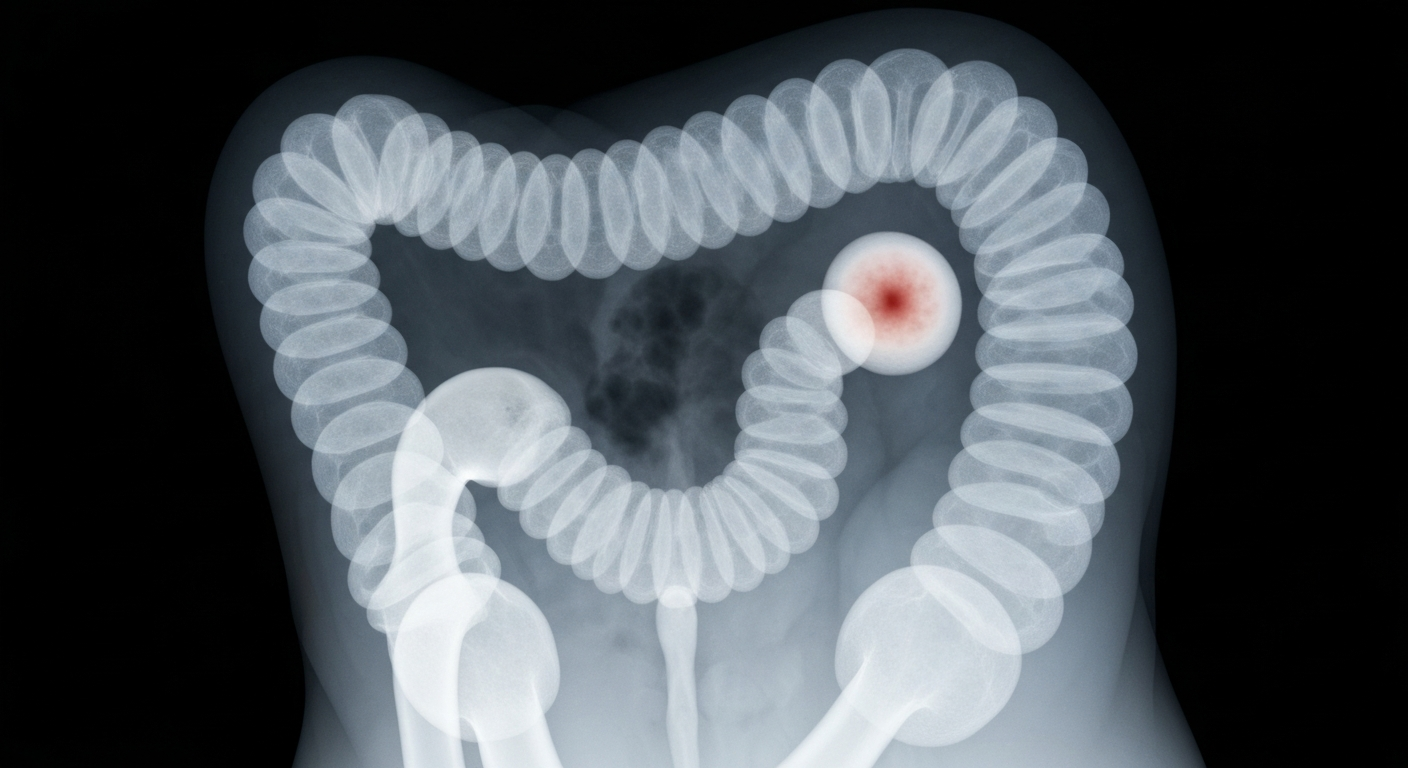 An X-ray view exposes the internal structures of the colon, highlighting the need for vigilance and early screening to detect cancer before it advances.NYC Today
A 22-year-old recent college graduate was diagnosed with a large colon tumor after experiencing unexplained stomach pain for about a year. Dr. Marc Greenwald, who treated the patient, says colon cancer cases are increasing in younger adults, even those without a family history. He emphasizes the importance of seeking medical attention for any new or persistent symptoms, as early-onset colon cancers may not cause obvious signs until the disease has advanced.
Why it matters
Colon cancer is now the top cause of cancer-related death in people under 50, making it crucial for younger adults to be aware of potential symptoms and get screened, even if they don't fit the typical profile for the disease. Early detection is key, as colon cancer caught before symptoms appear has a much higher chance of effective treatment.
The details
Dr. Greenwald's 22-year-old patient had been experiencing intermittent stomach pain for about a year, which she initially attributed to stress. When the pain became severe, scans revealed a large tumor nearly blocking her colon. Despite having no family history of colon cancer, the patient was diagnosed with the disease. Greenwald says he's seeing more young colon cancer patients at his hospital, as the condition becomes less rare in people under 45. Common symptoms include abdominal pain, bloating, fatigue, changes in bathroom habits, and rectal bleeding, though early-onset cases may have subtle or no symptoms until the cancer has progressed.
- The 22-year-old patient had been experiencing stomach pain for about a year before seeking emergency care.
- Scans found the patient had a large tumor nearly blocking her colon.
The players
Dr. Marc Greenwald
The chief of colorectal clinical services and surgeon-in-chief at North Shore University Hospital in New York, who treated the 22-year-old colon cancer patient.
The 22-year-old patient
A recent college graduate who was diagnosed with colon cancer after experiencing unexplained stomach pain for about a year.
What they’re saying
“There's no doubt that we're seeing more people. The problem is that a lot of the symptoms are somewhat subtle. If there are new symptoms for somebody, regardless of age, they should seek medical attention.”
— Dr. Marc Greenwald, Chief of Colorectal Clinical Services and Surgeon-in-Chief
“The most dangerous misconception is that I have no symptoms, so I must be fine. That is really the wrong attitude because if colorectal cancer is caught before symptoms occur, your chance of a cure is much higher than if you wait for symptoms.”
— Dr. Marc Greenwald, Chief of Colorectal Clinical Services and Surgeon-in-Chief
What’s next
Doctors recommend that even younger adults who don't fit the typical colon cancer profile should be vigilant about any new or persistent symptoms and seek early screening, as options like colonoscopies and at-home stool tests can help detect the disease before it advances.
The takeaway
The rise in colon cancer cases among younger adults underscores the need for greater awareness and proactive screening, as early detection is crucial for effective treatment, even in patients without a family history of the disease.