- Today
- Holidays
- Birthdays
- Reminders
- Cities
- Atlanta
- Austin
- Baltimore
- Berwyn
- Beverly Hills
- Birmingham
- Boston
- Brooklyn
- Buffalo
- Charlotte
- Chicago
- Cincinnati
- Cleveland
- Columbus
- Dallas
- Denver
- Detroit
- Fort Worth
- Houston
- Indianapolis
- Knoxville
- Las Vegas
- Los Angeles
- Louisville
- Madison
- Memphis
- Miami
- Milwaukee
- Minneapolis
- Nashville
- New Orleans
- New York
- Omaha
- Orlando
- Philadelphia
- Phoenix
- Pittsburgh
- Portland
- Raleigh
- Richmond
- Rutherford
- Sacramento
- Salt Lake City
- San Antonio
- San Diego
- San Francisco
- San Jose
- Seattle
- Tampa
- Tucson
- Washington
Ithaca Today
By the People, for the People
Cornell Students Embrace Typewriters to Hone Writing Skills
Analog tools challenge AI-assisted writing and promote critical thinking in the classroom.
Apr. 11, 2026 at 1:40pm
Got story updates? Submit your updates here. ›
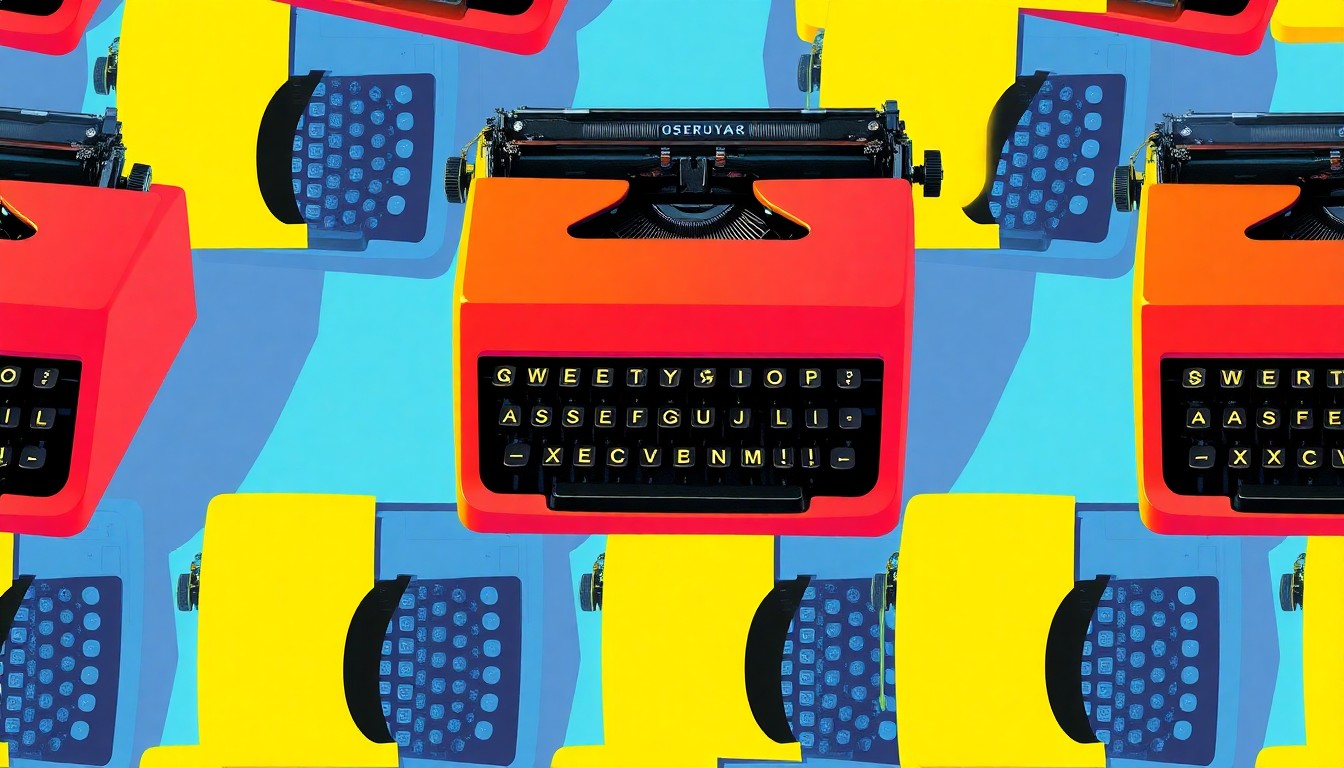 The return of manual typewriters in university classrooms signals a push to combat the overreliance on AI-assisted writing tools and cultivate critical thinking skills.Ithaca Today
Across universities, a counter-movement is emerging that embraces analog tools like typewriters to combat the overreliance on AI-writing assistance. At Cornell University, German instructor Grit Matthias Phelps has introduced manual typewriters into her classroom, forcing students to confront the deliberate process of writing without the convenience of digital shortcuts. This exercise is not merely nostalgic, but a deliberate attempt to recalibrate how students approach skill, learning, and intellectual integrity in an age of ubiquitous automation.
Why it matters
The typewriter experiment challenges the assumption that digital fluency equals cognitive fluency. By removing the safety net of instant corrections and AI-generated polish, students are forced to articulate their thoughts with greater constraint and accountability. This highlights the contrast between effortless AI-generated output and the messy, iterative reality of genuine drafting, ultimately promoting critical thinking and problem-solving skills over passive generation.
The details
Phelps has turned a handful of thrift-store typewriters into a laboratory for exploring how writing happens when the crutch of technology is removed. Using a manual typewriter requires a different cognitive rhythm, where students must feed the paper, strike the key, feel the letter land, and confront the imperfect result. This exercise reframes writing as a discipline that requires proactive problem-solving rather than passive generation. Without the option to instantly correct errors, students are forced to articulate their thoughts with constraint, revealing gaps in reasoning and the quality of the draft without the safety net of AI polish.
- The typewriter experiment was introduced in Phelps' German language classes at Cornell University in the spring of 2026.
The players
Grit Matthias Phelps
A German instructor at Cornell University who has introduced manual typewriters into her classroom as a way to challenge students' reliance on AI-writing tools and promote critical thinking.
Cornell University
The Ivy League institution located in Ithaca, New York, where the typewriter experiment is being conducted in language arts classes.
What they’re saying
“The exercise isn't about mastering a machine; it's about mastering attention.”
— Grit Matthias Phelps, German Instructor, Cornell University
“This isn't nostalgia for its own sake; it's a deliberate attempt to recalibrate how we understand skill, learning, and intellectual integrity in a world where machines can too easily do the thinking for us.”
— Grit Matthias Phelps, German Instructor, Cornell University
What’s next
The university plans to expand the typewriter experiment to other language and writing-focused courses in the upcoming academic year, as part of a broader initiative to promote critical thinking and digital literacy among students.
The takeaway
The typewriter experiment at Cornell University highlights the importance of cultivating robust thinking skills that persist regardless of the medium. By embracing analog tools, students are forced to confront the deliberate process of writing, fostering a deeper understanding of intellectual craftsmanship in an era of ubiquitous automation.