- Today
- Holidays
- Birthdays
- Reminders
- Cities
- Atlanta
- Austin
- Baltimore
- Berwyn
- Beverly Hills
- Birmingham
- Boston
- Brooklyn
- Buffalo
- Charlotte
- Chicago
- Cincinnati
- Cleveland
- Columbus
- Dallas
- Denver
- Detroit
- Fort Worth
- Houston
- Indianapolis
- Knoxville
- Las Vegas
- Los Angeles
- Louisville
- Madison
- Memphis
- Miami
- Milwaukee
- Minneapolis
- Nashville
- New Orleans
- New York
- Omaha
- Orlando
- Philadelphia
- Phoenix
- Pittsburgh
- Portland
- Raleigh
- Richmond
- Rutherford
- Sacramento
- Salt Lake City
- San Antonio
- San Diego
- San Francisco
- San Jose
- Seattle
- Tampa
- Tucson
- Washington
Immune Cell Mutations Linked to Autoimmune Diseases
New research suggests somatic mutations in immune cells may drive autoimmune conditions like thyroid disease.
Apr. 15, 2026 at 1:12am
Got story updates? Submit your updates here. ›
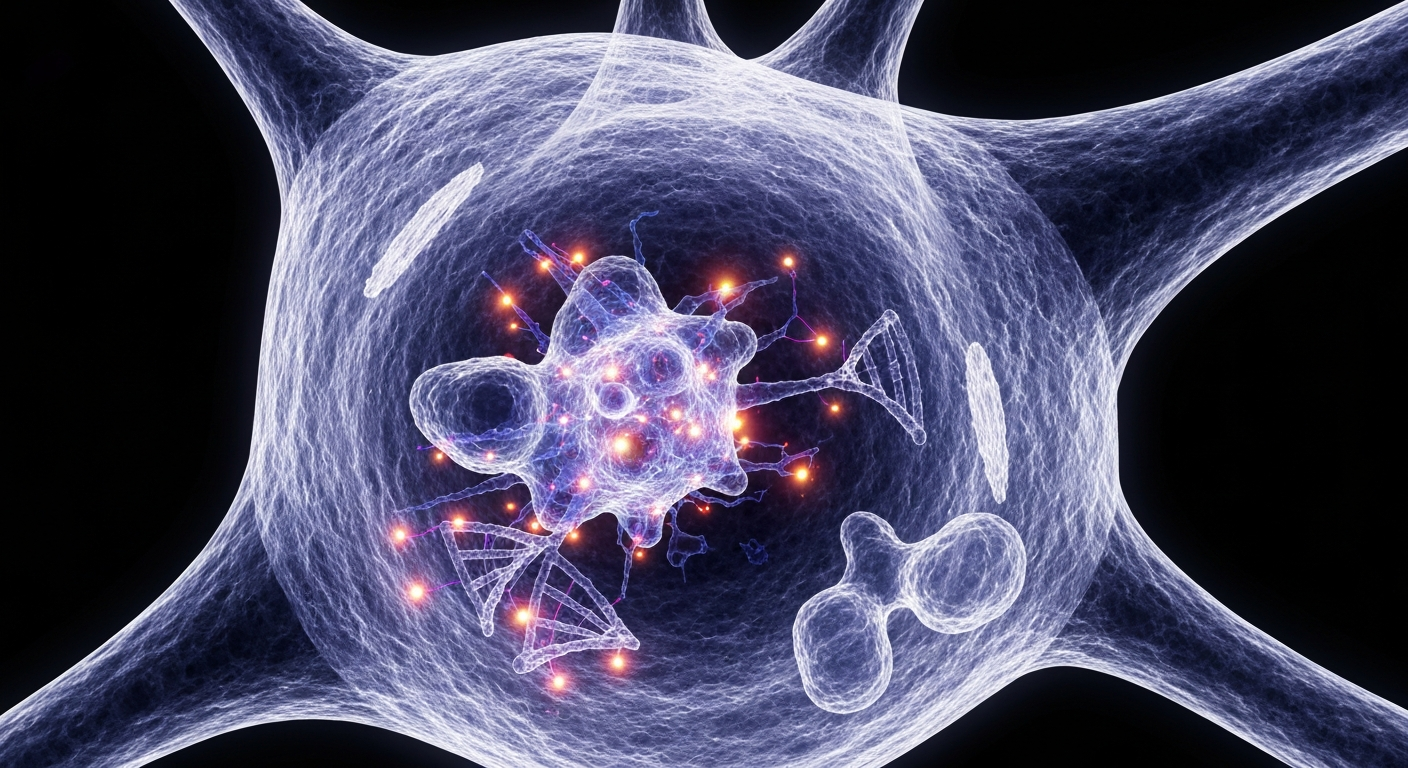 Advanced DNA sequencing techniques have uncovered a hidden world of somatic mutations in immune cells that may contribute to the development of autoimmune diseases.Manchester Today
A new study from the Wellcome Sanger Institute and collaborators reveals that autoimmune diseases may be driven by DNA mutations in immune cells that remove natural brakes on the immune system. Using advanced DNA sequencing techniques, the researchers found that many B cells in autoimmune patients had acquired multiple mutations in key genes that normally control the immune response, potentially leading to unchecked attacks on the body's own tissues.
Why it matters
This research provides the strongest evidence to date that somatic mutations in immune cells play an important role in autoimmune diseases, which affect 5-10% of the global population. Understanding the molecular basis of autoimmunity could lead to more precise diagnoses and targeted treatments, rather than the broad immune suppression currently used.
The details
The researchers studied thyroid autoimmune diseases like Hashimoto's and Graves' disease, using advanced DNA sequencing techniques like NanoSeq to detect rare mutations. They found that many B cells in patients had developed inactivating mutations in genes that normally regulate the immune system, including the critical checkpoint genes TNFRSF14 and CD274. Some B cell clones had acquired up to six driver mutations over time, silently building up changes before symptoms appeared - a highly unexpected finding outside of cancer.
- The research was reported on April 14, 2026.
The players
Dr. Andrew Lawson
Co-first author at the Wellcome Sanger Institute.
Dr. Pantelis Nicola
Co-first author formerly of the Wellcome PhD Programme for Clinicians in Cambridge, currently a NIHR clinical lecturer at The Christie in Manchester.
Professor Chris Goodnow
Bill and Patricia Ritchie Chair, Professor at the Garvan Institute and University of New South Wales Sydney, who pioneered the study of somatic mutations in autoimmunity for the last 20 years.
Dr. Iñigo Martincorena
Senior author at the Wellcome Sanger Institute.
Wellcome Sanger Institute
A research institute that collaborated on this study.
What they’re saying
“Our study suggests that somatic mutations in immune cells may play an important role in autoimmune disease, an idea first proposed in the 1950s that we have lacked the techniques to investigate. Now that we have NanoSeq, which we developed in the last few years, we can study somatic mutations with ultra-high accuracy and explore their contribution to autoimmune diseases, not just cancer.”
— Dr. Andrew Lawson, Co-first author at the Wellcome Sanger Institute
“Autoimmune diseases are currently treated by broadly suppressing the immune system, which can leave patients vulnerable to infections as well as a long list of other complications. If these findings are confirmed, they could eventually enable more precise diagnoses and treatments leading to better patient outcomes.”
— Dr. Pantelis Nicola, Co-first author formerly of the Wellcome PhD Programme for Clinicians in Cambridge, currently a NIHR clinical lecturer at The Christie in Manchester
“This is a huge leap forward into the pathogenesis of autoimmune disease. It changes everything, and explains so much that was up in the air. It reminds me of when NASA fixed the optics on the Hubble Telescope: suddenly all the stars and galaxies are crystal clear, and there is a lot more going on than we had ever imagined.”
— Professor Chris Goodnow, Bill and Patricia Ritchie Chair, Professor at the Garvan Institute and University of New South Wales Sydney
“For decades, researchers have wondered whether somatic mutations might contribute to autoimmune disease, but evidence has been elusive. Our findings suggest this process is far more widespread than we anticipated. While we need further studies to confirm the role of these mutations, this work could mark the beginning of a new phase in understanding autoimmune disease.”
— Dr. Iñigo Martincorena, Senior author at the Wellcome Sanger Institute
What’s next
The research team has also started to see similar results in other autoimmune diseases, but these are preliminary findings and require more investigation.
The takeaway
This research reveals a hidden world of somatic evolution in B cells during autoimmunity and provides the strongest evidence to date for an important role of somatic mutations in a common autoimmune disease. If confirmed, these findings could lead to more precise diagnoses and targeted treatments for autoimmune conditions, moving beyond the current broad immune suppression approach.
Manchester top stories


Manchester events

Apr. 15, 2026
New Hampshire Fisher Cats vs. Chesapeake Baysox
Apr. 16, 2026
New Hampshire Fisher Cats vs. Chesapeake Baysox
Apr. 17, 2026
New Hampshire Fisher Cats vs. Chesapeake Baysox