- Today
- Holidays
- Birthdays
- Reminders
- Cities
- Atlanta
- Austin
- Baltimore
- Berwyn
- Beverly Hills
- Birmingham
- Boston
- Brooklyn
- Buffalo
- Charlotte
- Chicago
- Cincinnati
- Cleveland
- Columbus
- Dallas
- Denver
- Detroit
- Fort Worth
- Houston
- Indianapolis
- Knoxville
- Las Vegas
- Los Angeles
- Louisville
- Madison
- Memphis
- Miami
- Milwaukee
- Minneapolis
- Nashville
- New Orleans
- New York
- Omaha
- Orlando
- Philadelphia
- Phoenix
- Pittsburgh
- Portland
- Raleigh
- Richmond
- Rutherford
- Sacramento
- Salt Lake City
- San Antonio
- San Diego
- San Francisco
- San Jose
- Seattle
- Tampa
- Tucson
- Washington
Trump Sparks Outrage with AI Image Depicting Himself as Jesus
Christians across faiths condemn the post as 'blasphemy' against sacred religious imagery
Apr. 14, 2026 at 7:35pm
Got story updates? Submit your updates here. ›
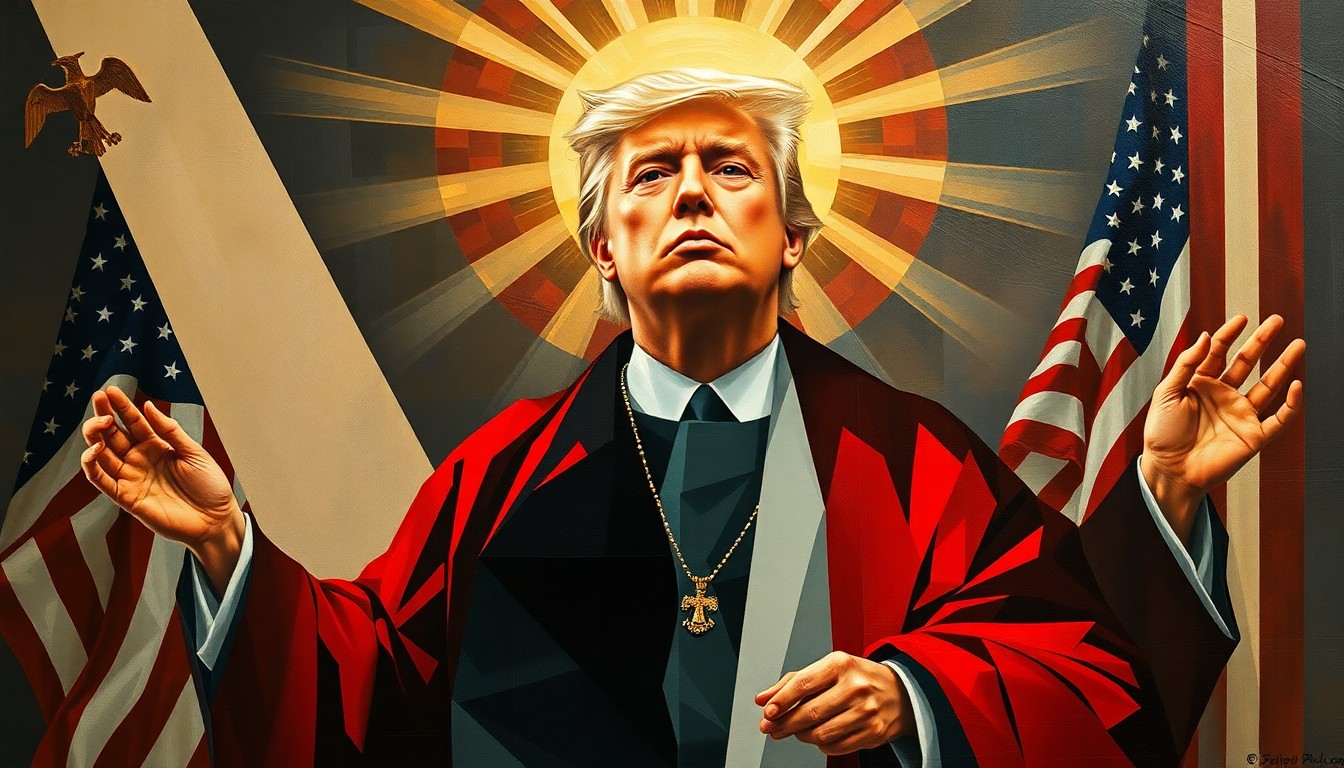 The former president's self-aggrandizing depiction of himself as a divine healer has sparked outrage and debate over the boundaries of religious iconography in political speech.Washington Today
In a controversial move, former President Donald Trump shared an AI-generated image on Truth Social depicting himself as a divine healer in the style of biblical artwork. The rendering, which showed Trump towering over devotees with American flags and warplanes in the background, was widely condemned by Christians across denominations as an act of 'blasphemy' that irreverently combined political self-promotion with sacred religious imagery.
Why it matters
Trump's blending of his own image with that of Jesus Christ has reignited debates over the boundaries of free expression when it comes to religious iconography. While some see it as a clear-cut case of blasphemy, others argue intent matters in judging such acts, and that only God can be the final arbiter. The controversy also highlights the former president's continued tendency to court religious voters while pushing the limits of acceptable political speech.
The details
The AI-generated image, which appeared to be a digitally altered version of a similar image shared earlier by right-wing influencer Nick Adams, presented Trump dressed in red and white robes reminiscent of biblical art. The president was shown resting one hand on the forehead of an ailing man, with a beam of divine light emanating from the other. In the background, American flags, bald eagles, and warplanes were visible.
- On Sunday, Trump shared the image in the midst of a Truth Social tirade against Pope Leo XIV.
- On Monday, the post was deleted, and Trump denied that he had represented himself as Jesus, claiming the image was meant to depict him as a 'doctor making people better.'
The players
Donald Trump
The former president of the United States who shared the controversial AI-generated image on Truth Social.
Nick Adams
A right-wing influencer and State Department special envoy who shared a nearly identical image in early February.
Marjorie Taylor Greene
A Republican congresswoman who condemned the image as representing an 'Antichrist spirit.'
Kim Haines-Eitzen
A professor of early Christianity and early Judaism at Cornell University who provided historical context on the meaning of 'blasphemy.'
Len Gutkin
A writer who explained how the charge of 'blasphemy' has evolved to include offending the sensitivities of believers.
What they’re saying
“It's more than blasphemy. It's an Antichrist spirit.”
— Marjorie Taylor Greene, Republican Congresswoman
“What blasphemy does is move the conversation from one First Amendment area, freedom of expression, to another First Amendment area, of freedom of religion.”
— Isaac Butler, Author
“All the words apply: heresy, apostasy, blasphemy.”
— Jim Wallis, Chair and Director, Georgetown University Center on Faith and Justice
“Technically, that's blasphemy, what he did. But morally speaking, is he a blasphemer? Well, I think only God can be the final judge of that.”
— Dennis Doyle, Catholic Theologian and Professor Emeritus, University of Dayton
What’s next
The former president's legal team has not indicated whether they will address the controversy or take any action in response to the widespread criticism.
The takeaway
This incident highlights the ongoing tensions between free expression, religious sensitivities, and the blurring of political and sacred imagery, especially when it involves a polarizing public figure like Donald Trump. It underscores the need for nuanced discussions around the boundaries of acceptable speech when it comes to religious iconography.
Washington top stories

Washington events

Apr. 14, 2026
Maisie Peters: Before The Bloom
Apr. 14, 2026
Whiskey & History: Lincoln Assassination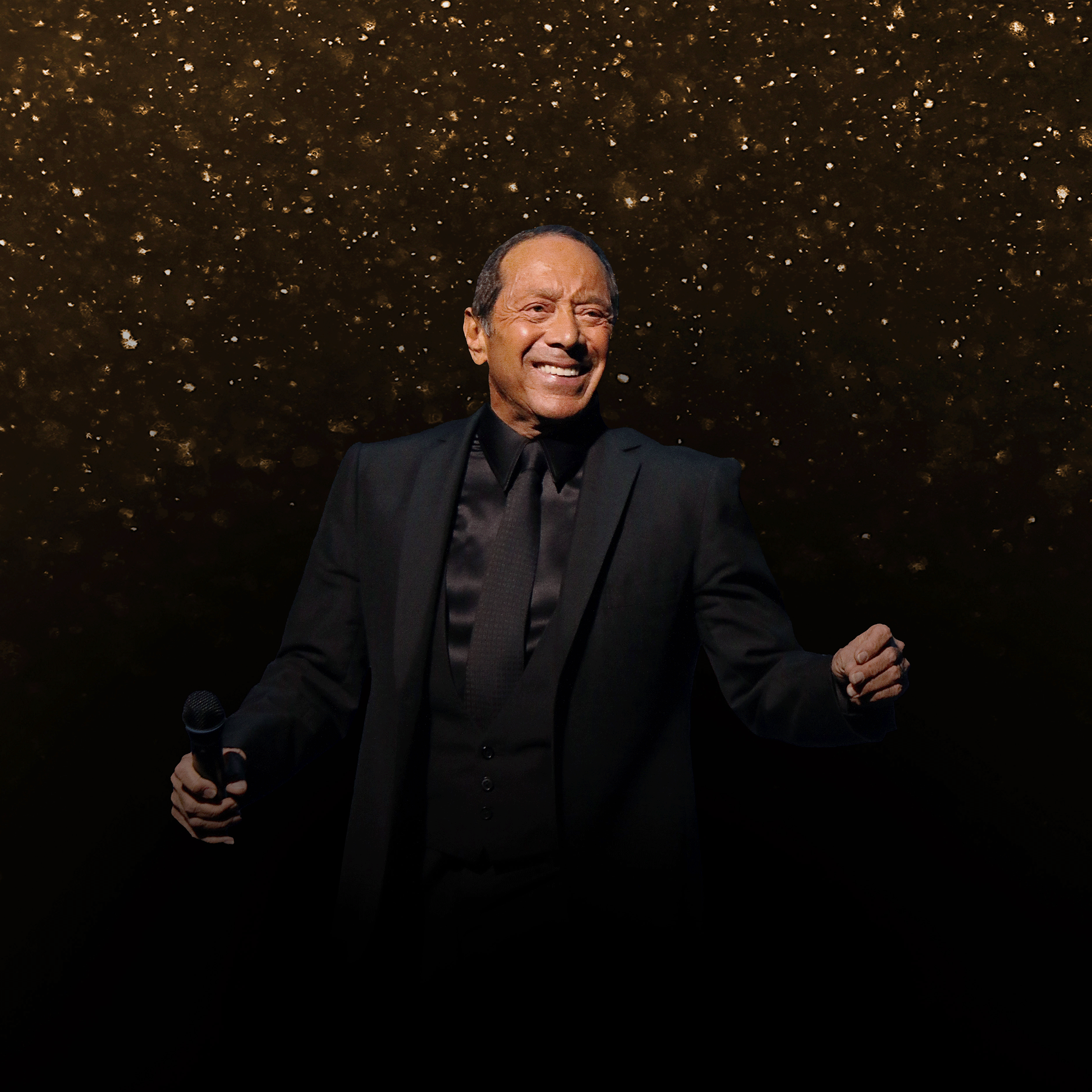
Apr. 14, 2026
Paul Anka