- Today
- Holidays
- Birthdays
- Reminders
- Cities
- Atlanta
- Austin
- Baltimore
- Berwyn
- Beverly Hills
- Birmingham
- Boston
- Brooklyn
- Buffalo
- Charlotte
- Chicago
- Cincinnati
- Cleveland
- Columbus
- Dallas
- Denver
- Detroit
- Fort Worth
- Houston
- Indianapolis
- Knoxville
- Las Vegas
- Los Angeles
- Louisville
- Madison
- Memphis
- Miami
- Milwaukee
- Minneapolis
- Nashville
- New Orleans
- New York
- Omaha
- Orlando
- Philadelphia
- Phoenix
- Pittsburgh
- Portland
- Raleigh
- Richmond
- Rutherford
- Sacramento
- Salt Lake City
- San Antonio
- San Diego
- San Francisco
- San Jose
- Seattle
- Tampa
- Tucson
- Washington
Global Robotaxi Deployment Heats Up as U.S. and Chinese Firms Vie for Dominance
Waymo, Tesla, Baidu, and CaoCao emerge as key players in the race to scale autonomous ride-hailing worldwide
Apr. 17, 2026 at 8:21am by Ben Kaplan
Got story updates? Submit your updates here. ›
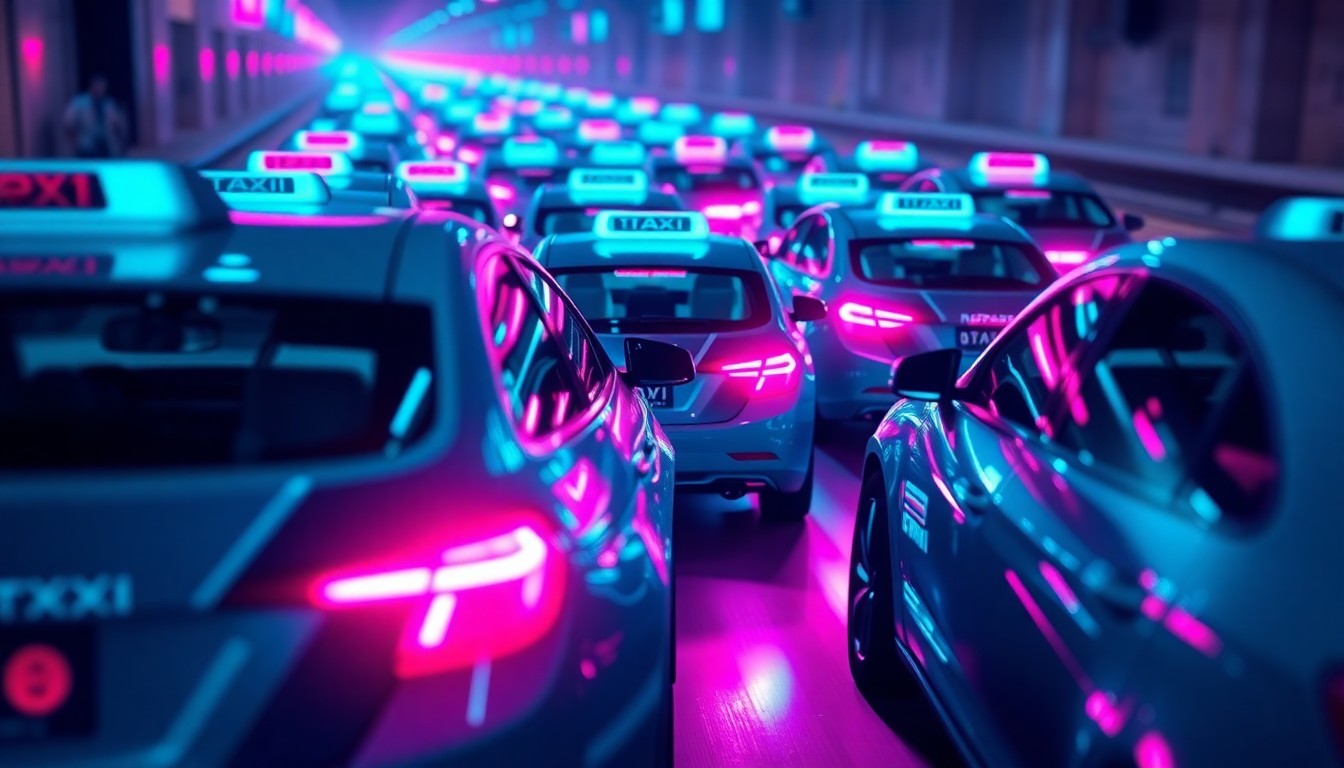 As the global Robotaxi market heats up, a glowing fleet of autonomous vehicles represents the technological advancements and international expansion driving the future of urban mobility.San Francisco Today
The global Robotaxi market is experiencing rapid growth, with major players from the U.S. and China competing to deploy autonomous ride-hailing services worldwide. While U.S. firms like Waymo and Tesla focus on perfecting technology in select markets, Chinese companies such as Baidu, WeRide, and CaoCao are prioritizing geographic expansion and operational scale. This strategic divergence highlights the different development priorities as the industry battles for leadership in the autonomous driving ecosystem.
Why it matters
The Robotaxi market is poised for explosive growth, with its valuation expected to surge from $500 million in 2025 to over $100 billion by the early 2030s. This competition between U.S. and Chinese firms will shape the future of urban mobility and autonomous driving technology globally.
The details
In the U.S., Waymo has established significant operations in cities like Phoenix and San Francisco, completing over 20 million rides with a fleet of 3,000 vehicles. However, Tesla's upcoming CyberCab aims to challenge Waymo's dominance by leveraging its existing consumer fleet equipped with Full Self-Driving capabilities. In China, Baidu's Apollo Go has completed 17 million rides across 22 cities, while WeRide has launched operations in over 30 cities across 11 countries. Pony.ai maintains a presence in both China and the U.S. with a 1,159-vehicle fleet. The uniquely positioned CaoCao Inc., known for its traditional ride-hailing services, boasts operations in 195 cities, giving it a significant advantage in navigating diverse regulatory environments.
- In 2025, the global Robotaxi market was valued at just over $500 million.
- By the early 2030s, the Robotaxi market is projected to surpass $100 billion in valuation.
The players
Waymo
A subsidiary of Alphabet Inc. and an industry pioneer in autonomous driving, Waymo has established significant operations in cities like Phoenix and San Francisco, completing over 20 million shared rides with a fleet of 3,000 vehicles.
Tesla
The highly anticipated launch of Tesla's CyberCab, leveraging its vast consumer fleet equipped with Full Self-Driving capabilities, aims to create a decentralized Robotaxi network that can scale rapidly and challenge Waymo's dominance in the U.S. market.
Baidu
Baidu's Apollo Go has emerged as a strong leader in the Chinese Robotaxi market, completing an impressive 17 million rides across 22 cities, rivaling and in some metrics surpassing its U.S. counterparts.
WeRide
WeRide has launched ambitious international expansion plans, establishing operations in more than 30 cities across 11 countries, making it one of the most geographically diverse Robotaxi operators.
CaoCao Inc.
While commonly associated with traditional ride-hailing, CaoCao Inc.'s vast operational footprint spanning 195 cities provides an unparalleled platform for deploying autonomous driving services globally, positioning it as a strong competitor among global autonomous driving operators.
What’s next
As the global Robotaxi market continues to evolve, the competition between U.S. and Chinese firms will intensify, with the companies that successfully combine cutting-edge technology with a scalable global operating model poised to lead the driverless revolution.
The takeaway
The Sino-U.S. competition in Robotaxi is a microcosm of the battle for leadership in the entire autonomous driving technology ecosystem. The future of urban mobility will be shaped by the companies that can deploy autonomous vehicles at scale, both domestically and globally.
San Francisco top stories



San Francisco events

Apr. 17, 2026
LIVE 105 Presents: The Format 4/17
Apr. 17, 2026
SFBATCO: The Lin-Manuel Effect
Apr. 17, 2026
Kaskade