- Today
- Holidays
- Birthdays
- Reminders
- Cities
- Atlanta
- Austin
- Baltimore
- Berwyn
- Beverly Hills
- Birmingham
- Boston
- Brooklyn
- Buffalo
- Charlotte
- Chicago
- Cincinnati
- Cleveland
- Columbus
- Dallas
- Denver
- Detroit
- Fort Worth
- Houston
- Indianapolis
- Knoxville
- Las Vegas
- Los Angeles
- Louisville
- Madison
- Memphis
- Miami
- Milwaukee
- Minneapolis
- Nashville
- New Orleans
- New York
- Omaha
- Orlando
- Philadelphia
- Phoenix
- Pittsburgh
- Portland
- Raleigh
- Richmond
- Rutherford
- Sacramento
- Salt Lake City
- San Antonio
- San Diego
- San Francisco
- San Jose
- Seattle
- Tampa
- Tucson
- Washington
New Tool Detects Alcohol in Steatotic Liver Disease
A simple index may quantify the role of alcohol in steatotic liver disease without expensive testing.
Apr. 15, 2026 at 8:51am
Got story updates? Submit your updates here. ›
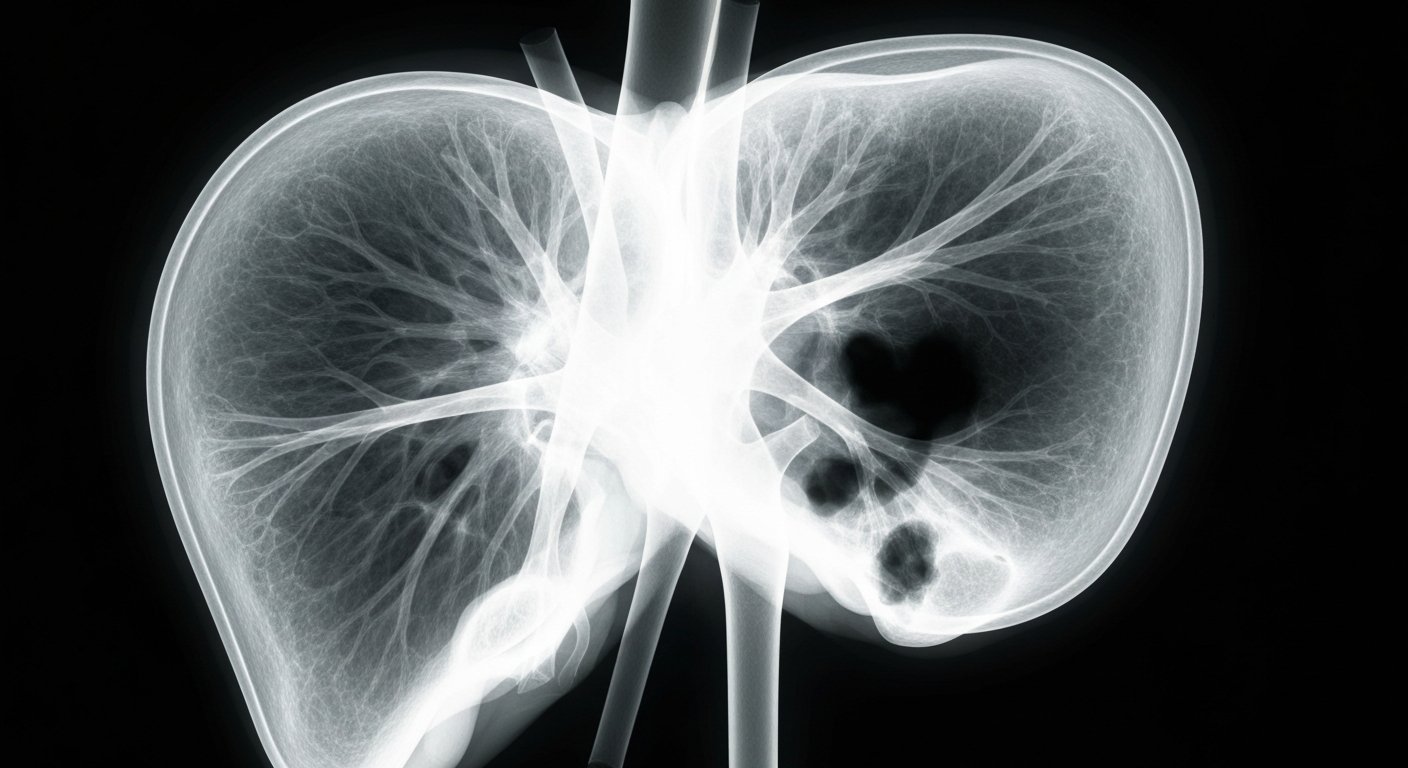 A novel biomarker test aims to uncover hidden alcohol-related damage in steatotic liver disease, improving diagnostic accuracy and guiding better treatment.San Diego Today
Researchers have developed a novel biomarker test called the MetALD-ALD prediction Index (MAPI) that integrates sex and four routine lab tests to identify when steatotic liver disease (SLD) is driven by excessive alcohol use versus metabolic factors. The new tool aims to improve how clinicians classify liver disease and help patients achieve better long-term health outcomes.
Why it matters
Accurately quantifying alcohol use is essential for correctly classifying individuals within the newly defined subcategories of SLD, which include metabolic dysfunction-associated SLD (MASLD), metabolic and alcohol-associated liver disease (MetALD), and alcohol-associated liver disease (ALD). The current reliance on self-reported alcohol consumption is often unreliable, leading to underreporting, so an objective biomarker test like MAPI could significantly improve diagnostic accuracy.
The details
The MAPI biomarker panel includes four routine lab tests - mean corpuscular volume (MCV), gamma-glutamyltransferase (GGT), high-density lipoprotein cholesterol, and A1c - as well as sex to create a single score. The researchers tested the accuracy of MAPI in a derivation cohort of 503 adults with overweight or obesity, using phosphatidylethanol (PEth) testing to categorize alcohol consumption. MAPI emerged as the top-performing predictive model, outperforming other commonly used indirect alcohol biomarkers, with an area under the receiver operating characteristic curve of 0.76 for the derivation cohort and 0.75 for an independent validation cohort.
- The study was published online in Gastroenterology in 2026.
The players
Rohit Loomba, MD, MHSc
Professor of medicine, director of the MASLD Research Center, and chief of the Division of Gastroenterology and Hepatology at the University of California at San Diego.
K. Rajender Reddy, MD
Founder's Professor in Hepatology and Professor of Medicine in Surgery, Liver Transplant Office, at the University of Pennsylvania.
What they’re saying
“This new score gives clinicians a simple and accessible way to uncover hidden alcohol-related injury. By improving how we classify liver disease, we can help patients achieve better long-term health outcomes.”
— Rohit Loomba, MD, MHSc, Professor of medicine, director of the MASLD Research Center, and chief of the Division of Gastroenterology and Hepatology, University of California at San Diego
“MAPI is a simple tool to help community physicians distinguish metabolic syndrome from metabolic syndrome-associated and alcohol liver disease. I hope there will be uptake of this tool in the community, especially since it does not require an outrageous data element.”
— K. Rajender Reddy, MD, Founder's Professor in Hepatology and Professor of Medicine in Surgery, Liver Transplant Office, University of Pennsylvania
What’s next
The authors note that further clinical trials are needed to validate the MAPI tool. They also acknowledge limitations, such as the lack of structured interviews quantifying alcohol intake during the week immediately preceding blood sampling, which makes it challenging to interpret elevated PEth levels in participants who may engage in heavy episodic drinking but otherwise have low-to-moderate intake.
The takeaway
The new MAPI biomarker test provides a practical and robust way to identify patients with steatotic liver disease who may be underreporting their alcohol consumption. By improving diagnostic accuracy, this tool can help guide appropriate clinical management and lead to better long-term health outcomes for patients.
San Diego top stories



San Diego events

Apr. 15, 2026
San Diego Padres vs. Seattle Mariners
Apr. 15, 2026
San Diego Gulls vs. Tucson Roadrunners
Apr. 15, 2026
The Notebook (Touring)