- Today
- Holidays
- Birthdays
- Reminders
- Cities
- Atlanta
- Austin
- Baltimore
- Berwyn
- Beverly Hills
- Birmingham
- Boston
- Brooklyn
- Buffalo
- Charlotte
- Chicago
- Cincinnati
- Cleveland
- Columbus
- Dallas
- Denver
- Detroit
- Fort Worth
- Houston
- Indianapolis
- Knoxville
- Las Vegas
- Los Angeles
- Louisville
- Madison
- Memphis
- Miami
- Milwaukee
- Minneapolis
- Nashville
- New Orleans
- New York
- Omaha
- Orlando
- Philadelphia
- Phoenix
- Pittsburgh
- Portland
- Raleigh
- Richmond
- Rutherford
- Sacramento
- Salt Lake City
- San Antonio
- San Diego
- San Francisco
- San Jose
- Seattle
- Tampa
- Tucson
- Washington
Bay Area Scientists Honored at 'Oscars of Science'
Researchers from Stanford and UC Berkeley recognized for advancements in math and physics
Apr. 19, 2026 at 11:05am
Got story updates? Submit your updates here. ›
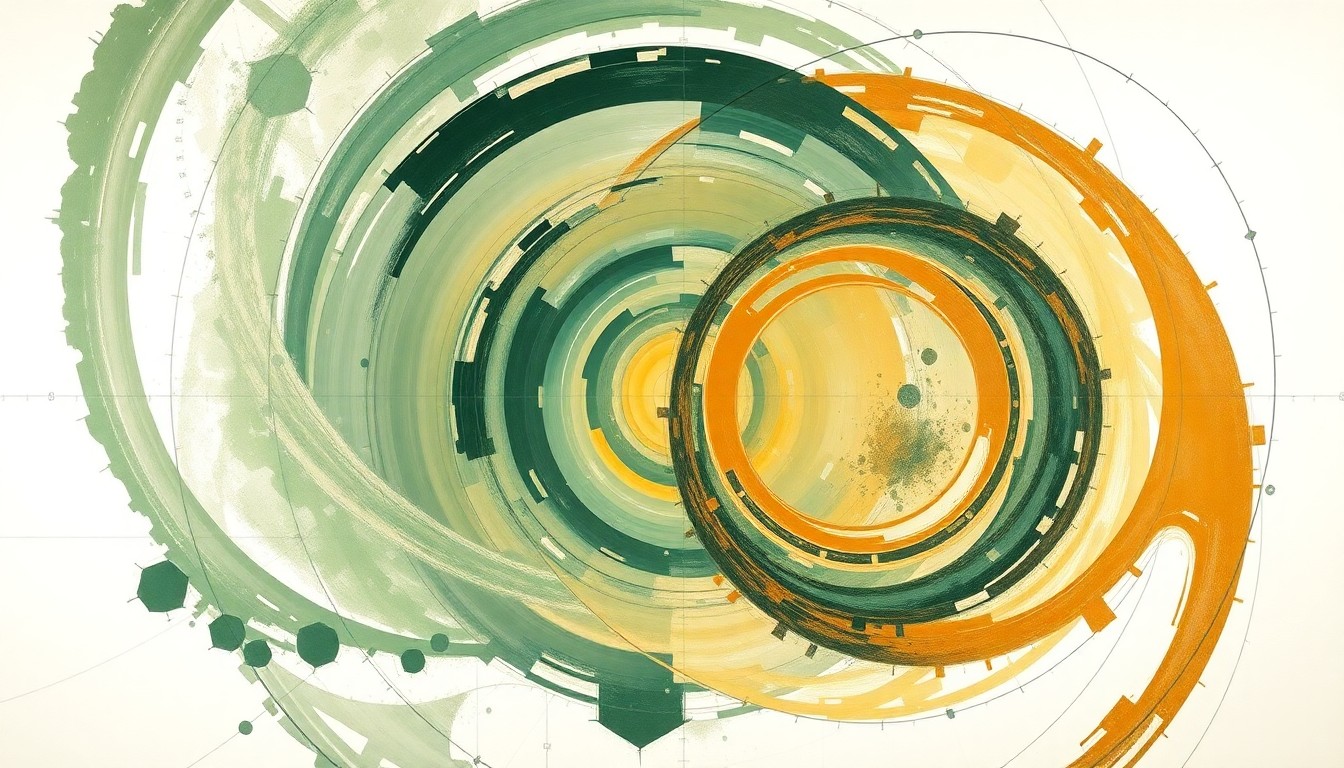 Breakthrough Prize winners from the Bay Area are pushing the boundaries of mathematics and physics, unlocking new insights about the fundamental nature of the universe.Berkeley Today
Three Bay Area scientists from Stanford and UC Berkeley were awarded prestigious Breakthrough Prizes on Saturday, known as the 'Oscars of Science,' for their groundbreaking work in mathematics and physics. The awards, which come with $3 million in prize money, aim to elevate researchers to celebrity status and inspire the next generation to tackle major scientific questions.
Why it matters
The Breakthrough Prize honors transformative advances in the fields of mathematics, physics, and life sciences, shining a spotlight on the critical work being done at leading research institutions like Stanford and UC Berkeley. These awards help raise public awareness of important scientific pursuits and the need for continued federal funding to support cutting-edge research.
The details
The Breakthrough Prize winners from the Bay Area include UC Berkeley physicist Benjamin Safdi, who is working to detect a hypothetical subatomic particle called the axion, as well as UC Berkeley mathematician Yunqing Tang and Stanford mathematician Otis Chodosh, who made significant breakthroughs in number theory and differential geometry respectively. Their work represents the collaborative spirit and technical sophistication of modern mathematics and physics research.
- The Breakthrough Prize awards ceremony took place on Saturday, April 19, 2026.
- Safdi, Tang, and Chodosh were recognized for research conducted over the past several years.
The players
Benjamin Safdi
A physicist at the University of California, Berkeley who was awarded the New Horizons in Physics prize for his work on detecting the hypothetical axion particle, which could make up a significant portion of dark matter in the universe.
Yunqing Tang
An associate professor of mathematics at the University of California, Berkeley who was awarded the New Horizons in Mathematics prize for her work on the 'unbounded denominators conjecture' in number theory and modular forms.
Otis Chodosh
An associate professor of mathematics at Stanford University who was awarded the New Horizons in Mathematics prize for his contributions to solving long-standing problems in differential geometry, particularly related to the properties of high-dimensional spaces.
Breakthrough Prize
An organization founded in 2012 by Silicon Valley leaders that awards $3 million annually to recognize major scientific advancements in mathematics, physics, and life sciences.
UC Berkeley
A leading public research university in the San Francisco Bay Area that is home to several of the Breakthrough Prize winners.
What they’re saying
“I hope that all of these awards, not just the New Horizons, but scientific awards more generally, can bring a spotlight on what's happening in the scientific community. I hope that people read the stories from these awards and learn what people are doing and feel compelled by that to support science.”
— Benjamin Safdi, UC Berkeley Physicist
“Math is not quite a science, and it's not quite humanities. We have no experiment. They make hypotheses, we call them conjectures. And then the replacement for the experiment is called a proof. And so you essentially have a logical deduction, step by step.”
— Otis Chodosh, Stanford University Mathematician
“These objects not only arise from the number theory aspect, they come from our understanding of the universe. When (my colleagues) put everything into the mathematical language, everything suddenly makes more sense to me.”
— Yunqing Tang, UC Berkeley Mathematician
What’s next
The Breakthrough Prize winners plan to continue their research, with Safdi focused on the search for the elusive axion particle, Tang exploring the deeper connections between number theory and the structure of the universe, and Chodosh working to uncover new insights in high-dimensional geometry.
The takeaway
The Breakthrough Prize awards highlight the vital role that fundamental scientific research plays in expanding human knowledge and driving innovation, even if the work may not have immediate practical applications. By elevating these Bay Area researchers to celebrity status, the prizes aim to inspire the next generation of mathematicians and physicists to tackle the greatest unsolved mysteries of our time.
Berkeley top stories


Berkeley events

Apr. 22, 2026
Free Throw w/ MacSeal
Apr. 25, 2026
Petty Theft
Apr. 27, 2026
Soul Blind w/ Split Chain