- Today
- Holidays
- Birthdays
- Reminders
- Cities
- Atlanta
- Austin
- Baltimore
- Berwyn
- Beverly Hills
- Birmingham
- Boston
- Brooklyn
- Buffalo
- Charlotte
- Chicago
- Cincinnati
- Cleveland
- Columbus
- Dallas
- Denver
- Detroit
- Fort Worth
- Houston
- Indianapolis
- Knoxville
- Las Vegas
- Los Angeles
- Louisville
- Madison
- Memphis
- Miami
- Milwaukee
- Minneapolis
- Nashville
- New Orleans
- New York
- Omaha
- Orlando
- Philadelphia
- Phoenix
- Pittsburgh
- Portland
- Raleigh
- Richmond
- Rutherford
- Sacramento
- Salt Lake City
- San Antonio
- San Diego
- San Francisco
- San Jose
- Seattle
- Tampa
- Tucson
- Washington
Sunbirds Suck, Scientists Find. Hummingbirds Don't
Researchers discover sunbirds use suction to feed on nectar, unlike their hummingbird counterparts
Apr. 14, 2026 at 5:06am
Got story updates? Submit your updates here. ›
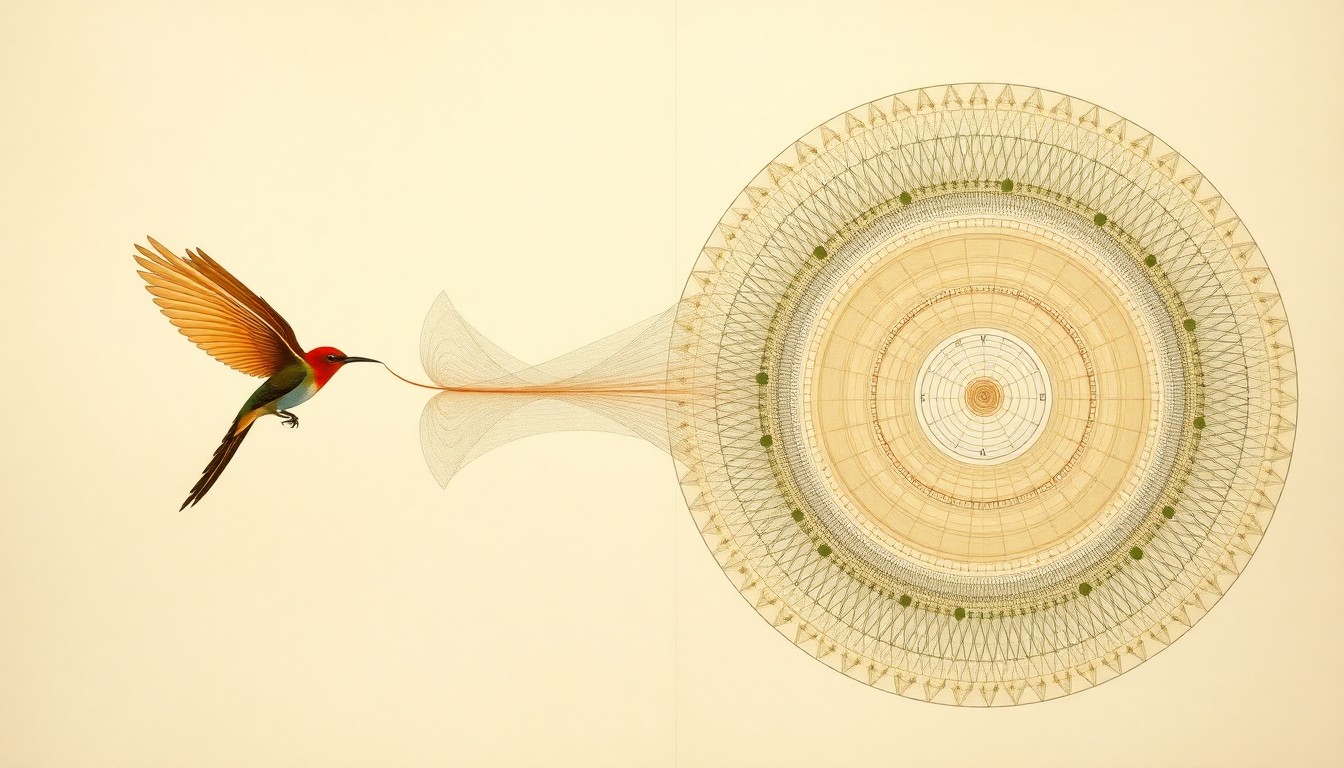 An artistic rendering of the suction-based nectar feeding mechanism uniquely evolved in sunbirds, a remarkable example of convergent evolution.Berkeley Today
A new study by UC Berkeley biologists has found that sunbirds, the African and Asian counterparts of hummingbirds, use suction with their tongues to extract nectar from flowers - a feeding mechanism never before seen in vertebrates. This contrasts with hummingbirds, which use a unique tongue-squeezing technique to draw up nectar. The findings highlight the remarkable diversity of evolutionary solutions to similar ecological problems.
Why it matters
The discovery of sunbirds' suction-based nectar feeding provides a fascinating example of convergent evolution, where two unrelated organisms develop similar adaptations to fill the same ecological niche. Understanding the biomechanics behind these feeding mechanisms can offer broader insights into how physical laws shape the incredible diversity of life.
The details
Experiments using high-speed cameras and 3D-printed artificial flowers revealed that sunbirds press the base of their tongues against the top of their beaks to create an airtight seal, generating suction that draws up nectar. This is in contrast to hummingbirds, which compress their tongues to absorb nectar like a sponge. MicroCT scans also showed key anatomical differences between the two groups, with sunbirds having specialized flexible flaps at the base of their tongues to facilitate the suction mechanism.
- The study findings were reported last month in the journal Current Biology.
- The research was conducted over several years, with field experiments in Africa and Indonesia.
The players
Rauri Bowie
UC Berkeley professor of integrative biology and a study author.
David Cuban
First author of the study and a postdoctoral fellow at Brown University, who previously studied at UC Berkeley.
Alejandro Rico-Guevara
Former UC Berkeley Miller Postdoctoral Fellow who demonstrated hummingbirds' tongue-squeezing feeding technique.
Cynthia Wang-Claypool
Graduate student at UC Berkeley who conducted microCT scans to confirm the anatomical differences between sunbirds and hummingbirds.
Yohanna Yohanna
Researcher at the National Research and Innovation Agency of Indonesia, and a co-author on the study.
What they’re saying
“It's just a really amazing example of the power and beauty of convergent evolution, where in nature we have two organisms filling the same ecological role, but when you look in detail, they're achieving that outcome in two completely different ways.”
— Rauri Bowie, UC Berkeley professor of integrative biology
“I am fascinated by the phenomena of convergent evolution. Hummingbirds and sunbirds - and some other nectar-feeding birds - have similar morphology, coloration, behavior and ecological niches, but once we zoom in on something specific, in this case their feeding mechanism, we find that they use completely distinct mechanisms.”
— David Cuban, Postdoctoral fellow at Brown University
What’s next
The researchers continue to explore the differences between sunbirds and hummingbirds and the broader phenomenon of convergent evolution among nectar-feeding animals.
The takeaway
This study provides a remarkable example of how nature can arrive at similar ecological solutions through vastly different biological mechanisms. By studying the physical adaptations of organisms, scientists can gain deeper insights into the fundamental laws shaping the diversity of life.