- Today
- Holidays
- Birthdays
- Reminders
- Cities
- Atlanta
- Austin
- Baltimore
- Berwyn
- Beverly Hills
- Birmingham
- Boston
- Brooklyn
- Buffalo
- Charlotte
- Chicago
- Cincinnati
- Cleveland
- Columbus
- Dallas
- Denver
- Detroit
- Fort Worth
- Houston
- Indianapolis
- Knoxville
- Las Vegas
- Los Angeles
- Louisville
- Madison
- Memphis
- Miami
- Milwaukee
- Minneapolis
- Nashville
- New Orleans
- New York
- Omaha
- Orlando
- Philadelphia
- Phoenix
- Pittsburgh
- Portland
- Raleigh
- Richmond
- Rutherford
- Sacramento
- Salt Lake City
- San Antonio
- San Diego
- San Francisco
- San Jose
- Seattle
- Tampa
- Tucson
- Washington
Hoover Today
By the People, for the People
Former Alabama Star Reflects on Kalen DeBoer Era and NIL Landscape
Marlon Humphrey shares insights on the transition from Nick Saban's tenure and the evolving college football culture.
Apr. 11, 2026 at 6:49pm
Got story updates? Submit your updates here. ›
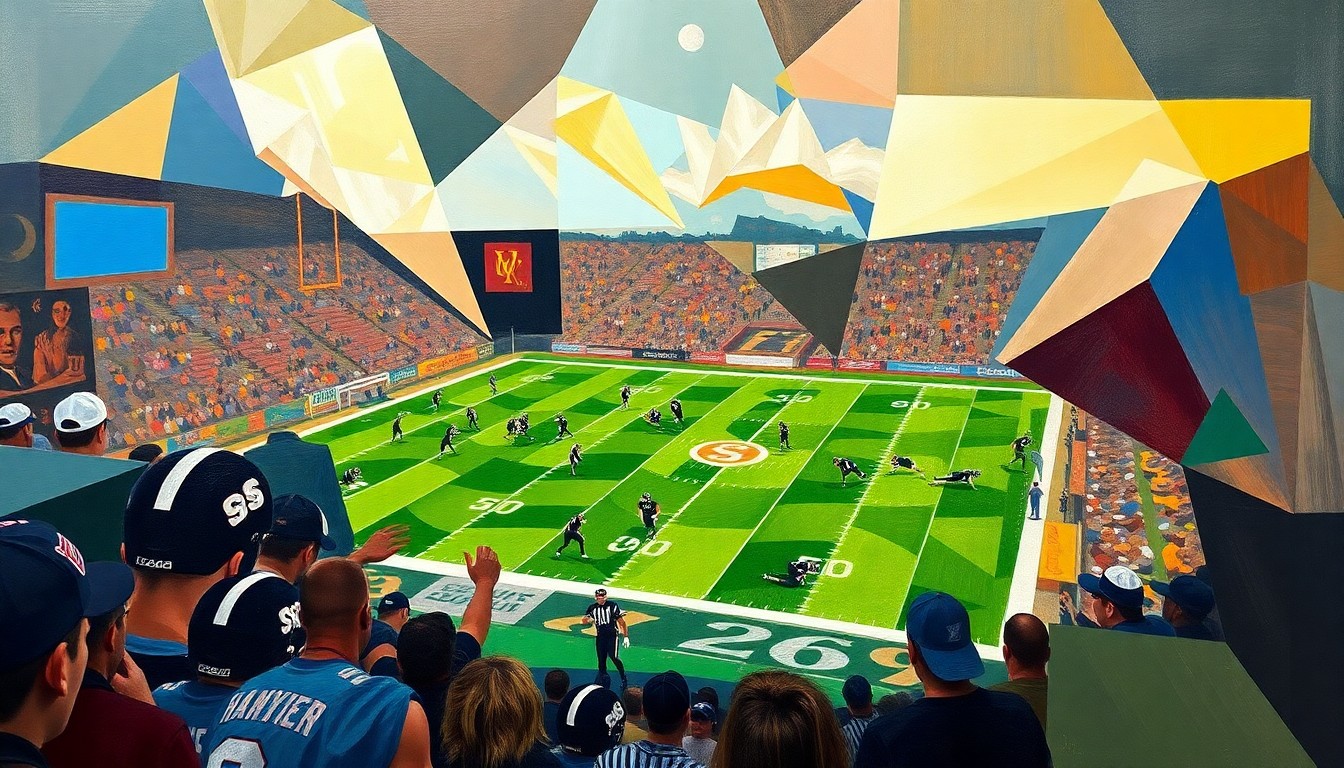 A cubist interpretation of the evolving culture of college football, where the traditional camaraderie and simplicity of the sport clash with the modern pursuit of financial gain and individual success.Hoover Today
Former Alabama star Marlon Humphrey recently spoke candidly about his thoughts on the transition from the Nick Saban era to the Kalen DeBoer era, as well as the evolving landscape of NIL (Name, Image, and Likeness) opportunities in college football. Humphrey, a Hoover native and former All-American cornerback, played a pivotal role in Alabama's 2015 national championship under Saban, but expressed a different path he may have taken if he had been on the team during Saban's retirement.
Why it matters
Humphrey's perspective offers a unique insight into the challenges of replacing a legendary coach like Saban, as well as the impact of NIL on the college football culture. His comments raise questions about the trade-offs between financial gain and the traditional college experience for student-athletes.
The details
In the interview, Humphrey acknowledged the difficulty of filling Saban's shoes, stating, 'To fill the shoes of Saban is obviously extremely hard.' He sees the current regime under DeBoer as a new era, a shift in the college football landscape, especially with the rise of NIL. Humphrey believes that no one has yet mastered the code to success in this new era, emphasizing the impact of NIL on the sport.
- Humphrey played a pivotal role in Alabama's 2015 national championship under Saban.
- Humphrey visited Alabama last summer to speak to current players about the importance of small actions and the process approach he learned from Saban.
- Humphrey missed out on the lucrative NIL contracts that are now prevalent in college football.
The players
Marlon Humphrey
A former Alabama star and All-American cornerback who played a key role in the team's 2015 national championship under Nick Saban.
Kalen DeBoer
The current head coach of the Alabama football team, succeeding the legendary Nick Saban.
Nick Saban
The former head coach of the Alabama football team, who led the team to multiple national championships during his tenure.
What they’re saying
“To fill the shoes of Saban is obviously extremely hard.”
— Marlon Humphrey, Former Alabama Star
“Humphrey's visit to Alabama last summer to speak to current players about the importance of small actions and the process approach he learned from Saban left a lasting impression.”
— Marlon Humphrey, Former Alabama Star
What’s next
Humphrey's insights offer a unique perspective on the evolution of college football, highlighting the tension between tradition and the pursuit of financial success. His comments raise questions about the impact of NIL on the culture and experience of college athletes, and the potential trade-offs between financial gain and the traditional college experience.
The takeaway
Humphrey's perspective on the current era of college football is one of both similarity and stark contrast to his playing days. While he fondly recalls the humble moments of his college experience, he believes that these experiences are now less accessible due to the increased focus on NIL and the 'standoffish' nature of modern college athletes.