- Today
- Holidays
- Birthdays
- Reminders
- Cities
- Atlanta
- Austin
- Baltimore
- Berwyn
- Beverly Hills
- Birmingham
- Boston
- Brooklyn
- Buffalo
- Charlotte
- Chicago
- Cincinnati
- Cleveland
- Columbus
- Dallas
- Denver
- Detroit
- Fort Worth
- Houston
- Indianapolis
- Knoxville
- Las Vegas
- Los Angeles
- Louisville
- Madison
- Memphis
- Miami
- Milwaukee
- Minneapolis
- Nashville
- New Orleans
- New York
- Omaha
- Orlando
- Philadelphia
- Phoenix
- Pittsburgh
- Portland
- Raleigh
- Richmond
- Rutherford
- Sacramento
- Salt Lake City
- San Antonio
- San Diego
- San Francisco
- San Jose
- Seattle
- Tampa
- Tucson
- Washington
China's Robot Revolution Reshapes Global Power Dynamics
As China surpasses the U.S. in robot production, experts warn of the 'Thucydides Trap' and call for cooperation to address shared challenges.
Apr. 18, 2026 at 4:25am
Got story updates? Submit your updates here. ›
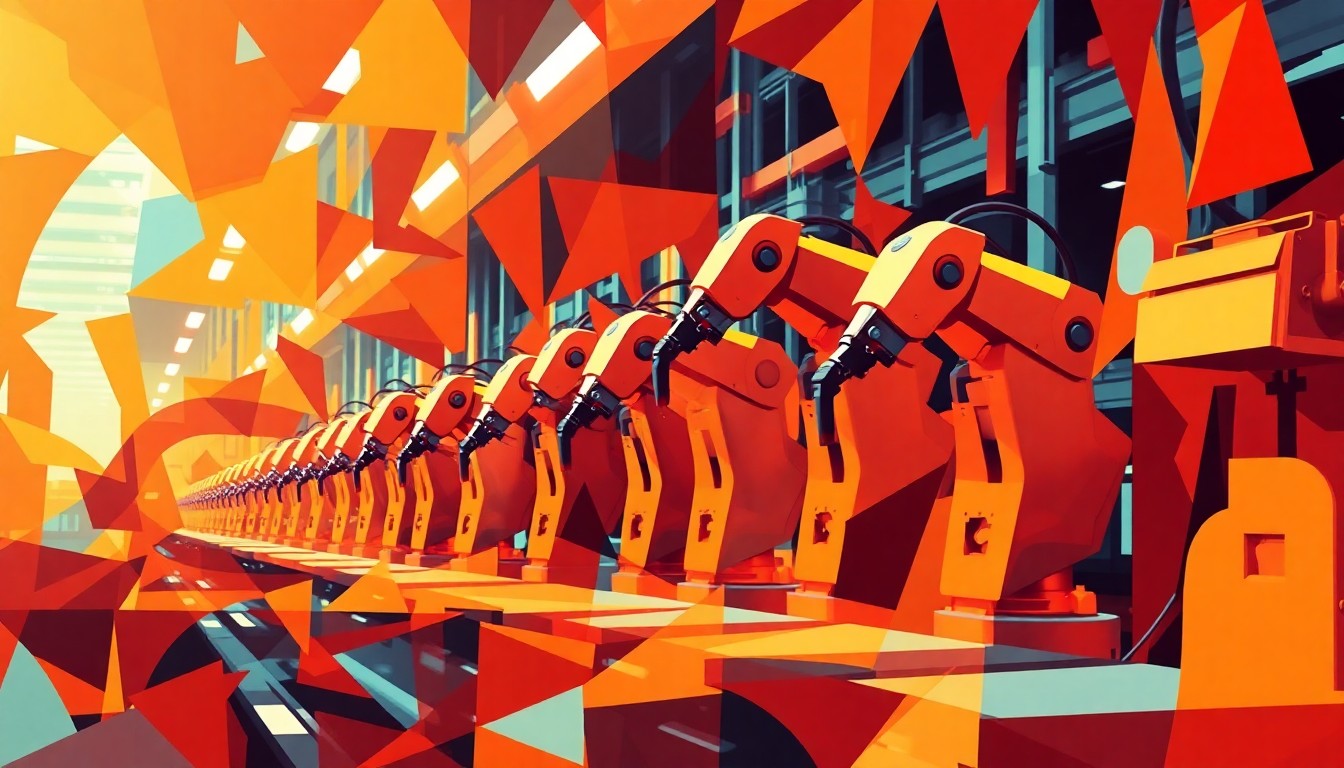 As China's robot revolution reshapes global industry, the race for technological supremacy heightens tensions between the world's two superpowers.Spokane Today
A new report highlights how China's rapid advancement in robotics and automation is shifting the global balance of economic and geopolitical power. With China now producing more robots than the rest of the world combined, experts caution that the U.S. risks falling into the 'Thucydides Trap' of inevitable conflict between an established power and a rising one. However, some argue that the U.S. and China should instead focus on collaborating to address shared challenges like poverty, climate change, and the responsible development of AI.
Why it matters
The rise of China's robot-powered economy has major implications for the future of global leadership and the U.S.-China relationship. As China solidifies its manufacturing dominance through automation, it could threaten America's economic and technological supremacy, raising the risk of heightened tensions and even conflict between the two superpowers.
The details
China is now the world's largest producer of industrial robots, with over 800,000 units installed in 2021 - more than the rest of the world combined. Experts attribute this to China's strategic investments in robotics, its response to labor shortages from the one-child policy, and the rise of 'dark factories' that can operate with minimal human intervention. This rapid automation is helping China's manufacturers become more efficient and cost-competitive, potentially eroding the U.S. industrial base.
- In 2021, China installed over 800,000 industrial robots, a new global record.
- The American Century is considered to have begun in 1917 when the U.S. entered World War I, and ended in 2017 with the inauguration of the current president.
The players
China
The world's most populous country and second-largest economy, which has surpassed the U.S. in the production and deployment of industrial robots.
United States
The current global superpower, which is facing the risk of falling behind China in key areas of technological and economic competitiveness.
Thucydides Trap
A term used by political scientists to describe the historical pattern of tension and conflict that often arises when an established great power is challenged by a rising power.
What’s next
Experts suggest the U.S. and China should focus on areas of potential cooperation, such as enforcing global sovereignty, eradicating poverty, solving the climate crisis, and ensuring the responsible development of artificial intelligence.
The takeaway
China's rapid advancement in robotics and automation is reshaping the global balance of power, raising the risk of conflict between the U.S. and China. However, rather than succumbing to the 'Thucydides Trap,' the two superpowers may be better served by finding ways to collaborate on shared challenges and ensure a more stable and prosperous future for all.
Spokane top stories



Spokane events

Apr. 19, 2026
Spokane Indians vs. Vancouver Canadians
Apr. 19, 2026
Spokane Zephyr FC vs. Sporting Club Jacksonville
Apr. 23, 2026
Pentagram, Dusted Angel