- Today
- Holidays
- Birthdays
- Reminders
- Cities
- Atlanta
- Austin
- Baltimore
- Berwyn
- Beverly Hills
- Birmingham
- Boston
- Brooklyn
- Buffalo
- Charlotte
- Chicago
- Cincinnati
- Cleveland
- Columbus
- Dallas
- Denver
- Detroit
- Fort Worth
- Houston
- Indianapolis
- Knoxville
- Las Vegas
- Los Angeles
- Louisville
- Madison
- Memphis
- Miami
- Milwaukee
- Minneapolis
- Nashville
- New Orleans
- New York
- Omaha
- Orlando
- Philadelphia
- Phoenix
- Pittsburgh
- Portland
- Raleigh
- Richmond
- Rutherford
- Sacramento
- Salt Lake City
- San Antonio
- San Diego
- San Francisco
- San Jose
- Seattle
- Tampa
- Tucson
- Washington
Quantico Today
By the People, for the People
How Media Vocabulary Shapes Perceptions of War
Experts warn that the language used to describe conflict can numb us to its realities
Apr. 17, 2026 at 9:20pm
Got story updates? Submit your updates here. ›
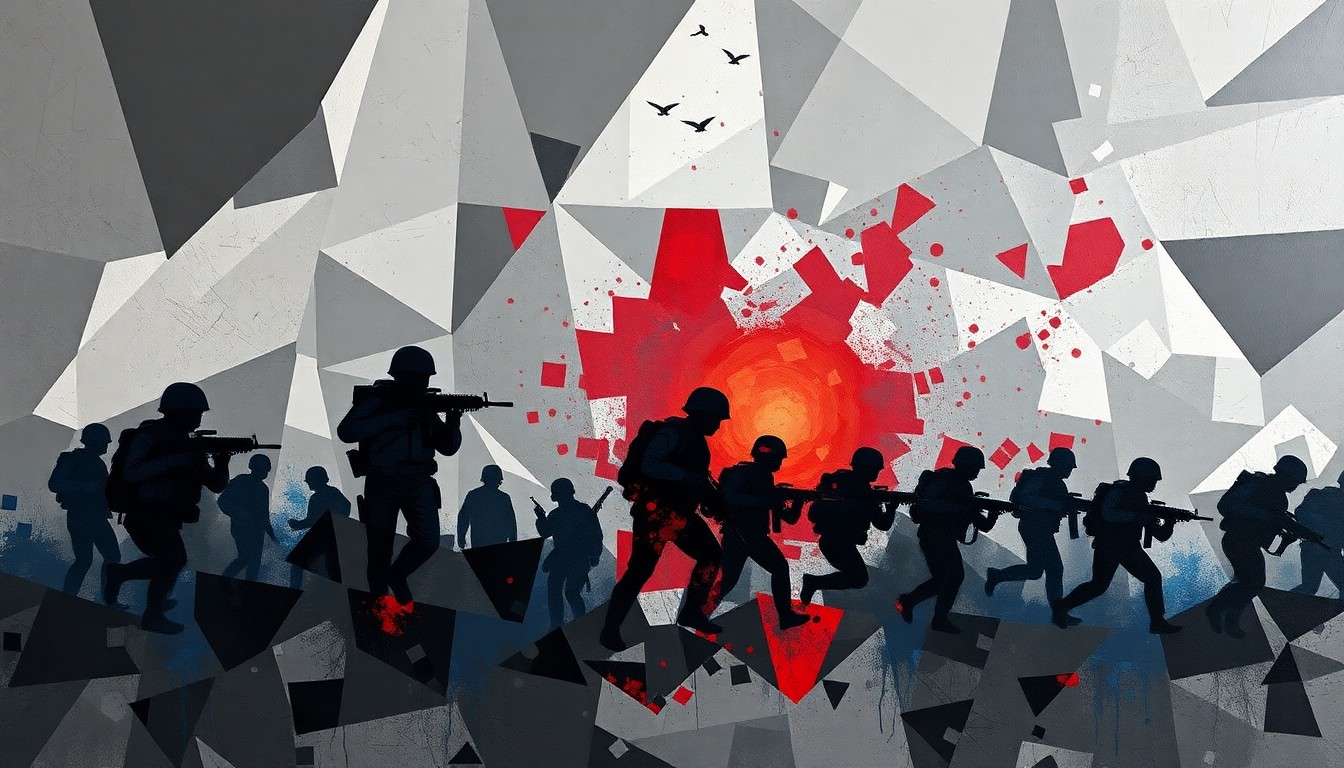 The use of media-inspired language to describe the realities of war can create an emotional distance that obscures the true human toll of conflict.Quantico Today
A psychology expert examines how the use of media-inspired terms, or 'mediaspeak,' to describe war and violence can create emotional distance and make such events seem less disturbing. The article explores how frequent exposure to violent imagery and the interchangeability of media vocabulary with real-life events can lead to a 'depletion of humanity' and an inability to fully empathize with the suffering caused by war.
Why it matters
The way the media portrays and describes war can have a significant impact on public perception and emotional response. Overreliance on sanitized, cinematic language to discuss real-world violence and conflict risks desensitizing people and making atrocities seem more palatable or acceptable.
The details
The article traces this phenomenon back to the Vietnam War, when graphic battlefield footage first became widely available. To cope with the disturbing nature of these images, a new vocabulary emerged that borrowed terms from movies and video games, such as 'collateral damage,' 'neutralized,' and 'high-value target.' Over time, this 'mediaspeak' has become increasingly common in discussions of real-world wars and conflicts, creating an emotional buffer that can prevent people from fully grasping the human toll of violence.
- The article was published on April 17, 2026.
The players
Richard M. Restak, M.D.
A neuropsychiatrist and author who has lectured at the FBI Academy in Quantico, Virginia on the neuropsychiatry of serial killers.
What they’re saying
“When this interchangeability between the vocabulary of media and real life progresses unchecked, events that ordinarily would lead to distress (widespread genocidal attacks on people competing for and with equal rights to the same land or resources, for example) routinely undergo an emotional flattening (the people depicted are 'targets' who must be 'neutralized').”
— Richard M. Restak, M.D., Neuropsychiatrist and author
“Watching images of death and destruction from a safe, comfy distance ('Pass the popcorn, please') has a long history. We've seen so much violence and mayhem in movies and on television screens all our lives that when we encounter real-life depictions of battlefield horrors, we tend, as in a movie theater, to sit back and enjoy the 'special effects.'”
— Richard M. Restak, M.D., Neuropsychiatrist and author
What’s next
The article does not mention any specific future events related to this story.
The takeaway
This article highlights the concerning trend of using media-inspired language to describe real-world violence and conflict, which can lead to a troubling desensitization and emotional distancing from the true human cost of war. Experts warn that we must be vigilant about recognizing and challenging this 'mediaspeak' in order to maintain our empathy and moral clarity.