- Today
- Holidays
- Birthdays
- Reminders
- Cities
- Atlanta
- Austin
- Baltimore
- Berwyn
- Beverly Hills
- Birmingham
- Boston
- Brooklyn
- Buffalo
- Charlotte
- Chicago
- Cincinnati
- Cleveland
- Columbus
- Dallas
- Denver
- Detroit
- Fort Worth
- Houston
- Indianapolis
- Knoxville
- Las Vegas
- Los Angeles
- Louisville
- Madison
- Memphis
- Miami
- Milwaukee
- Minneapolis
- Nashville
- New Orleans
- New York
- Omaha
- Orlando
- Philadelphia
- Phoenix
- Pittsburgh
- Portland
- Raleigh
- Richmond
- Rutherford
- Sacramento
- Salt Lake City
- San Antonio
- San Diego
- San Francisco
- San Jose
- Seattle
- Tampa
- Tucson
- Washington
Wellington Today
By the People, for the People
Rural Cancer Patients Face Daunting Hurdles to Access Care
A North Texas rancher's journey highlights the stark contrast between urban and rural healthcare landscapes
Apr. 10, 2026 at 5:55pm
Got story updates? Submit your updates here. ›
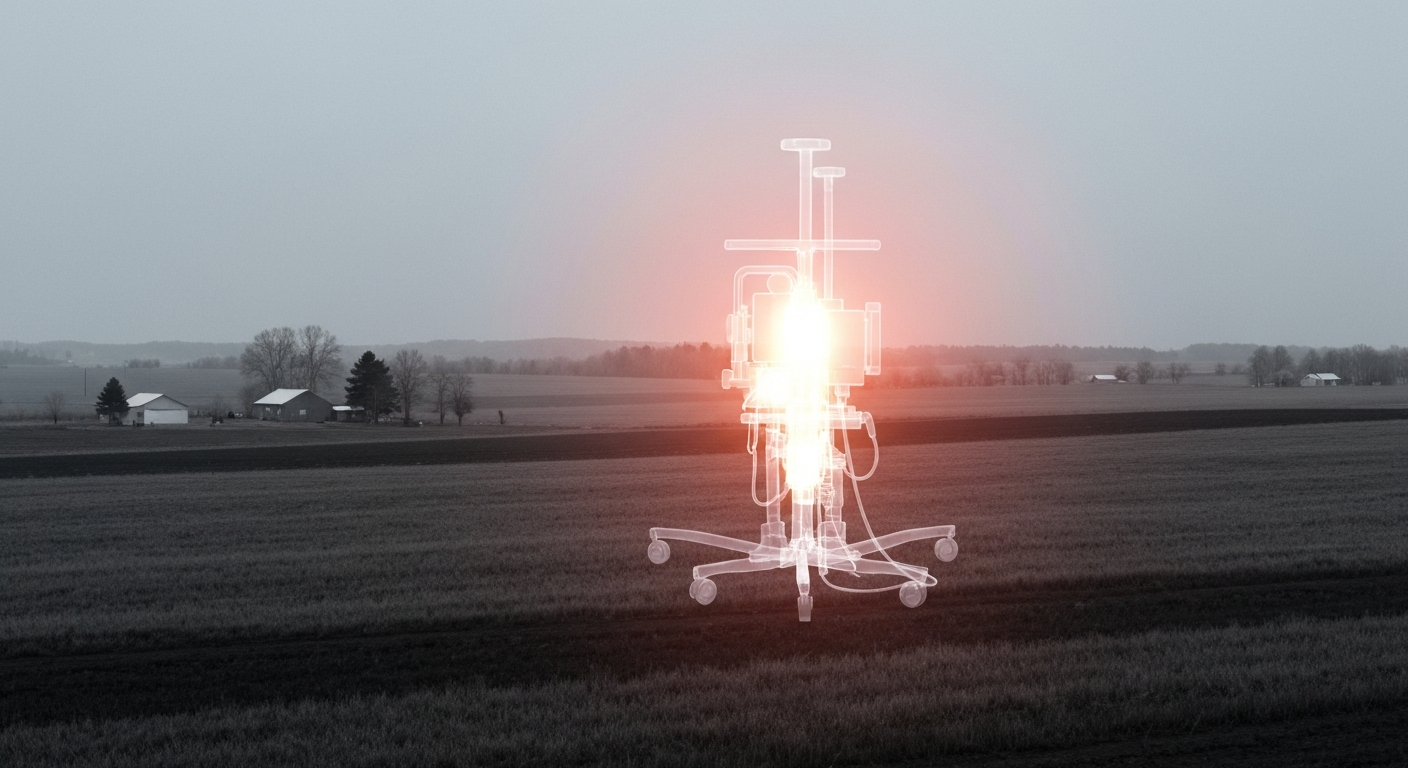 An X-ray view of the complex, fragile infrastructure that rural cancer patients must navigate to access specialized care.Wellington Today
In the vast rural expanse of America, cancer patients like 76-year-old Andy Henard face immense challenges accessing specialized care. Henard's story in North Texas illustrates the stark disparities, where distance, resources, and specialized services are often lacking compared to urban areas. Despite obstacles, a local infusion center has become a lifeline for Henard and his community, underscoring the power of human connection in rural healthcare.
Why it matters
Rural cancer patients are about 9% more likely to die from the disease compared to urban counterparts, due to factors like the shortage of oncologists and specialized treatment options outside of major cities. This disparity highlights the need for innovative solutions to address the healthcare access crisis in rural America.
The details
Henard, a 76-year-old rancher, had to travel over 200 miles to receive cutting-edge treatment for stage IV bladder cancer at MD Anderson in Houston. Many rural patients face similar difficult choices, having to forgo certain treatments due to the lack of specialized care in their areas. The financial pressures on rural hospitals, with 40% already operating at a loss, further limit access to care as they struggle to afford new, costly medications and complex treatment regimens.
- Henard was diagnosed with stage IV bladder cancer in 2025.
- He began receiving treatment at the infusion center in Childress Regional Medical Center in early 2026.
The players
Andy Henard
A 76-year-old rancher in North Texas who was diagnosed with stage IV bladder cancer.
Childress Regional Medical Center
A rural hospital in Texas that opened an infusion center to provide specialized cancer care to the local community.
Kathy Ivy
An oncology nurse at the Childress Regional Medical Center infusion center who is also a neighbor of Henard's from the nearby town of Wellington.
What’s next
Experts say addressing the healthcare disparities in rural America will require a multi-faceted approach, including policy changes and community-driven initiatives to improve access to specialized cancer care.
The takeaway
Henard's story highlights the stark realities faced by rural cancer patients, where distance, resources, and access to specialized care can mean the difference between life and death. However, the success of the Childress Regional Medical Center infusion center shows the power of community-driven solutions to bridge these gaps and provide a lifeline for those in need.