- Today
- Holidays
- Birthdays
- Reminders
- Cities
- Atlanta
- Austin
- Baltimore
- Berwyn
- Beverly Hills
- Birmingham
- Boston
- Brooklyn
- Buffalo
- Charlotte
- Chicago
- Cincinnati
- Cleveland
- Columbus
- Dallas
- Denver
- Detroit
- Fort Worth
- Houston
- Indianapolis
- Knoxville
- Las Vegas
- Los Angeles
- Louisville
- Madison
- Memphis
- Miami
- Milwaukee
- Minneapolis
- Nashville
- New Orleans
- New York
- Omaha
- Orlando
- Philadelphia
- Phoenix
- Pittsburgh
- Portland
- Raleigh
- Richmond
- Rutherford
- Sacramento
- Salt Lake City
- San Antonio
- San Diego
- San Francisco
- San Jose
- Seattle
- Tampa
- Tucson
- Washington
New Case Study Shows bioAffinity Technologies CyPath Lung Diagnostic Helps Avoid Unnecessary Lung Biopsy
CyPath Lung test results prompt follow-up imaging, confirm physician's suspicion of inflammation rather than cancer
Apr. 15, 2026 at 1:43pm
Got story updates? Submit your updates here. ›
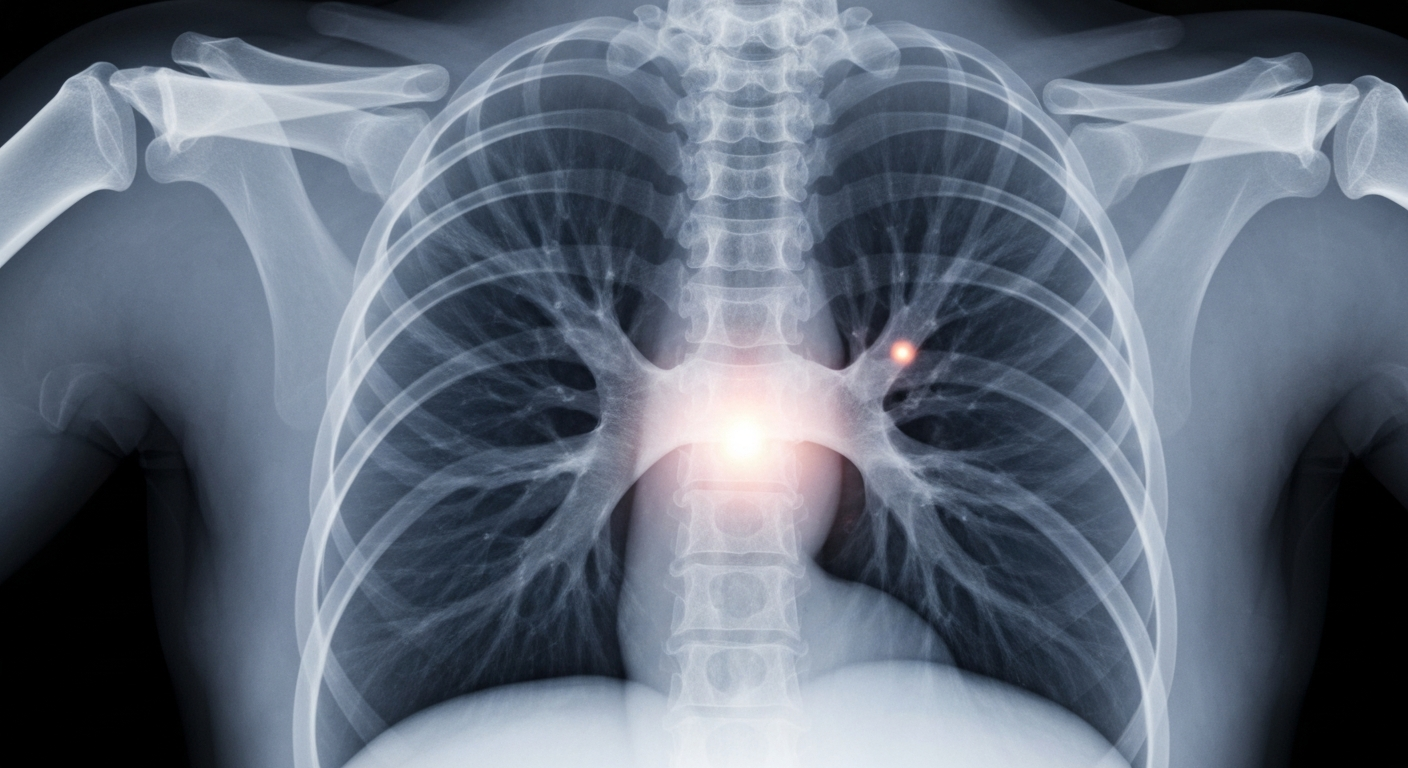 A noninvasive diagnostic test helps a physician avoid an unnecessary and risky lung biopsy procedure for a high-risk patient.San Antonio Today
bioAffinity Technologies, a biotechnology company advancing noninvasive diagnostics for lung cancer and other lung diseases, released a new clinical case study illustrating how its CyPath Lung test helped determine next steps for a high-risk patient with a suspicious pulmonary nodule. Despite imaging and risk models suggesting a high likelihood of cancer, the physician's CyPath Lung test result of 'Unlikely Malignancy' prompted additional imaging that confirmed the abnormality was due to a reversible inflammatory process rather than lung cancer, allowing the patient to avoid an unnecessary and risky biopsy procedure.
Why it matters
This case highlights how CyPath Lung can assist physicians with pulmonary nodule management by providing additional objective data to help confidently defer unnecessary and often risky invasive procedures, especially for patients with underlying lung disease or other complicating health conditions where biopsy can carry significant risks.
The details
The patient, a 70-year-old female with a 50 pack-year smoking history and smoking-related emphysema, presented with increased symptoms including cough, sputum production and shortness of breath. A low-dose CT scan identified a suspicious 30-millimeter lesion in the lower right lung with nearby enlarged lymph nodes, findings that can be associated with lung cancer. PET imaging suggested a high likelihood of malignancy, and lung cancer risk calculators estimated a high to intermediate probability of cancer. However, the treating pulmonologist, Dr. Daya Nadarajah, ordered the CyPath Lung test, which returned a negative 'Unlikely Malignancy' result. This prompted an additional CT scan that showed the concerning nodule had completely resolved, confirming the physician's suspicion of an inflammatory process rather than lung cancer.
- The patient presented with symptoms and underwent initial imaging in early 2026.
- The CyPath Lung test was ordered and returned a negative result, prompting follow-up imaging.
- The follow-up CT scan in 2026 showed the concerning nodule had resolved.
The players
bioAffinity Technologies, Inc.
A biotechnology company advancing noninvasive diagnostics for lung cancer and other lung diseases, and the developer of the CyPath Lung test.
Daya Nadarajah, MD
The treating pulmonologist who ordered the CyPath Lung test for the patient.
Gordon Downie, MD, PhD
The Chief Medical Officer of bioAffinity Technologies.
What they’re saying
“In this case, imaging findings and risk calculators suggested a very high probability of lung cancer, and we scheduled her for biopsy. I routinely use CyPath Lung in my practice and ordered the test for her. She received a negative result, 'Unlikely Malignancy,' which prompted another scan before we moved forward with the biopsy.”
— Daya Nadarajah, Treating Pulmonologist
“In patients with underlying lung disease, like emphysema, or other comorbidities like cardiovascular disease, biopsy can carry significant risks. Physicians must weigh the risks against the potential benefits. Adding CyPath Lung to the diagnostic pathway for indeterminate nodules provides additional objective data that can be very valuable when assessing patients with complicating health conditions. In this patient's case, CyPath Lung supported additional imaging before biopsy which resulted in saving the patient from a risky, costly and unnecessary procedure.”
— Gordon Downie, Chief Medical Officer, bioAffinity Technologies
What’s next
This case study is illustrative of a single patient experience and does not establish generalized clinical utility. Additional research and data will be needed to further demonstrate the value of CyPath Lung in pulmonary nodule management.
The takeaway
This case highlights how noninvasive diagnostic tests like CyPath Lung can provide valuable objective data to help physicians make more informed decisions about next steps for patients with suspicious lung abnormalities, especially those with underlying health conditions where invasive procedures carry heightened risks.
San Antonio top stories



San Antonio events

Apr. 15, 2026
Sonidos de San Antonio
Apr. 15, 2026
Southern Culture On the Skids