- Today
- Holidays
- Birthdays
- Reminders
- Cities
- Atlanta
- Austin
- Baltimore
- Berwyn
- Beverly Hills
- Birmingham
- Boston
- Brooklyn
- Buffalo
- Charlotte
- Chicago
- Cincinnati
- Cleveland
- Columbus
- Dallas
- Denver
- Detroit
- Fort Worth
- Houston
- Indianapolis
- Knoxville
- Las Vegas
- Los Angeles
- Louisville
- Madison
- Memphis
- Miami
- Milwaukee
- Minneapolis
- Nashville
- New Orleans
- New York
- Omaha
- Orlando
- Philadelphia
- Phoenix
- Pittsburgh
- Portland
- Raleigh
- Richmond
- Rutherford
- Sacramento
- Salt Lake City
- San Antonio
- San Diego
- San Francisco
- San Jose
- Seattle
- Tampa
- Tucson
- Washington
Mesquite Today
By the People, for the People
Feral Hogs Invade Texas Neighborhoods
Packs of wild pigs are tearing up lawns and gardens in residential areas across the state.
Apr. 13, 2026 at 11:04pm
Got story updates? Submit your updates here. ›
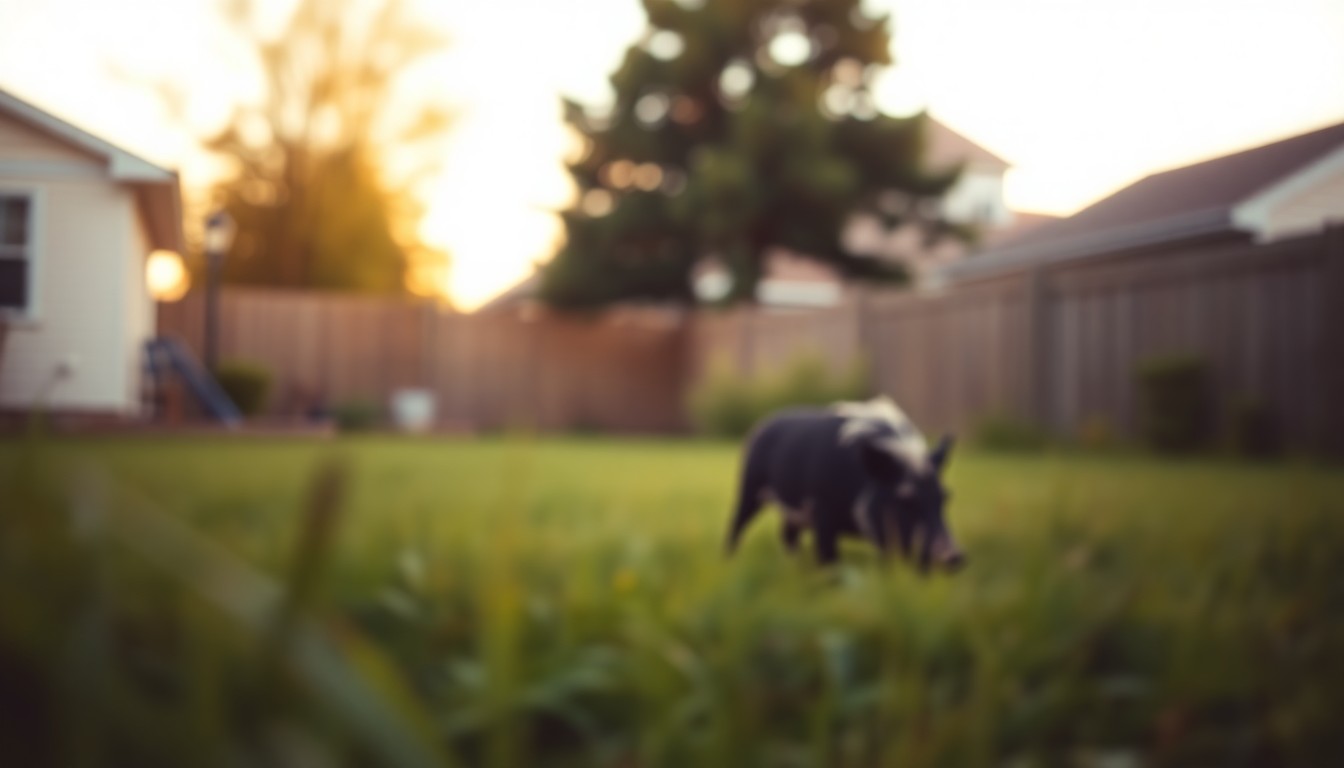 The encroachment of feral hogs into residential neighborhoods across Texas has disrupted the peace and order of suburban life.Mesquite Today
Feral hogs, an invasive species in Texas, are increasingly being spotted in residential neighborhoods across the state, causing significant damage to lawns, gardens, and other property. The problem has escalated in recent weeks, with reports of packs of up to 10 hogs at a time foraging in suburban areas and leaving behind churned soil and stripped plants. Residents in affected communities are pushing local authorities to find solutions to control the growing feral hog population.
Why it matters
Feral hogs are a major problem in Texas, causing an estimated $670 million in agricultural damage each year, along with another $200 million in control and mitigation costs. As the hog population continues to expand, the issue is now spilling over into suburban and urban areas, creating new challenges for homeowners and local governments.
The details
The problem has been particularly acute in Mesquite, where residents have reported seeing packs of feral hogs tearing up their lawns and gardens for weeks. In other parts of the state, such as Fort Bend County and San Antonio, similar sightings have been on the rise near residential areas. The feral hogs are able to adapt to a wide range of environments, including suburban settings, and their population growth is fueled by their rapid reproductive rate, with females able to breed as early as six months old.
- Over the last six weeks, the activity of feral hogs in Mesquite neighborhoods has picked up.
- In recent weeks, packs of feral hogs have been spotted tearing up lawns and gardens in residential areas across Texas.
The players
Ted Faulkner
A longtime resident of the Falcons Lair neighborhood in Mesquite, who has reported the feral hog problem to animal control and the city manager's office.
Jamie Calberg
A resident of San Antonio who has lived in the area for 30 years and has only recently started seeing feral hogs in residential areas near the Frost Bank Center and Salado Creek.
Texas A&M Natural Resources Institute
An organization that estimates Texas has the largest wild pig population in the country, with more than 3 million animals.
What they’re saying
“The assistant city manager is saying they have contacted Texas Parks and Wildlife to see if they can get some assistance, because Mesquite doesn't have the capability to trap these hogs.”
— Ted Faulkner, Resident
“I've lived here for 30 years and never seen hogs before, until they started building hundreds of homes five or six miles downstream from here.”
— Jamie Calberg, Resident
What’s next
Mesquite officials have contacted Texas Parks and Wildlife to seek assistance in controlling the feral hog population in the city, as the municipality lacks the resources to effectively trap the animals on its own.
The takeaway
The growing presence of feral hogs in Texas neighborhoods highlights the need for a comprehensive, statewide approach to managing this invasive species, which is causing significant damage to both agricultural and residential areas. Local governments and state agencies will need to work together to find effective solutions to this escalating problem.