- Today
- Holidays
- Birthdays
- Reminders
- Cities
- Atlanta
- Austin
- Baltimore
- Berwyn
- Beverly Hills
- Birmingham
- Boston
- Brooklyn
- Buffalo
- Charlotte
- Chicago
- Cincinnati
- Cleveland
- Columbus
- Dallas
- Denver
- Detroit
- Fort Worth
- Houston
- Indianapolis
- Knoxville
- Las Vegas
- Los Angeles
- Louisville
- Madison
- Memphis
- Miami
- Milwaukee
- Minneapolis
- Nashville
- New Orleans
- New York
- Omaha
- Orlando
- Philadelphia
- Phoenix
- Pittsburgh
- Portland
- Raleigh
- Richmond
- Rutherford
- Sacramento
- Salt Lake City
- San Antonio
- San Diego
- San Francisco
- San Jose
- Seattle
- Tampa
- Tucson
- Washington
Dual-Bacteria Sensors Convert Signals to Electricity
Researchers develop a flexible bioelectrical sensor system called e-COSENS that can monitor everything from human health to environmental contaminants.
Apr. 18, 2026 at 2:26am
Got story updates? Submit your updates here. ›
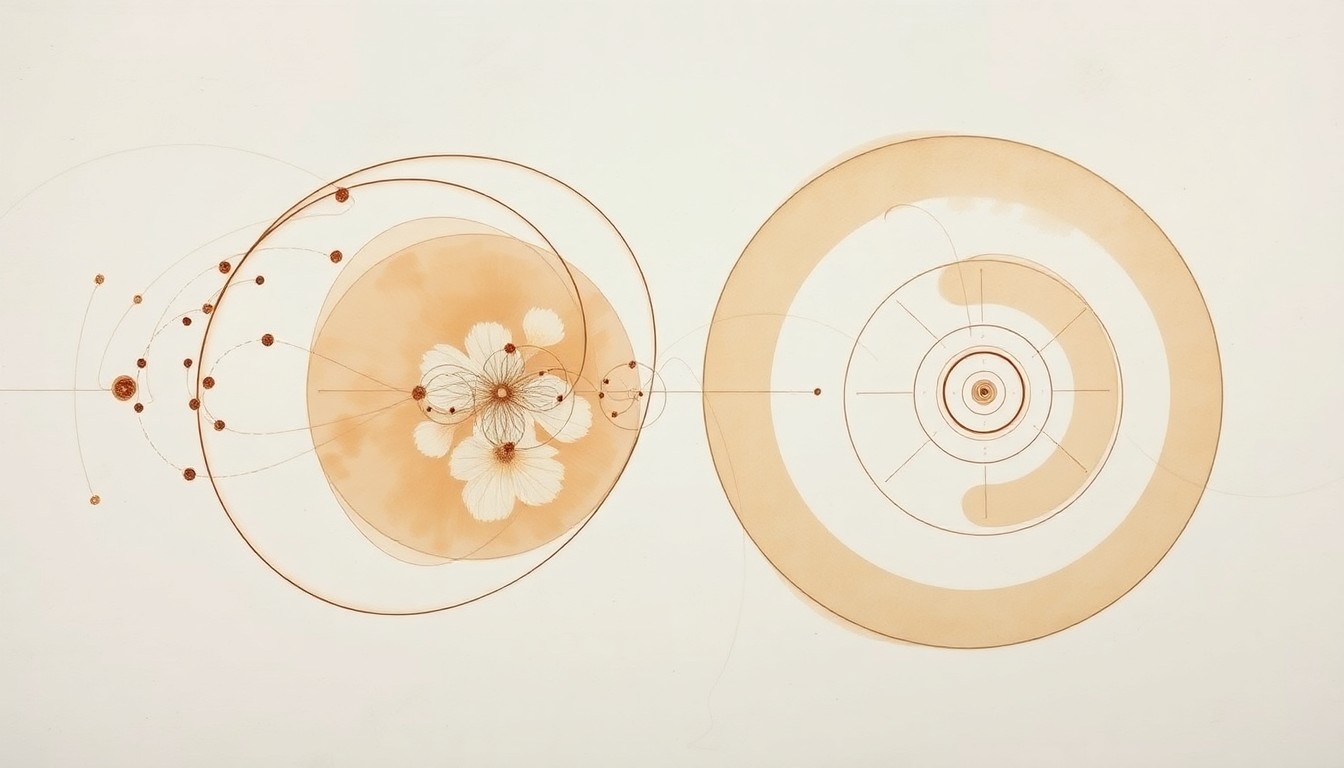 An abstract visualization of the flexible, modular e-COSENS bioelectronic sensor system, which harnesses the power of dual bacteria to convert environmental signals into electrical currents.Houston Today
Researchers at Rice University, Tufts University, and Baylor College of Medicine have developed a new bioelectrical sensor system called e-COSENS that uses a division of labor between two different bacteria to convert signals into electrical currents. The system is designed to be flexible and modular, allowing it to be used in a variety of environments to monitor everything from human health markers to environmental contaminants.
Why it matters
Bioelectrical sensing has long been a goal for researchers, but manipulating electricity-producing bacteria into useful sensors has proven challenging. The e-COSENS system overcomes this by splitting the sensing and electricity-producing functions between two different bacteria, making the system more flexible and scalable for real-world applications.
The details
The key to e-COSENS is the molecule quinone, which the bacterium L. plantarum uses to generate electricity. L. plantarum cannot produce its own quinone, so the researchers engineered E. coli to produce quinone only in the presence of specific analytes. When the E. coli releases the quinone, the L. plantarum uses it to generate an electrical signal that can be read by an electrode. The researchers tested the system for detecting heavy metals, inflammation markers, antimicrobial peptides, and antibiotics in various environments.
- The study was published in Nature Biotechnology in 2026.
- The researchers filed a provisional patent on the e-COSENS design in August 2024.
- An appendix to the patent was filed in June 2025 covering the use of the system with a multimeter.
- A separate provisional patent on the fabrication of a clay membrane for the system was filed in March 2025.
The players
Caroline Ajo-Franklin
The Ralph and Dorothy Looney Professor of Biosciences at Rice University and the corresponding author on this study. She is also the director of the Rice Synthetic Biology Institute.
Siliang Li
The first author on the study and a postdoctoral fellow.
Duolong Zhu
A researcher at Baylor College of Medicine who collaborated on the study.
Robert Britton
A researcher at Baylor College of Medicine who collaborated on the study.
Kundan Saha
A researcher at Tufts University who collaborated on the study.
Sameer Sonkusale
A researcher at Tufts University who collaborated on the study.
What they’re saying
“Bioelectrical sensing is by no means a new concept, but e-COSENS is the first system that allows us to easily engineer bioelectronic sensors in a modular manner, like assembling Legos, allowing us to potentially use them to monitor everything from human health to environmental contaminates.”
— Caroline Ajo-Franklin, Ralph and Dorothy Looney Professor of Biosciences, Rice University
“Instead of forcing a single bacterium to do everything, we split the job between two bacteria. That division of labor is what makes e-COSENS so flexible and powerful.”
— Siliang Li, Postdoctoral Fellow
“This simplified hardware dramatically lowers the barrier to using bioelectronic sensors outside the lab and opens possibilities for low-cost, field-ready diagnostics.”
— Siliang Li, Postdoctoral Fellow
“The strength of e-COSENS is the flexibility derived from sharing the work across multiple cells. In the same manner, the success of this research hinged on sharing expertise and work among my research group and our partners.”
— Caroline Ajo-Franklin, Ralph and Dorothy Looney Professor of Biosciences, Rice University
What’s next
The researchers plan to continue developing the e-COSENS system to expand its capabilities and explore new applications in fields like human health monitoring and environmental sensing.
The takeaway
The e-COSENS system represents a significant advancement in bioelectrical sensing, demonstrating how a modular, flexible approach that divides labor between multiple bacteria can unlock new possibilities for low-cost, real-world applications of this technology.
Houston top stories



Houston events

Apr. 18, 2026
Cynthia Lee Fontaine Presents: Drag Brunch at the Punch
Apr. 18, 2026
The Creekers
Apr. 18, 2026
Dethklok & Amon Amarth: The Amonklok Conquest