- Today
- Holidays
- Birthdays
- Reminders
- Cities
- Atlanta
- Austin
- Baltimore
- Berwyn
- Beverly Hills
- Birmingham
- Boston
- Brooklyn
- Buffalo
- Charlotte
- Chicago
- Cincinnati
- Cleveland
- Columbus
- Dallas
- Denver
- Detroit
- Fort Worth
- Houston
- Indianapolis
- Knoxville
- Las Vegas
- Los Angeles
- Louisville
- Madison
- Memphis
- Miami
- Milwaukee
- Minneapolis
- Nashville
- New Orleans
- New York
- Omaha
- Orlando
- Philadelphia
- Phoenix
- Pittsburgh
- Portland
- Raleigh
- Richmond
- Rutherford
- Sacramento
- Salt Lake City
- San Antonio
- San Diego
- San Francisco
- San Jose
- Seattle
- Tampa
- Tucson
- Washington
Bulk Carrier Struck by Projectiles in Gulf of Oman; Pakistani Navy Responds
Attack triggers spike in war-risk insurance premiums and supply chain disruptions
Apr. 14, 2026 at 3:49pm
Got story updates? Submit your updates here. ›
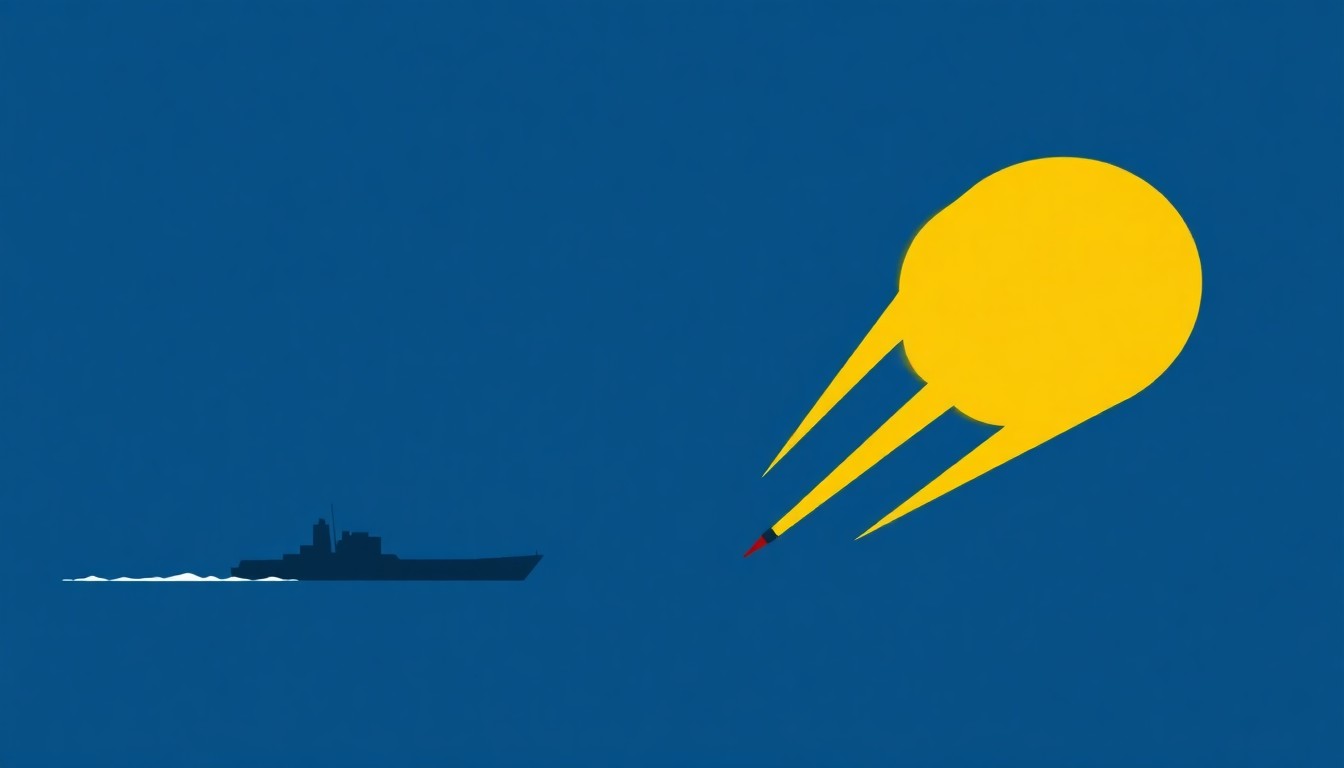 As tensions escalate in the Gulf of Oman, the threat of unidentified projectiles targeting commercial vessels disrupts global supply chains.Houston Today
On April 14, 2026, a bulk carrier transiting the Gulf of Oman was struck by two unidentified projectiles, sparking an onboard fire. The UK Maritime Trade Operations (UKMTO) confirmed the attack, which prompted an immediate response from a Pakistani Navy vessel to provide assistance and security in the volatile corridor. This incident highlights the growing instability in the Strait of Hormuz, a critical global energy chokepoint, as regional proxies and Western naval coalitions escalate tensions through attacks on commercial vessels.
Why it matters
The targeting of non-military commercial ships creates a climate of 'calculated instability,' forcing international powers to commit more naval assets to escort duties. This volatility triggers spikes in war-risk insurance premiums and forces a recalculation of global supply chain viability, impacting industries relying on Middle Eastern transit.
The details
The Gulf of Oman serves as the gateway to the Strait of Hormuz, through which roughly one-fifth of the world's total oil consumption passes daily. By targeting bulk carriers, aggressors signal that no vessel is truly neutral in these waters. The involvement of the Pakistani Navy underscores a regional security architecture that is increasingly fragmented, where bilateral cooperation often supersedes formal international coalitions.
- On April 14, 2026, a bulk carrier was struck by two unidentified projectiles while transiting the Gulf of Oman.
The players
UK Maritime Trade Operations (UKMTO)
A UK government organization that provides maritime security information and support to the global shipping industry.
Pakistani Navy
The naval force of the Islamic Republic of Pakistan, which responded to the attack on the bulk carrier in the Gulf of Oman.
Captain Alistair Vance
A senior fellow at the Maritime Security Institute who commented on the shift from targeted political strikes to indiscriminate attacks on commercial vessels.
Sarah Jenkins
The director of global risk at Aegis Maritime Security, who emphasized the need for the shipping industry to pivot toward autonomous defensive systems and diversified routing.
What they’re saying
“The shift from targeted political strikes to indiscriminate attacks on commercial bulk carriers suggests a dangerous erosion of the 'unwritten rules' of maritime engagement. We are seeing a transition toward total blockade psychology.”
— Captain Alistair Vance, Senior Fellow at the Maritime Security Institute
“We cannot rely on the benevolence of neighboring navies to save us from a missile. The industry must pivot toward autonomous defensive systems and diversified routing if we are to maintain the integrity of the global bulk trade.”
— Sarah Jenkins, Director of Global Risk at Aegis Maritime Security
What’s next
The incident on April 14 is a warning that the boundary between a commercial voyage and a combat zone is thinner than ever. As the situation evolves, the need for vetted maritime security contractors becomes paramount to bridge the gap between government intelligence and the practical reality of protecting commercial vessels in the Gulf of Oman.
The takeaway
This attack on a bulk carrier in the Gulf of Oman is a symptom of the deepening systemic instability in the Strait of Hormuz, a critical global energy chokepoint. The volatility in this region triggers spikes in war-risk insurance premiums and forces a recalculation of global supply chain viability, impacting industries relying on Middle Eastern transit.
Houston top stories



Houston events

Apr. 15, 2026
An Evening With Victor Jones: The Construct Tour 2026
Apr. 15, 2026
Damien Escobar
Apr. 15, 2026
Not Our First Rodeo