- Today
- Holidays
- Birthdays
- Reminders
- Cities
- Atlanta
- Austin
- Baltimore
- Berwyn
- Beverly Hills
- Birmingham
- Boston
- Brooklyn
- Buffalo
- Charlotte
- Chicago
- Cincinnati
- Cleveland
- Columbus
- Dallas
- Denver
- Detroit
- Fort Worth
- Houston
- Indianapolis
- Knoxville
- Las Vegas
- Los Angeles
- Louisville
- Madison
- Memphis
- Miami
- Milwaukee
- Minneapolis
- Nashville
- New Orleans
- New York
- Omaha
- Orlando
- Philadelphia
- Phoenix
- Pittsburgh
- Portland
- Raleigh
- Richmond
- Rutherford
- Sacramento
- Salt Lake City
- San Antonio
- San Diego
- San Francisco
- San Jose
- Seattle
- Tampa
- Tucson
- Washington
Fort Davis Today
By the People, for the People
Telehealth Brings Care to Aging Rural Texans
A retrofitted shipping container in Fort Davis is at the center of a new experiment in bringing telehealth to an aging rural population.
Apr. 3, 2026 at 12:04am
Got story updates? Submit your updates here. ›
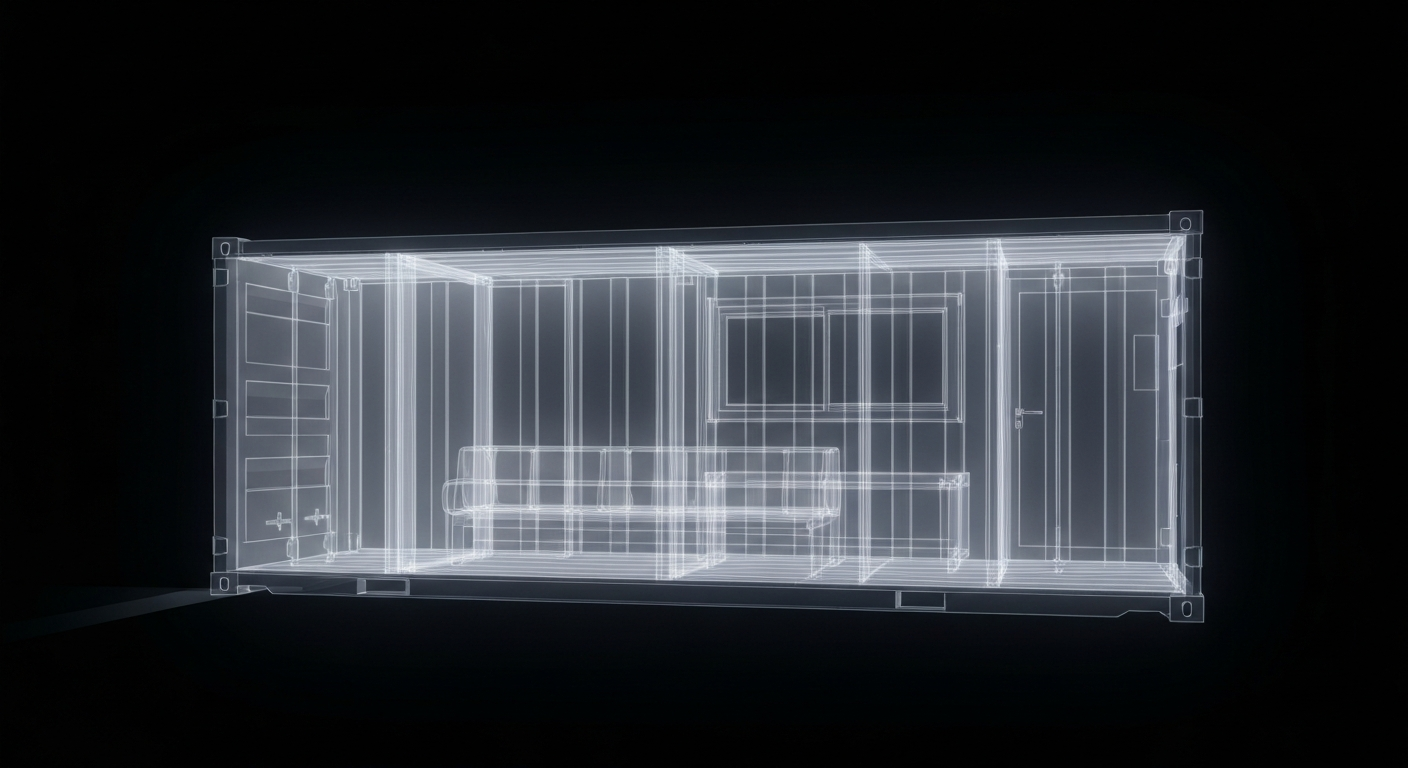 An X-ray view of the retrofitted shipping container that houses the Davis Mountain Clinic, a telehealth hub bringing virtual care to an aging rural population.Fort Davis Today
In Fort Davis, Texas, a telehealth hub called the Davis Mountain Clinic is using a retrofitted shipping container to connect residents, many of whom are older adults, with remote medical and mental health professionals. The clinic is a partnership between Texas A&M and Texas Tech universities, and it features a registered nurse who can perform exams and guide patients through virtual visits. This hybrid approach aims to overcome the challenges of limited broadband and digital literacy in rural areas, providing a physical space with reliable connectivity and local support.
Why it matters
Rural Texas communities face steep barriers to healthcare access, including limited broadband, few primary care providers, and scarce public transportation. The Davis Mountain Clinic's telehealth model offers a potential solution by bringing virtual care to an aging population while also providing in-person support and community connections.
The details
The Davis Mountain Clinic is located in a retrofitted 40-foot shipping container in Fort Davis, Texas. It features an exam room where patients can be seen by virtual physicians and specialists, with in-person support from a registered nurse named Carol Brewer. Brewer can take vital signs, perform physical exams, and guide patients through the telehealth visits, helping to overcome the challenges of limited digital literacy among older residents. The clinic also serves as a hub for the community, with Brewer often providing rides, managing medical records, and checking on patients who are unable to make it to the clinic.
- The Davis Mountain Clinic opened in October 2025.
- A 2025 report from the Texas Broadband Development Office found that Jeff Davis County, where Fort Davis is located, faces significant broadband challenges.
The players
Carol Brewer
A registered nurse who is the director of the Davis Mountain Clinic. She provides in-person support to patients during their virtual visits with remote providers.
Billy U. Philips, PhD
The former executive vice president of the The F. Marie Hall Institute for Rural and Community Health and current Grover E. Murray Professor at Texas Tech University.
Alma Montes
The director of Area Agency on Aging of the Permian Basin, who is working to help older people in rural Texas age in place.
Dr. Ariel Santos
A trauma and acute care surgeon and director of the Texas Tech Telemedicine Program, who uses telemedicine to triage patients across rural West Texas.
Brock Slabach
The chief operations officer at the National Rural Health Association (NRHA), who emphasizes that telehealth should be a supplement to, not a replacement for, in-person primary care.
What they’re saying
“The advantage is, when they come here to see the doctor, I manage the technology on my end, they don't have to deal with that at all...I'm the hands of the physician via telehealth. I have a stethoscope and an otoscope. So they can hear their lung sounds, heart sounds, bowel sounds, or look in their eyes, ears, nose. I facilitate that.”
— Carol Brewer, Registered Nurse and Director, Davis Mountain Clinic
“People who live in rural areas are older, sicker, and poorer than people who live in urban areas. Because of that, there are absolutely practical applications for telehealth and its clinical applications. But when you overlay with age dimension, then the delivery of care is really going to depend on local and personal circumstances.”
— Billy U. Philips, PhD, Former Executive Vice President, The F. Marie Hall Institute for Rural and Community Health; Current Grover E. Murray Professor, Texas Tech University
“Even if you pay for the platinum packages, you may at best receive only so-so service. Internet availability and quality are among the biggest hurdles [to accessing telehealth].”
— Amy Kiddy Villarreal, Director, Coastal Bend Aging and Disability Resource Center
“We want to improve their overall well-being. Even if we didn't fully get them to telehealth, there were gains along the way. They can now email family, send and receive photos, connect on social media, even Skype with loved ones. And we know, especially after COVID, that social connection has a real impact on health.”
— Alma Montes, Director, Area Agency on Aging of the Permian Basin
“Telehealth is not a substitute for good, high quality primary care. So in my opinion, it should be delivered as a tool for primary care and for specialists to be able to enhance the care continuum and hopefully, in many cases, reduce the need for in-person visits.”
— Brock Slabach, Chief Operations Officer, National Rural Health Association
What’s next
As rural communities continue to innovate in health care, discovering new ways to better serve their patient populations, they also face threats from cuts to broadband, health care, and education funding. Sustained investment will be crucial to maintaining the progress made in expanding telehealth and broadband access in these areas.
The takeaway
The Davis Mountain Clinic's hybrid telehealth model, combining virtual care with in-person support, offers a promising approach to overcoming the unique challenges of delivering healthcare to aging rural populations. By addressing both technological and human factors, the clinic is able to bring specialized medical expertise to a remote community and promote overall wellbeing through improved access and community connections.