- Today
- Holidays
- Birthdays
- Reminders
- Cities
- Atlanta
- Austin
- Baltimore
- Berwyn
- Beverly Hills
- Birmingham
- Boston
- Brooklyn
- Buffalo
- Charlotte
- Chicago
- Cincinnati
- Cleveland
- Columbus
- Dallas
- Denver
- Detroit
- Fort Worth
- Houston
- Indianapolis
- Knoxville
- Las Vegas
- Los Angeles
- Louisville
- Madison
- Memphis
- Miami
- Milwaukee
- Minneapolis
- Nashville
- New Orleans
- New York
- Omaha
- Orlando
- Philadelphia
- Phoenix
- Pittsburgh
- Portland
- Raleigh
- Richmond
- Rutherford
- Sacramento
- Salt Lake City
- San Antonio
- San Diego
- San Francisco
- San Jose
- Seattle
- Tampa
- Tucson
- Washington
Global Turning Points: Realigning Power in a Fractured World
Systemic shifts in 2026 echo the post-WWII and post-Cold War eras, creating new risks and opportunities for businesses and governments.
Apr. 16, 2026 at 12:26am
Got story updates? Submit your updates here. ›
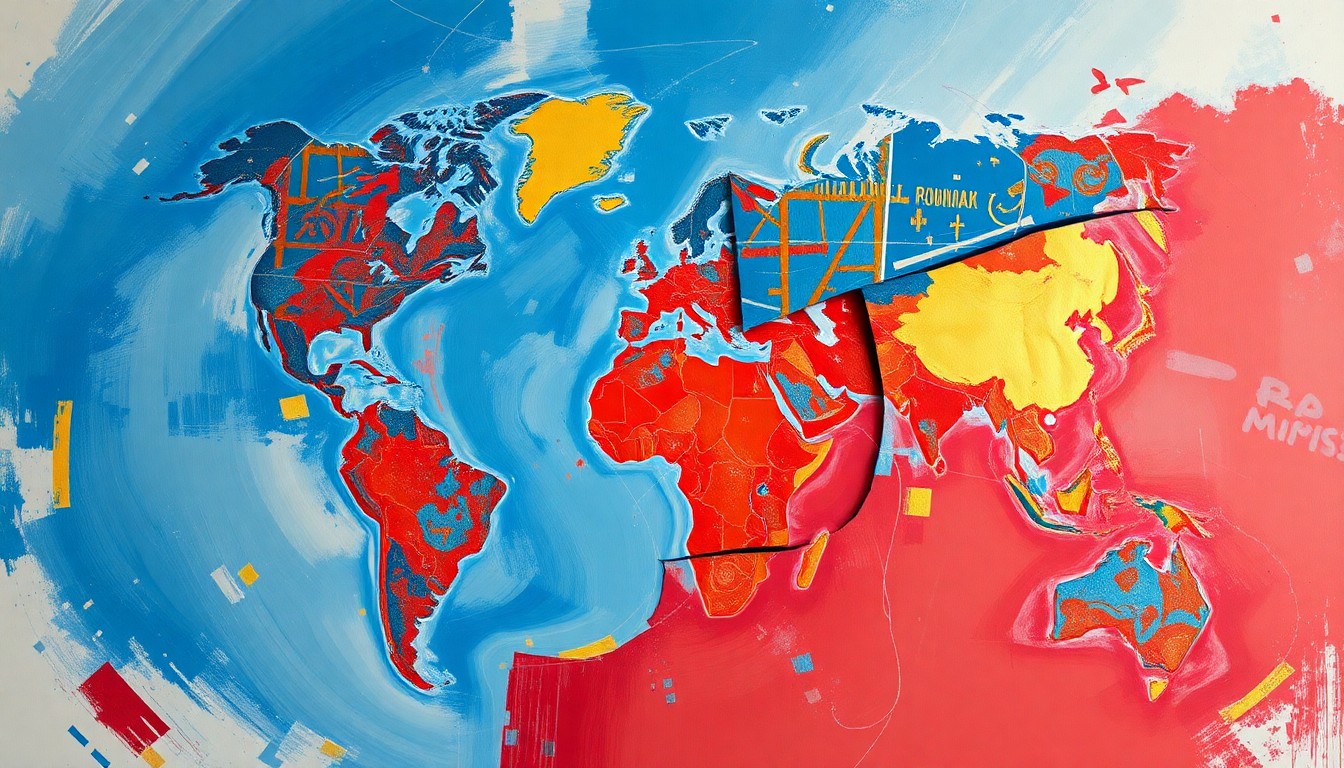 The rapid realignment of global power structures is shattering the old world order, creating new risks and opportunities for businesses and governments.Austin Today
Global geopolitical shifts in early 2026 have triggered a systemic realignment of power reminiscent of the post-WWII era and the 1991 collapse of the Soviet Union. This volatility is reshaping international trade, diplomatic alliances, and security frameworks, forcing nations to rapidly restructure their economic dependencies to avoid systemic collapse. Experts warn that the speed of this transition is what makes it dangerous, as the old rules of engagement are dead and the new ones haven't been written yet.
Why it matters
The current moment represents a pivotal turning point in global affairs, with parallels to the post-WWII and post-Cold War eras. The emergence of 'economic fortressing' and the decoupling of ideological blocs is creating new 'hard borders' and disrupting global supply chains, forcing businesses and governments to rapidly adapt to a multipolar, fragmented world order.
The details
The macro-economic shift is manifesting as local crises around the world. In the European Union, the struggle to maintain a unified energy policy has led to localized 'energy islands.' In Southeast Asia, the 'China Plus One' strategy has evolved into a full-scale industrial migration, overwhelming local infrastructure. Globally, the validity of long-term contracts is being questioned in courts as treaties are rewritten.
- In early 2026, global geopolitical shifts triggered a systemic realignment of power.
- On April 15, 2026, experts observed the dissolution of a decades-old global order.
The players
Dr. Elena Vance
A senior fellow at the Institute for Strategic Studies who notes that the current volatility is fundamentally different because it is accelerated by AI-driven economic warfare.
Associated Press
A news agency that can provide further analysis of these systemic shifts.
U.S. Department of State
The government agency that can provide official policy updates on the global realignment.
What they’re saying
“We are not merely seeing a trade war; we are seeing the wholesale decoupling of ideological blocs. The ability to move capital and goods across borders is now contingent on political alignment rather than market demand.”
— Dr. Elena Vance, Senior Fellow, Institute for Strategic Studies
What’s next
As governments struggle to provide clear guidance, the role of the independent expert becomes paramount. Organizations are seeking strategic risk management firms that can provide real-time intelligence on regional stability to navigate the legal and logistical complexities of the new multipolar world order.
The takeaway
The current moment represents a pivotal turning point in global affairs, with parallels to the post-WWII and post-Cold War eras. Businesses and governments must rapidly adapt to a multipolar, fragmented world order defined by 'economic fortressing' and the decoupling of ideological blocs, creating new risks and opportunities.
Austin top stories


Austin events

Apr. 16, 2026
Mamma Mia! (Touring)
Apr. 16, 2026
Dear Evan Hansen (Touring)
Apr. 16, 2026
Eve 6 & Fastball