- Today
- Holidays
- Birthdays
- Reminders
- Cities
- Atlanta
- Austin
- Baltimore
- Berwyn
- Beverly Hills
- Birmingham
- Boston
- Brooklyn
- Buffalo
- Charlotte
- Chicago
- Cincinnati
- Cleveland
- Columbus
- Dallas
- Denver
- Detroit
- Fort Worth
- Houston
- Indianapolis
- Knoxville
- Las Vegas
- Los Angeles
- Louisville
- Madison
- Memphis
- Miami
- Milwaukee
- Minneapolis
- Nashville
- New Orleans
- New York
- Omaha
- Orlando
- Philadelphia
- Phoenix
- Pittsburgh
- Portland
- Raleigh
- Richmond
- Rutherford
- Sacramento
- Salt Lake City
- San Antonio
- San Diego
- San Francisco
- San Jose
- Seattle
- Tampa
- Tucson
- Washington
Sisters Today
By the People, for the People
Dire Wildfire Forecast Looms Over Oregon
State climatologists warn Central Oregon faces one of its most worrisome fire seasons in years.
Apr. 15, 2026 at 12:00am
Got story updates? Submit your updates here. ›
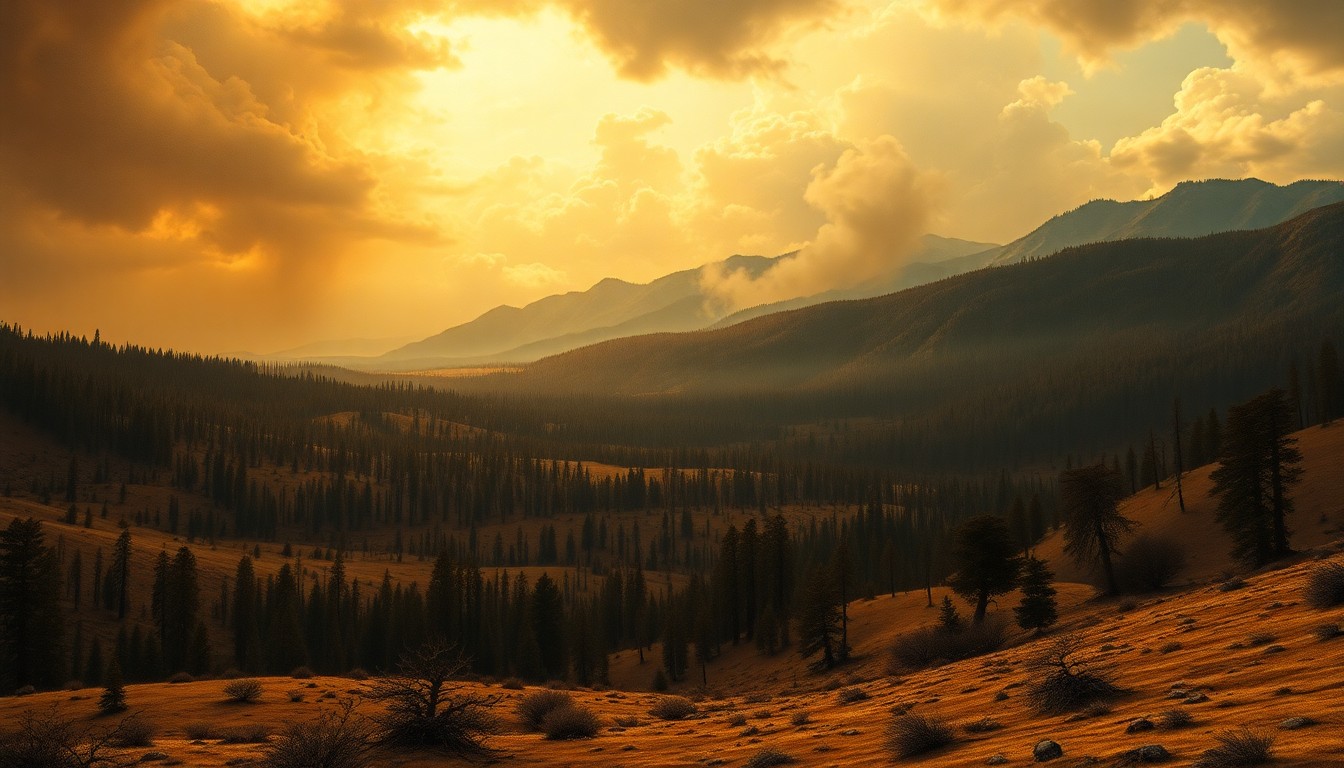 As drought and climate change intensify the wildfire risk in Oregon, a sense of foreboding looms over the state's vulnerable forests and communities.Sisters Today
Oregon's state climatologist Larry O'Neill warns that the state is facing a potentially catastrophic wildfire season in 2026, driven by record-low snowpack, early drought declarations, and an emerging El Niño climate pattern that historically brings warmer and drier conditions to the Pacific Northwest. Fire officials are preparing for an active season, urging homeowners to clear defensible space and cautioning residents about debris burning restrictions.
Why it matters
Wildfires pose a serious threat to communities in Central Oregon, where the wildland-urban interface puts homes and businesses at risk. The dire forecast for 2026 highlights the growing challenges posed by climate change and the need for proactive measures to mitigate fire risk.
The details
According to the report, Oregon entered the 2026 fire season with a snowpack that collapsed to roughly one-third of normal, a level that concerns emergency managers. The warm winter and dry spring conditions have set the stage for an above-normal wildfire potential across the Northwest east of the Cascades beginning in June. Additionally, the emerging El Niño climate pattern is expected to bring warmer, drier weather and increased lightning activity, further exacerbating the fire risk.
- In early April, the NOAA spring outlook projected continued dry conditions across the Pacific Northwest.
- On March 31, Governor Tina Kotek signed an executive order declaring drought emergencies in three eastern Oregon counties, months ahead of when drought declarations were typically issued.
- The El Niño-Southern Oscillation is expected to transition into a full El Niño pattern by May to July 2026, according to NOAA's Climate Prediction Center.
The players
Tony Prior
The chief of the Sisters-Camp Sherman Fire District, who addressed the Rotary Club of Sisters and shared his predictions for the coming fire season.
Larry O'Neill
Oregon's state climatologist, who warned that the state is facing a potentially catastrophic wildfire season in 2026 due to the record-low snowpack and other concerning indicators.
Tina Kotek
The governor of Oregon, who signed an executive order declaring drought emergencies in three eastern Oregon counties earlier than usual.
What they’re saying
“One of the things that has gotten my attention is the forecast El Niño which brings humidity, and in turn more lightning strikes.”
— Tony Prior, Fire Chief, Sisters-Camp Sherman Fire District
“It's a very worrying trend. Because it was so warm, our snowpack just really failed to build. Snowpack functionally acts as a reservoir for water. Basically, our largest reservoir of water is nearly empty at this point in time.”
— Larry O'Neill, State Climatologist, Oregon
“If you want a bad wildfire season, you start with a bad snowpack and right now, we can't predict exactly what it'll be like in summer. But if we have a dry spring, the bad snowpack then the dry spring will really put the nail in that coffin.”
— Larry O'Neill, State Climatologist, Oregon
What’s next
Fire officials are preparing accordingly, with the Oregon State Fire Marshal offering $35,000 grants to local fire departments to build staffing and capacity before the season peaks. Homeowners in the wildland-urban interface are urged to clear defensible space around their structures before conditions deteriorate.
The takeaway
The dire wildfire forecast for Oregon in 2026 highlights the growing threat posed by climate change and the need for proactive measures to mitigate fire risk. With record-low snowpack, early drought declarations, and an emerging El Niño pattern, the state is facing the potential for a catastrophic fire season that could have devastating impacts on communities in Central Oregon.