- Today
- Holidays
- Birthdays
- Reminders
- Cities
- Atlanta
- Austin
- Baltimore
- Berwyn
- Beverly Hills
- Birmingham
- Boston
- Brooklyn
- Buffalo
- Charlotte
- Chicago
- Cincinnati
- Cleveland
- Columbus
- Dallas
- Denver
- Detroit
- Fort Worth
- Houston
- Indianapolis
- Knoxville
- Las Vegas
- Los Angeles
- Louisville
- Madison
- Memphis
- Miami
- Milwaukee
- Minneapolis
- Nashville
- New Orleans
- New York
- Omaha
- Orlando
- Philadelphia
- Phoenix
- Pittsburgh
- Portland
- Raleigh
- Richmond
- Rutherford
- Sacramento
- Salt Lake City
- San Antonio
- San Diego
- San Francisco
- San Jose
- Seattle
- Tampa
- Tucson
- Washington
Youngstown Today
By the People, for the People
Trump Mocks Vance with AI-Generated Image, Sparking Deepfake Concerns
The controversy highlights the growing threat of synthetic media in U.S. elections, especially in key battleground states.
Apr. 19, 2026 at 2:33am
Got story updates? Submit your updates here. ›
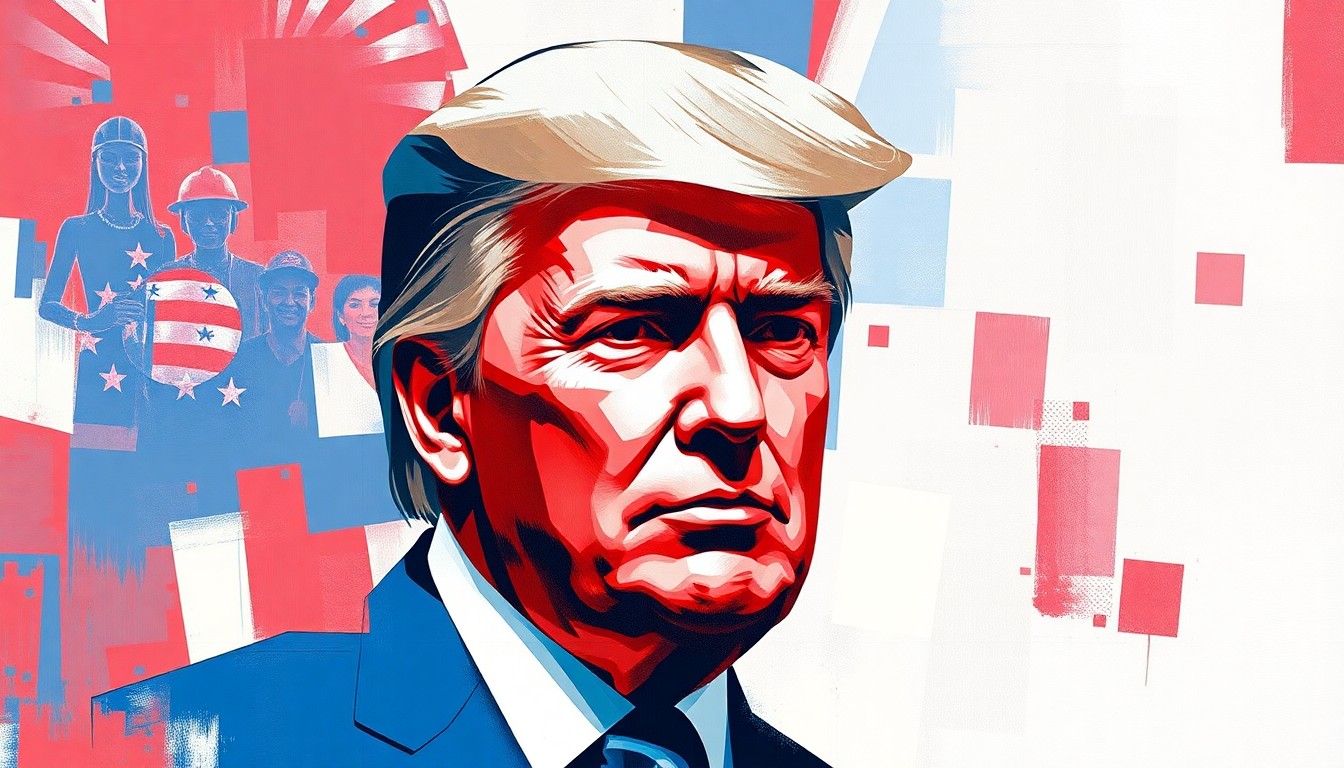 As AI-generated content becomes a growing threat to political discourse and electoral integrity, the weaponization of synthetic media raises urgent concerns about the erosion of shared reality.Youngstown Today
Former President Donald Trump has reignited debates over political loyalty, digital ethics, and the weaponization of synthetic media in U.S. elections by publicly mocking an AI-generated image depicting Ohio Senate candidate J.D. Vance in a blasphemous context. The incident marks at least the third time since 2024 that AI-generated content has been used to target Vance, underscoring a troubling escalation in the use of generative AI as a tool for political harassment.
Why it matters
The implications of this trend are especially acute in Ohio's post-industrial counties, where declining trust in national media has left residents more reliant on social platforms for news—a dynamic that increases vulnerability to AI-driven deception. The broader democratic risk lies in the erosion of shared reality, as AI-generated content blurs the line between fact and fabrication, complicating everything from judicial proceedings to public health messaging.
The details
The controversy began when Trump shared the fabricated image on his social media platform, Truth Social, on April 15, 2026, accompanied by a caption questioning Vance's religious sincerity. Though Vance quickly denounced the image as 'deeply offensive and artificially manufactured,' the episode marks at least the third time since 2024 that AI-generated content has been used to target him, according to a tracking log maintained by the nonpartisan Election Integrity Partnership. What distinguishes this moment is not just the recurrence, but the growing sophistication of the forgeries—this particular image passed initial detection by three major content moderation systems before being flagged by forensic analysts at Stanford's Internet Observatory.
- On April 15, 2026, former President Donald Trump shared the fabricated image on his social media platform, Truth Social.
- Since 2024, AI-generated content has been used to target J.D. Vance at least three times, according to a tracking log maintained by the nonpartisan Election Integrity Partnership.
The players
Donald Trump
The former President of the United States who shared the AI-generated image mocking J.D. Vance on his social media platform, Truth Social.
J.D. Vance
The Ohio Senate candidate who has been targeted by AI-generated content at least three times since 2024, according to a tracking log maintained by the nonpartisan Election Integrity Partnership.
Election Integrity Partnership
A nonpartisan organization that maintains a tracking log of AI-generated content used to target political figures, including J.D. Vance.
Stanford's Internet Observatory
A research group that helped flag the AI-generated image targeting J.D. Vance as a sophisticated forgery that passed initial detection by major content moderation systems.
Mike DeWine
The Ohio Governor who was the target of a similar deepfake video in March 2026, prompting the Ohio Secretary of State's office to issue a public advisory on synthetic media.
What they’re saying
“We're seeing a shift from isolated pranks to coordinated disinformation campaigns designed to exploit algorithmic amplification.”
— Dr. Lila Chen, Senior Researcher, Brennan Center for Justice's Democracy & Technology Program
“We've had constituents show up at polling places convinced a candidate said something they never did, based on a video they saw on Facebook. Our hands are tied unless we can partner with tech platforms and fact-checkers to move faster than the lies.”
— Maria Gonzalez, Director of Elections for Mahoning County
“The legal system isn't built to handle this volume of synthetic evidence. We need updated rules of evidence—and fast.”
— Thomas Reeves, Allegheny County Court Administrator
What’s next
Ohio's HB 482 (2025), which would criminalize the malicious distribution of deepfakes intended to influence elections, is expected to be reintroduced following the Vance incident.
The takeaway
The real danger isn't just the fake image—it's the slow normalization of doubt. Every time a politician must deny a fabrication, the public's grasp on reality loosens just a little more. Addressing this crisis requires coordinated action from technology platforms, election administrators, and legal professionals to build resilience through trusted local institutions and fact-checking efforts.