- Today
- Holidays
- Birthdays
- Reminders
- Cities
- Atlanta
- Austin
- Baltimore
- Berwyn
- Beverly Hills
- Birmingham
- Boston
- Brooklyn
- Buffalo
- Charlotte
- Chicago
- Cincinnati
- Cleveland
- Columbus
- Dallas
- Denver
- Detroit
- Fort Worth
- Houston
- Indianapolis
- Knoxville
- Las Vegas
- Los Angeles
- Louisville
- Madison
- Memphis
- Miami
- Milwaukee
- Minneapolis
- Nashville
- New Orleans
- New York
- Omaha
- Orlando
- Philadelphia
- Phoenix
- Pittsburgh
- Portland
- Raleigh
- Richmond
- Rutherford
- Sacramento
- Salt Lake City
- San Antonio
- San Diego
- San Francisco
- San Jose
- Seattle
- Tampa
- Tucson
- Washington
25-Year-Old's Dry Breast Skin Leads to Life-Threatening Diagnosis
Maddie Squire's case highlights how easily early signs of breast cancer can be mistaken for common skin conditions.
Apr. 18, 2026 at 10:06am
Got story updates? Submit your updates here. ›
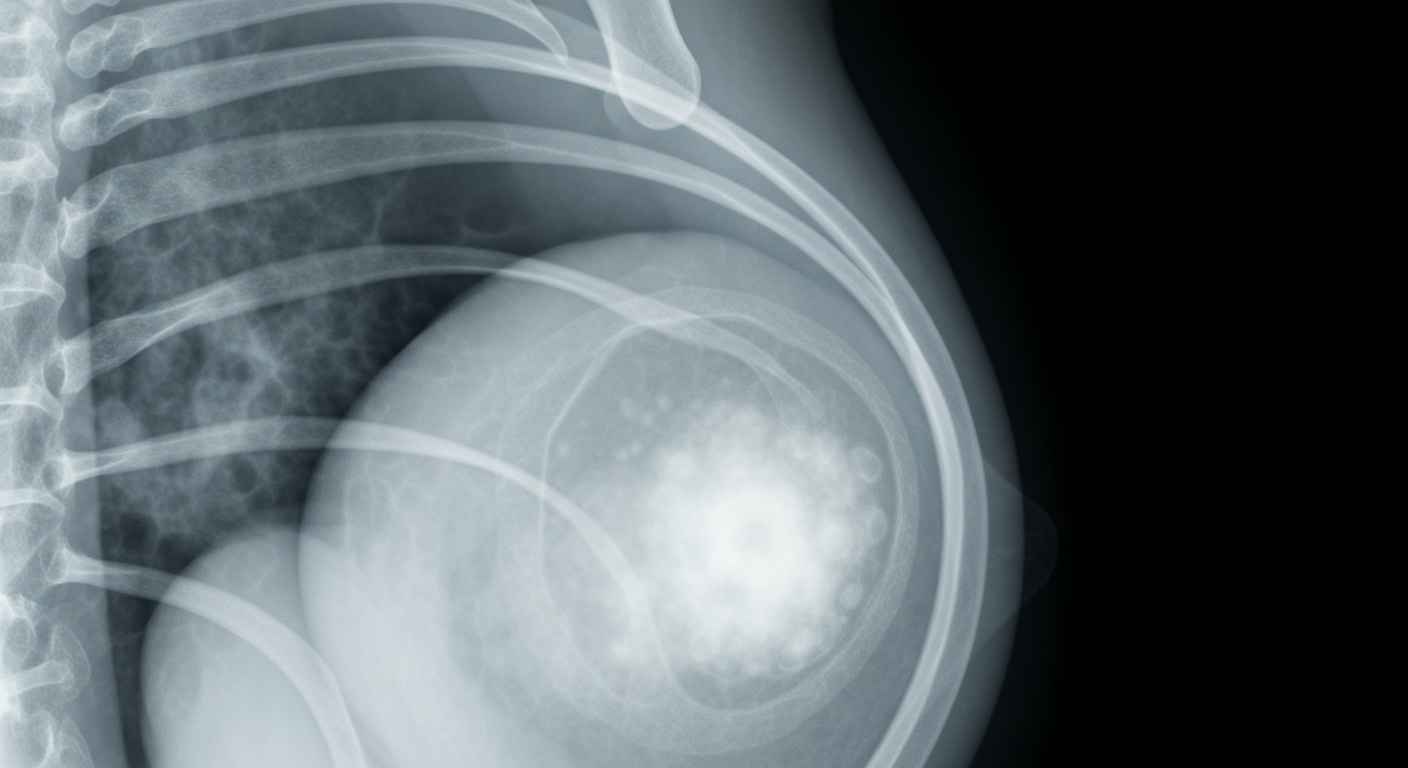 An X-ray image reveals the internal structures of a breast, highlighting the presence of a cancerous growth that may have initially presented as seemingly innocuous skin changes.Cleveland Today
A 25-year-old woman who initially dismissed persistent dry skin on her breast as a minor irritation was later diagnosed with stage 2 breast cancer, underscoring how easily early signs of the disease can be overlooked. Maddie Squire first noticed the skin changes weeks before seeking medical attention, assuming it was just a minor issue. However, when the symptoms persisted and worsened, a biopsy confirmed she had invasive ductal carcinoma that had progressed to stage 2.
Why it matters
Squire's case highlights a critical warning sign often overlooked - Paget's disease of the breast, a rare form of breast cancer that originates in the skin of the nipple and can closely resemble eczema or dermatitis. Medical experts note that while most nipple rashes are not cancerous, persistent changes should never be ignored, as any unusual skin alterations on the breast warrant prompt evaluation.
The details
Weeks after first noticing the dry, flaky skin on her nipple, Squire consulted a healthcare provider. A breast biopsy confirmed the diagnosis: invasive ductal carcinoma, the most common form of breast cancer, which had progressed to stage 2. Stage 2 breast cancer indicates the tumor is larger than 2 centimeters or has spread to nearby lymph nodes, though it remains localized to the breast area. Following her diagnosis, Squire underwent treatment that included surgery.
- Maddie Squire first noticed dry, flaky skin on her nipple several weeks before seeking medical attention.
- Weeks later, after the skin changes persisted and worsened, Squire consulted a healthcare provider.
The players
Maddie Squire
A 25-year-old woman who was diagnosed with stage 2 breast cancer after initially dismissing persistent dry skin on her breast as a minor irritation.
Cleveland Clinic
A medical organization that provides information about Paget's disease of the breast, a rare form of breast cancer that can resemble eczema or dermatitis.
Mayo Clinic
A medical organization that emphasizes that any unusual skin changes on the breast, including redness, flaking, thickening, or nipple discharge, warrant prompt medical evaluation.
What they’re saying
“I thought it was just dry skin. I never imagined it could be cancer. Now I want others to know: if something doesn't feel right, get it checked. It could save your life.”
— Maddie Squire
The takeaway
Squire's experience serves as a powerful reminder that cancer does not always present with a lump, and that seemingly insignificant skin changes can sometimes signal a serious underlying condition. Her case underscores the importance of young women being familiar with the normal look and feel of their breasts, and seeking prompt medical attention for any persistent abnormalities, even if they seem minor.
Cleveland top stories



Cleveland events

Apr. 19, 2026
Ray McNiece and Tongue in Groove
Apr. 19, 2026
Cleveland Monsters vs. Grand Rapids Griffins
Apr. 19, 2026
Take The Flame, Death & Exhale, Moneyball