- Today
- Holidays
- Birthdays
- Reminders
- Cities
- Atlanta
- Austin
- Baltimore
- Berwyn
- Beverly Hills
- Birmingham
- Boston
- Brooklyn
- Buffalo
- Charlotte
- Chicago
- Cincinnati
- Cleveland
- Columbus
- Dallas
- Denver
- Detroit
- Fort Worth
- Houston
- Indianapolis
- Knoxville
- Las Vegas
- Los Angeles
- Louisville
- Madison
- Memphis
- Miami
- Milwaukee
- Minneapolis
- Nashville
- New Orleans
- New York
- Omaha
- Orlando
- Philadelphia
- Phoenix
- Pittsburgh
- Portland
- Raleigh
- Richmond
- Rutherford
- Sacramento
- Salt Lake City
- San Antonio
- San Diego
- San Francisco
- San Jose
- Seattle
- Tampa
- Tucson
- Washington
Teddy Roosevelt Inducted into Pro Football Hall of Fame
The 26th president's executive intervention saved the sport from extinction in the early 20th century.
Apr. 19, 2026 at 5:03am
Got story updates? Submit your updates here. ›
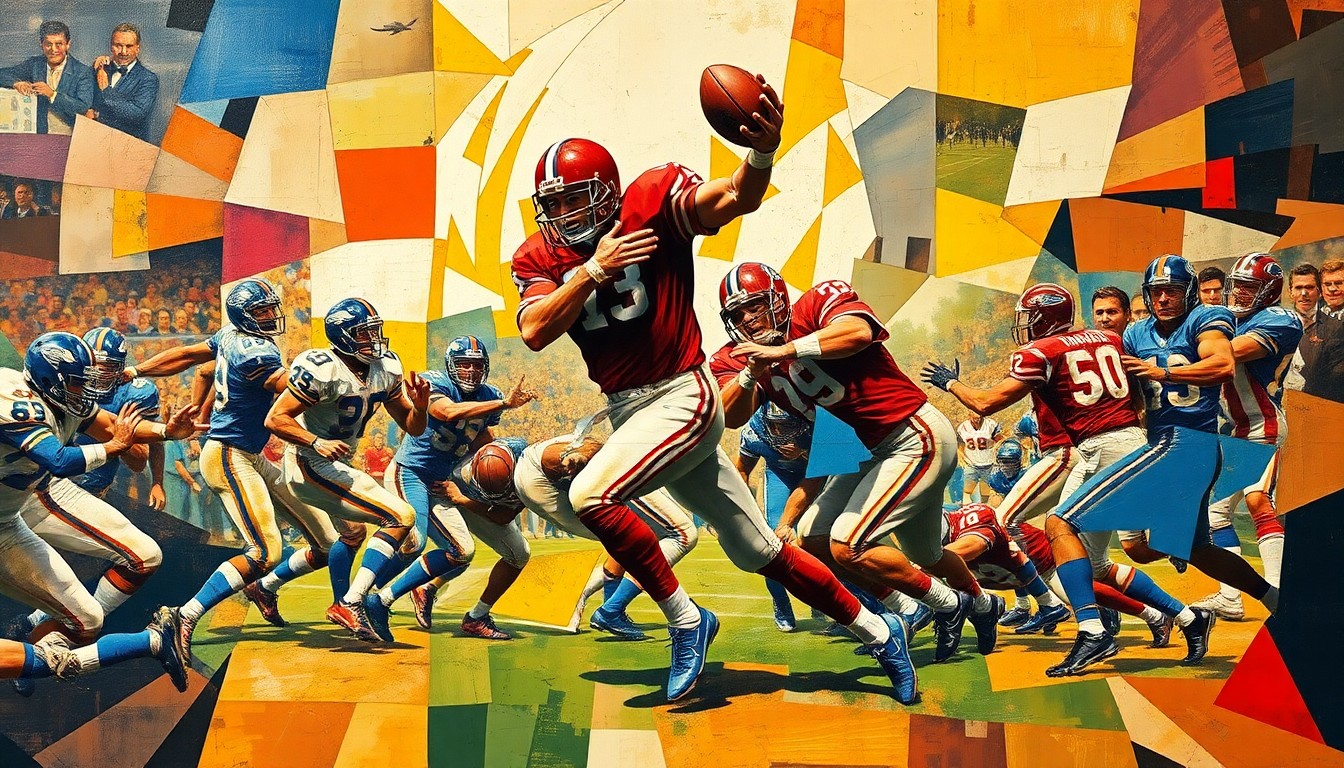 A cubist interpretation of a pivotal moment in football history, when President Theodore Roosevelt intervened to save the sport from extinction.Canton Today
In 1905, football was on the verge of being outlawed due to its extreme violence and high casualty rates. President Theodore Roosevelt summoned the leaders of the top college football programs to the White House and challenged them to reform the game's rules or face its abolition. This meeting led to key rule changes that fundamentally transformed the sport, paving the way for the modern professional game. While Roosevelt never played or worked in the NFL, his pivotal role in preserving and evolving football makes him a worthy inductee into the Pro Football Hall of Fame's 'Pioneers' category.
Why it matters
Without Roosevelt's executive intervention, the sport of football may have been banned entirely, severing the lineage that led from the chaotic early days of the college game to the polished professionalism of the modern NFL. By elevating football to a matter of national importance, Roosevelt helped establish the sport as a vital part of American culture and identity, enabling it to eventually eclipse baseball as the country's most popular pastime.
The details
In the autumn of 1905, the sport of football was on the verge of being outlawed due to its extreme violence and high casualty rates. That year alone saw 18 deaths and over 150 serious injuries on the college gridiron. University presidents were moving to abolish the sport entirely, replacing it with the perceived 'gentlemanly' safety of rugby. It was in this moment of existential dread that President Theodore Roosevelt stepped in, summoning the leaders of the 'Big Three' football powers - Harvard, Yale, and Princeton - to the White House. Roosevelt did not issue a decree, but rather issued a challenge: reform the game's rules to eliminate the 'dirty' play, or he would be forced to ban the sport via executive pressure. This meeting is widely considered the catalyst for the formation of the Intercollegiate Athletic Association of the United States (IAAUS), which would later become the NCAA.
- In the autumn of 1905, football was on the verge of being outlawed due to its extreme violence and high casualty rates.
- In October 1905, President Theodore Roosevelt summoned the leaders of the 'Big Three' football powers - Harvard, Yale, and Princeton - to the White House.
- The 1906 Rulebook, which fundamentally transformed the game, was the result of Roosevelt's intervention.
The players
Theodore Roosevelt
The 26th President of the United States, who intervened to save the sport of football from extinction in the early 20th century.
Intercollegiate Athletic Association of the United States (IAAUS)
The organization formed in the aftermath of Roosevelt's White House meeting, which would later become the NCAA.
What they’re saying
“I believe in rough games and in wild games, and I do not feel a particle of sympathy with the abstract sentiments of the people who die of horror because there is a roughness in the game or because there is an occasional casualty.”
— Theodore Roosevelt, 26th President of the United States
What’s next
The Pro Football Hall of Fame will formally induct Theodore Roosevelt into its 'Pioneers' category during a ceremony in Canton, Ohio later this year.
The takeaway
Theodore Roosevelt's pivotal role in preserving and evolving the sport of football, despite never playing or working in the professional game, makes him a worthy inductee into the Pro Football Hall of Fame. His executive intervention in 1905 led to key rule changes that fundamentally transformed the sport, paving the way for the modern professional game. By elevating football to a matter of national importance, Roosevelt helped establish the sport as a vital part of American culture and identity.