- Today
- Holidays
- Birthdays
- Reminders
- Cities
- Atlanta
- Austin
- Baltimore
- Berwyn
- Beverly Hills
- Birmingham
- Boston
- Brooklyn
- Buffalo
- Charlotte
- Chicago
- Cincinnati
- Cleveland
- Columbus
- Dallas
- Denver
- Detroit
- Fort Worth
- Houston
- Indianapolis
- Knoxville
- Las Vegas
- Los Angeles
- Louisville
- Madison
- Memphis
- Miami
- Milwaukee
- Minneapolis
- Nashville
- New Orleans
- New York
- Omaha
- Orlando
- Philadelphia
- Phoenix
- Pittsburgh
- Portland
- Raleigh
- Richmond
- Rutherford
- Sacramento
- Salt Lake City
- San Antonio
- San Diego
- San Francisco
- San Jose
- Seattle
- Tampa
- Tucson
- Washington
Spring Valley Today
By the People, for the People
Asylum-Seeking Migrants Face Increasing Pressure Amid Immigration Crackdown
Many migrants who entered the U.S. during the 2021-2023 border surge now find themselves at risk of arrest and deportation, even as they pursue legal asylum claims.
Apr. 12, 2026 at 8:18am
Got story updates? Submit your updates here. ›
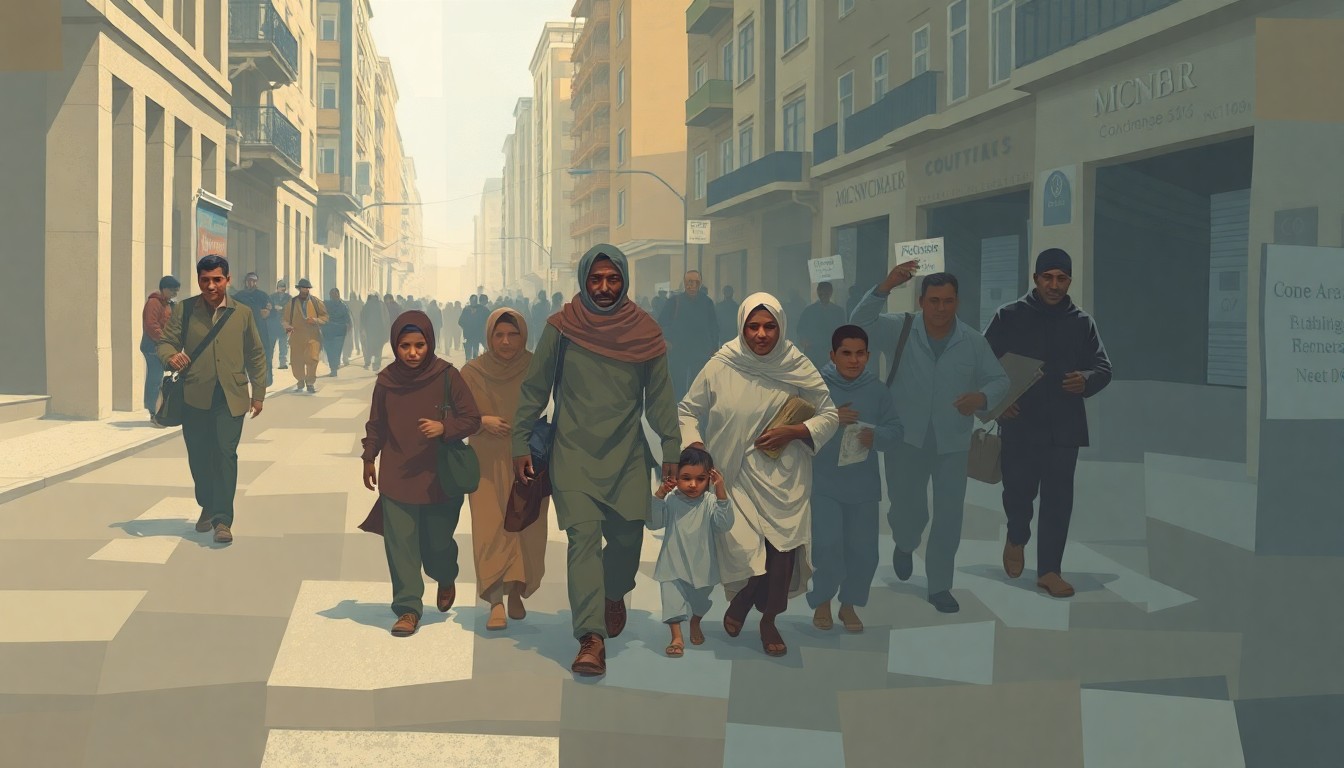 The chaotic journeys of asylum-seeking migrants in the U.S. are reflected in this fractured, avant-garde painting.Spring Valley Today
The millions of migrants who were released into the U.S. during the immigration surge that began in 2021 and peaked in 2023 are now facing increasing pressure, with many threatened with arrest and detention even when they appear for their court dates. While they can legally work after waiting six months, the Trump administration is seeking to extend that waiting period to one year. The analysis shows the largest numbers of recent asylum-seekers are in New York, Florida, Massachusetts, New Jersey and Utah, all of which have populations that are at least 1% higher than they were in 2020 due to the new migrants.
Why it matters
The influx of migrants that began escalating when President Joe Biden loosened immigration rules in January 2021 generated a political backlash that intensified after Republican governors began busing and flying border migrants to Democratic-led cities, putting a significant strain on their finances. This has also led to resentment from some established immigrant communities who feel the newcomers are receiving preferential treatment.
The details
Many of the migrants turned themselves in to immigration officials when they entered the U.S. illegally, but avoided immediate removal by claiming a "credible fear" of persecution or torture if they returned home, giving them the right to seek asylum. It can take years to receive an asylum hearing. Others seeking asylum arrived with appointments made through a government app or relied on temporary parole programs while pursuing legal status in court. Now, amid the Trump administration's immigration crackdown, these migrants are under increasing pressure, threatened with arrest and detention even when they appear for their court dates.
- In January 2021, President Joe Biden loosened immigration rules, leading to an influx of migrants.
- In the spring of 2022 through the fall of 2024, more than 223,000 asylum-seekers and other migrants arrived in New York City.
- In January 2026, Venezuelan dictator Nicolás Maduro was arrested and removed to the United States for trial, causing many Venezuelan asylum-seekers to stay home rather than risk being arrested at public celebrations.
The players
Joe Biden
The President of the United States who loosened immigration rules in January 2021, leading to an influx of migrants.
Ron DeSantis
The Republican Governor of Florida who led the charge to transport migrants out of state.
Greg Abbott
The Republican Governor of Texas who also led the charge to transport migrants out of state.
Nicolás Maduro
The Venezuelan dictator who was arrested in January 2026 and removed to the United States for trial.
Héctor Arguinzones
The organizer of a Venezuelan immigrant group in New York City.
What they’re saying
“All we can do is just work and hope for the best.”
— Rosa, Woman from Ecuador
“It's hard here but in Ecuador it's worse - there are gangs blackmailing you.”
— Anonymous, Woman working in a Queens store
“Many of us fled Venezuela because our own neighbors were our persecutors. We're not trying to, you know, sneak into the United States. A lot of us want to go back. We are full of hope. But we cannot think that this crisis in Venezuela will be solved in three months. We must be patient. What we really need is humanitarian treatment.”
— Héctor Arguinzones, Organizer of a Venezuelan immigrant group in New York City
What’s next
The Trump administration is seeking to extend the waiting period for asylum-seekers to work legally from six months to one year.
The takeaway
This case highlights the complex and tenuous situation facing many asylum-seeking migrants in the U.S., as they navigate a crackdown on immigration amid a political backlash and struggle to balance their legal status, employment, and fears of deportation. It underscores the need for comprehensive immigration reform and humanitarian treatment of those fleeing violence and oppression in their home countries.