- Today
- Holidays
- Birthdays
- Reminders
- Cities
- Atlanta
- Austin
- Baltimore
- Berwyn
- Beverly Hills
- Birmingham
- Boston
- Brooklyn
- Buffalo
- Charlotte
- Chicago
- Cincinnati
- Cleveland
- Columbus
- Dallas
- Denver
- Detroit
- Fort Worth
- Houston
- Indianapolis
- Knoxville
- Las Vegas
- Los Angeles
- Louisville
- Madison
- Memphis
- Miami
- Milwaukee
- Minneapolis
- Nashville
- New Orleans
- New York
- Omaha
- Orlando
- Philadelphia
- Phoenix
- Pittsburgh
- Portland
- Raleigh
- Richmond
- Rutherford
- Sacramento
- Salt Lake City
- San Antonio
- San Diego
- San Francisco
- San Jose
- Seattle
- Tampa
- Tucson
- Washington
Mount Sinai Today
By the People, for the People
Minimally Invasive Tape Strips Reveal Immune, Barrier Abnormalities Across Orphan Ichthyosis Subtypes
Pilot study finds shared Th17/Th22 upregulation and epidermal differentiation complex activation in Netherton syndrome, congenital ichthyosiform erythroderma, lamellar ichthyosis, and epidermolytic ichthyosis.
Apr. 16, 2026 at 5:39am
Got story updates? Submit your updates here. ›
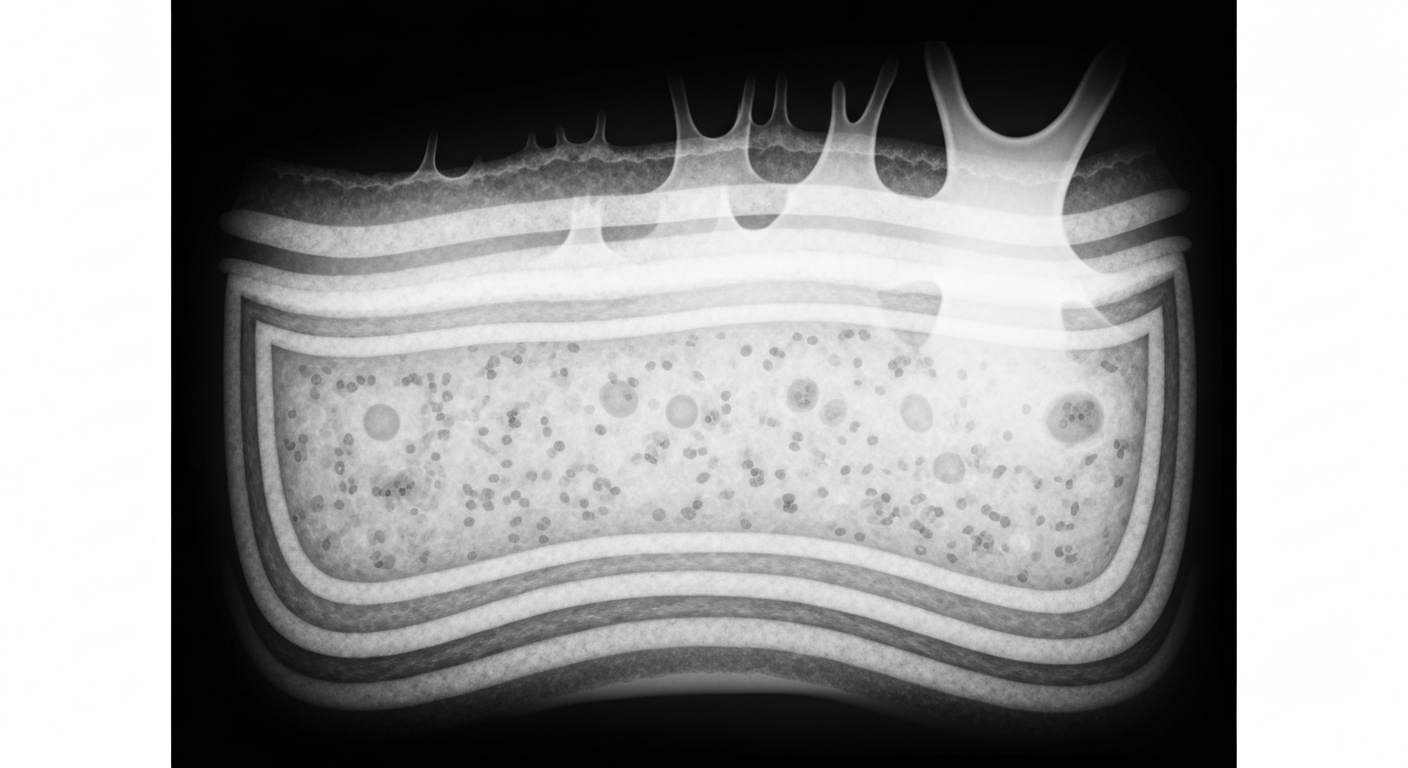 Minimally invasive tape strips provide a window into the molecular underpinnings of rare ichthyosis skin disorders.Mount Sinai Today
A pilot study evaluating minimally invasive tape-strip RNA sequencing found shared upregulation of Th17/Th22 immune markers and increased cornified envelope/epidermal differentiation complex (EDC) gene expression across all orphan ichthyosis subtypes, including Netherton syndrome, congenital ichthyosiform erythroderma, lamellar ichthyosis, and epidermolytic ichthyosis.
Why it matters
This study highlighted the feasibility of using tape strips to measure the immune and barrier abnormalities in these rare ichthyosis conditions, which predominantly affect children and have heterogeneous treatment responses. The minimally invasive sampling method may enable longitudinal monitoring of disease changes with treatment in future clinical trials.
The details
Researchers collected tape strip RNA sequencing data from 27 patients with ichthyosis and 18 demographically matched healthy controls at Mount Sinai and Northwestern University. The cohort included 9 patients with Netherton syndrome, 6 with congenital ichthyosiform erythroderma, 7 with lamellar ichthyosis, and 5 with epidermolytic ichthyosis. RNA was extracted from 20 consecutive tape-strip samples per individual and analyzed using RNA-seq. All ichthyosis subtypes demonstrated significant upregulation of Th17-associated and Th22-associated markers, with Netherton syndrome showing unique Th2 dysregulation. Disease severity correlated with ceramide synthase 3, Th17 markers, and late cornified envelope genes.
- The study was published online on April 9, 2026.
The players
Madeline Kim
MD, MS, Icahn School of Medicine at Mount Sinai, New York City, and lead author of the study.
Mount Sinai
A medical center in New York City where some of the study data was collected.
Northwestern University
A medical center in Chicago where some of the study data was collected.
What they’re saying
“This study highlighted 'the feasibility of tape strips in measuring the immune and barrier abnormalities' in Netherton syndrome, congenital ichthyosiform erythroderma, lamellar ichthyosis, and epidermolytic ichthyosis, with 'significant dysregulation that correlated with disease severity metrics and were overall concordant with changes measured in biopsy studies.'”
— The authors
What’s next
Considering the 'minimally invasive nature of this sampling modality,' the authors noted that tape strips 'may be a valuable means of studying these ichthyoses, given the pediatric predominance of these cohorts, the heterogeneity in treatment responses in each subtype, and the potential to evaluate changes longitudinally with treatment in future clinical trials.'
The takeaway
This pilot study demonstrates the potential of using minimally invasive tape strips to gain insights into the molecular mechanisms underlying different orphan ichthyosis subtypes, which could lead to improved understanding of these rare skin disorders and inform the development of more targeted therapies.