- Today
- Holidays
- Birthdays
- Reminders
- Cities
- Atlanta
- Austin
- Baltimore
- Berwyn
- Beverly Hills
- Birmingham
- Boston
- Brooklyn
- Buffalo
- Charlotte
- Chicago
- Cincinnati
- Cleveland
- Columbus
- Dallas
- Denver
- Detroit
- Fort Worth
- Houston
- Indianapolis
- Knoxville
- Las Vegas
- Los Angeles
- Louisville
- Madison
- Memphis
- Miami
- Milwaukee
- Minneapolis
- Nashville
- New Orleans
- New York
- Omaha
- Orlando
- Philadelphia
- Phoenix
- Pittsburgh
- Portland
- Raleigh
- Richmond
- Rutherford
- Sacramento
- Salt Lake City
- San Antonio
- San Diego
- San Francisco
- San Jose
- Seattle
- Tampa
- Tucson
- Washington
US bishops' doctrine chair defends church's just war tradition after JD Vance comments
Bishop Massa reaffirms Catholic teaching on just war after VP Vance criticizes Pope Leo XIV's comments on Iran conflict
Apr. 15, 2026 at 8:49pm
Got story updates? Submit your updates here. ›
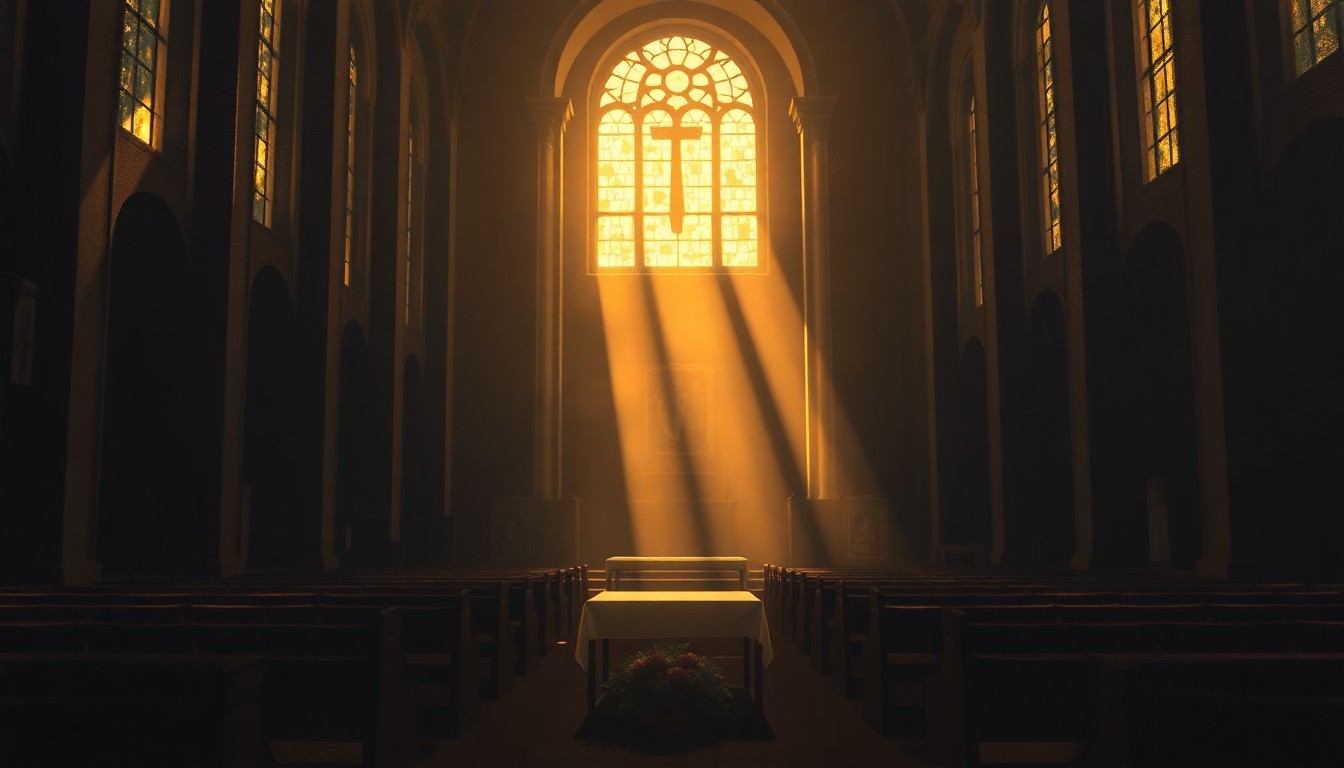 The Catholic Church's centuries-old just war tradition continues to shape debates over the morality of modern military conflicts.Brooklyn Today
Shortly after Vice President JD Vance appeared to warn Pope Leo XIV to 'be careful' when speaking about theology and taking issue with his description of the U.S. conflict in Iran as unjust, the U.S. bishops' point-man on doctrine, Auxiliary Bishop James Massa of Brooklyn, issued a forceful statement reaffirming the Catholic Church's long-standing just war tradition.
Why it matters
The exchange between Vance and Pope Leo XIV highlights ongoing tensions between some political leaders and the Church's teachings on war and peace. Bishop Massa's statement aims to clarify the Church's consistent position that for a war to be considered just, it must be a true act of self-defense after all peaceful options have been exhausted.
The details
In his comments, Vance invoked the 'more than 1,000-year tradition of Just War theory' to justify his opposition to Pope Leo XIV's characterization of the U.S. conflict in Iran as unjust. However, Bishop Massa emphasized that the Church's just war tradition actually requires that 'a nation can only legitimately take up the sword 'in self-defense, once all peace efforts have failed.' He said the pope was not merely offering opinions, but preaching the Gospel and exercising his ministry as the Vicar of Christ.
- On April 14, Vice President JD Vance made comments criticizing Pope Leo XIV's stance on the U.S. conflict in Iran.
- On April 15, Auxiliary Bishop James Massa of Brooklyn issued a statement defending the Catholic Church's just war tradition.
The players
JD Vance
The current Vice President of the United States, who became Catholic in 2019 after receiving instruction from Dominican friars.
Pope Leo XIV
The current Pope and supreme pastor of the universal Catholic Church, who has condemned the U.S. conflict in Iran as unjust.
Auxiliary Bishop James Massa
The chairman of the U.S. Conference of Catholic Bishops' Committee on Doctrine, who issued a statement defending the Church's just war tradition.
What they’re saying
“'For over a thousand years, the Catholic Church has taught just war theory and it is that long tradition the Holy Father carefully references in his comments on war.'”
— Auxiliary Bishop James Massa, Chairman of the U.S. Conference of Catholic Bishops' Committee on Doctrine
“'When Pope Leo speaks as supreme pastor of the universal Church, he is not merely offering opinions on theology, he is preaching the Gospel and exercising his ministry as the Vicar of Christ.'”
— Auxiliary Bishop James Massa, Chairman of the U.S. Conference of Catholic Bishops' Committee on Doctrine
“'Now we can, of course, have disagreements about whether this or that conflict is just; but I think in the way that it's important for the vice president of the United States to be careful when I talk about matters of public policy, I think it's very, very important for the pope to be careful when he talks about matters of theology.'”
— JD Vance, Vice President of the United States
What’s next
The ongoing debate between political leaders and the Catholic Church over the just war tradition is likely to continue, with both sides seeking to defend their respective positions on the morality of the U.S. conflict in Iran.
The takeaway
This exchange highlights the longstanding tension between political power and religious authority, as well as the challenges of reconciling the Church's teachings on just war with the realities of modern military conflicts. It underscores the need for open and respectful dialogue between political leaders and religious authorities on these complex issues.
Brooklyn top stories



Brooklyn events

Apr. 15, 2026
WFUV Presents Snail Mail
Apr. 15, 2026
SOLD OUT - Hairy Situation: A Comedy Show by ALOK
Apr. 15, 2026
DUGLUST LIVE: DUGGIN' IN THE CRATES