- Today
- Holidays
- Birthdays
- Reminders
- Cities
- Atlanta
- Austin
- Baltimore
- Berwyn
- Beverly Hills
- Birmingham
- Boston
- Brooklyn
- Buffalo
- Charlotte
- Chicago
- Cincinnati
- Cleveland
- Columbus
- Dallas
- Denver
- Detroit
- Fort Worth
- Houston
- Indianapolis
- Knoxville
- Las Vegas
- Los Angeles
- Louisville
- Madison
- Memphis
- Miami
- Milwaukee
- Minneapolis
- Nashville
- New Orleans
- New York
- Omaha
- Orlando
- Philadelphia
- Phoenix
- Pittsburgh
- Portland
- Raleigh
- Richmond
- Rutherford
- Sacramento
- Salt Lake City
- San Antonio
- San Diego
- San Francisco
- San Jose
- Seattle
- Tampa
- Tucson
- Washington
Los Alamos Today
By the People, for the People
AI Unlocks Secrets of Nuclear Forces with Neutron Star Data
Groundbreaking research uses machine learning to bridge the gap between astrophysical observations and quantum physics
Apr. 10, 2026 at 4:08am
Got story updates? Submit your updates here. ›
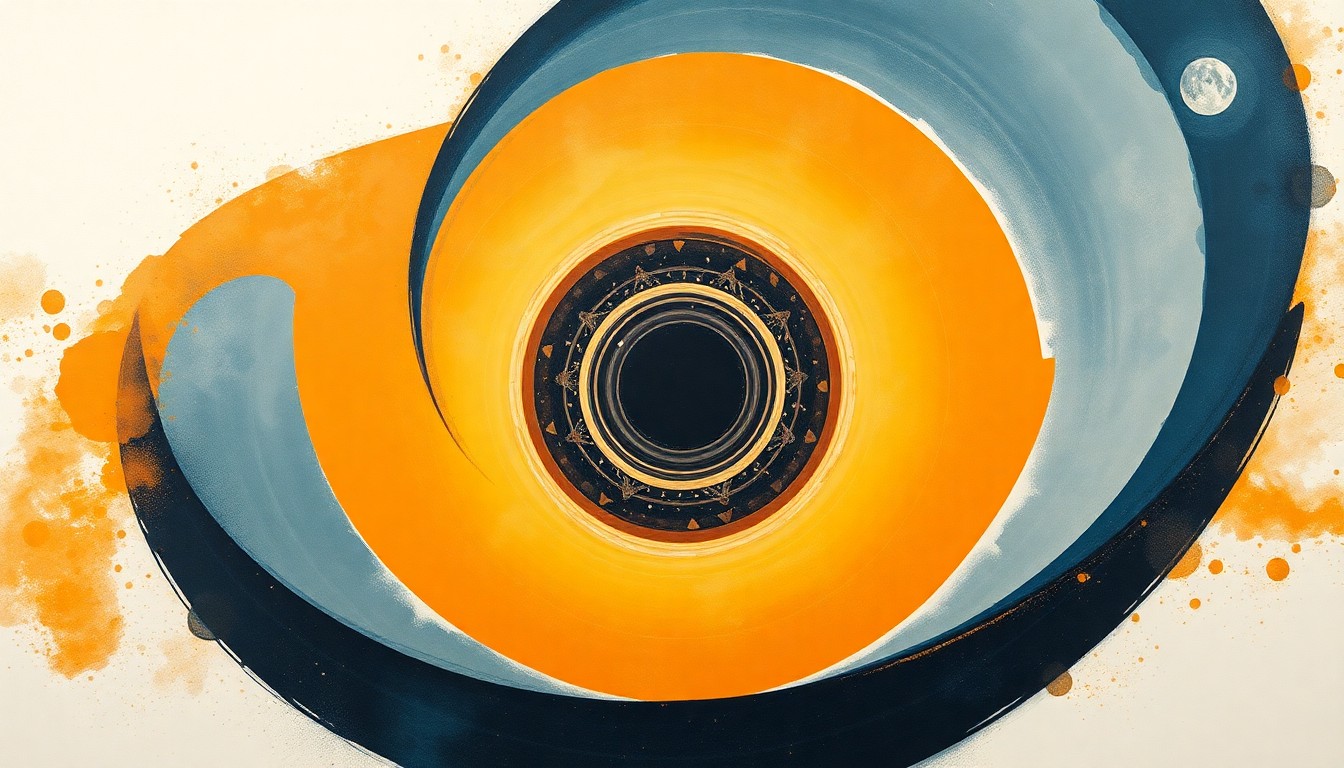 An abstract visualization of the intricate dance of neutrons and protons within the dense core of a neutron star, unlocking secrets about the strong nuclear force that binds atomic nuclei.Los Alamos Today
A team of scientists has harnessed the power of artificial intelligence (AI) to decipher the complex interactions between neutrons and protons within the dense heart of neutron stars, shedding light on the enigmatic strong force that binds atomic nuclei. By analyzing data from the 2017 gravitational wave detection of a neutron star merger, the researchers developed an AI framework that revolutionizes the field, enabling faster and more efficient extraction of crucial information compared to traditional computational approaches.
Why it matters
This breakthrough has profound implications for understanding three-body forces, a less understood aspect of nuclear interactions. By connecting neutron star properties to quantum mechanical neutron properties, the team is paving the way to elucidate the strong force at unprecedentedly large densities, which is crucial for comprehending the complex dynamics within neutron stars.
The details
The research team employed two machine learning algorithms: one rooted in quantum physics to efficiently compute dense-matter properties, and a neural network to connect these properties to neutron star characteristics. These algorithms serve as surrogates for complex, high-fidelity calculations, significantly accelerating the process. The study utilized data from the 2017 neutron star merger observed by LIGO and X-ray data from NASA's NICER, leveraging a multimessenger astronomy approach to gain a comprehensive understanding of the event.
- The research was published in Nature Communications in 2026.
The players
Ingo Tews
A Los Alamos physicist who emphasized the significance of this achievement in connecting the macroscopic and microscopic realms.
Isak Svensson
A scientist at the Technical University of Darmstadt who highlighted the breakthrough's impact in opening a new window into the strong-force physics of neutrons and protons and its effects on neutron stars.
Rahul Somasundaram
A Los Alamos scientist who expressed surprise at the algorithms' performance, noting that the framework provides constraints consistent with terrestrial experiments and anticipates even more precise constraints with future observations.
What they’re saying
“This research marks a pivotal moment in connecting the macroscopic and microscopic realms, allowing us to infer the interactions among neutrons and protons directly from astrophysical data.”
— Ingo Tews, Los Alamos physicist
“Our approach opens a new window into the strong-force physics of neutrons and protons and its effects on neutron stars. We can now bridge the gap between neutron star observations and the interactions within dense matter.”
— Isak Svensson, Scientist at the Technical University of Darmstadt
“The tools we developed outperformed our expectations. Our framework provides constraints consistent with terrestrial experiments, albeit with larger uncertainties. With future observations, we anticipate even more precise constraints, offering valuable insights into the strong force at extreme densities.”
— Rahul Somasundaram, Los Alamos scientist
What’s next
The team's methodology is poised to benefit from upcoming facilities like the Einstein Telescope in Europe and Cosmic Explorer in the United States, as these detectors will provide even more precise data, further advancing our understanding of nuclear forces and the mysteries of the cosmos.
The takeaway
This AI-driven research marks a significant leap in deciphering the strong force's role in neutron stars, offering a promising avenue for exploring the fundamental building blocks of the universe. As we continue to unravel these cosmic secrets, AI's role in scientific discovery becomes increasingly pivotal, shaping the future of our understanding of the physical world.