- Today
- Holidays
- Birthdays
- Reminders
- Cities
- Atlanta
- Austin
- Baltimore
- Berwyn
- Beverly Hills
- Birmingham
- Boston
- Brooklyn
- Buffalo
- Charlotte
- Chicago
- Cincinnati
- Cleveland
- Columbus
- Dallas
- Denver
- Detroit
- Fort Worth
- Houston
- Indianapolis
- Knoxville
- Las Vegas
- Los Angeles
- Louisville
- Madison
- Memphis
- Miami
- Milwaukee
- Minneapolis
- Nashville
- New Orleans
- New York
- Omaha
- Orlando
- Philadelphia
- Phoenix
- Pittsburgh
- Portland
- Raleigh
- Richmond
- Rutherford
- Sacramento
- Salt Lake City
- San Antonio
- San Diego
- San Francisco
- San Jose
- Seattle
- Tampa
- Tucson
- Washington
Pascagoula Today
By the People, for the People
Chevron Expands Venezuelan Oil Imports as U.S. Supply Chain Adjusts
Company confirms rising crude shipments as global disruptions reshape energy flows and refinery demand
Apr. 8, 2026 at 8:55pm
Got story updates? Submit your updates here. ›
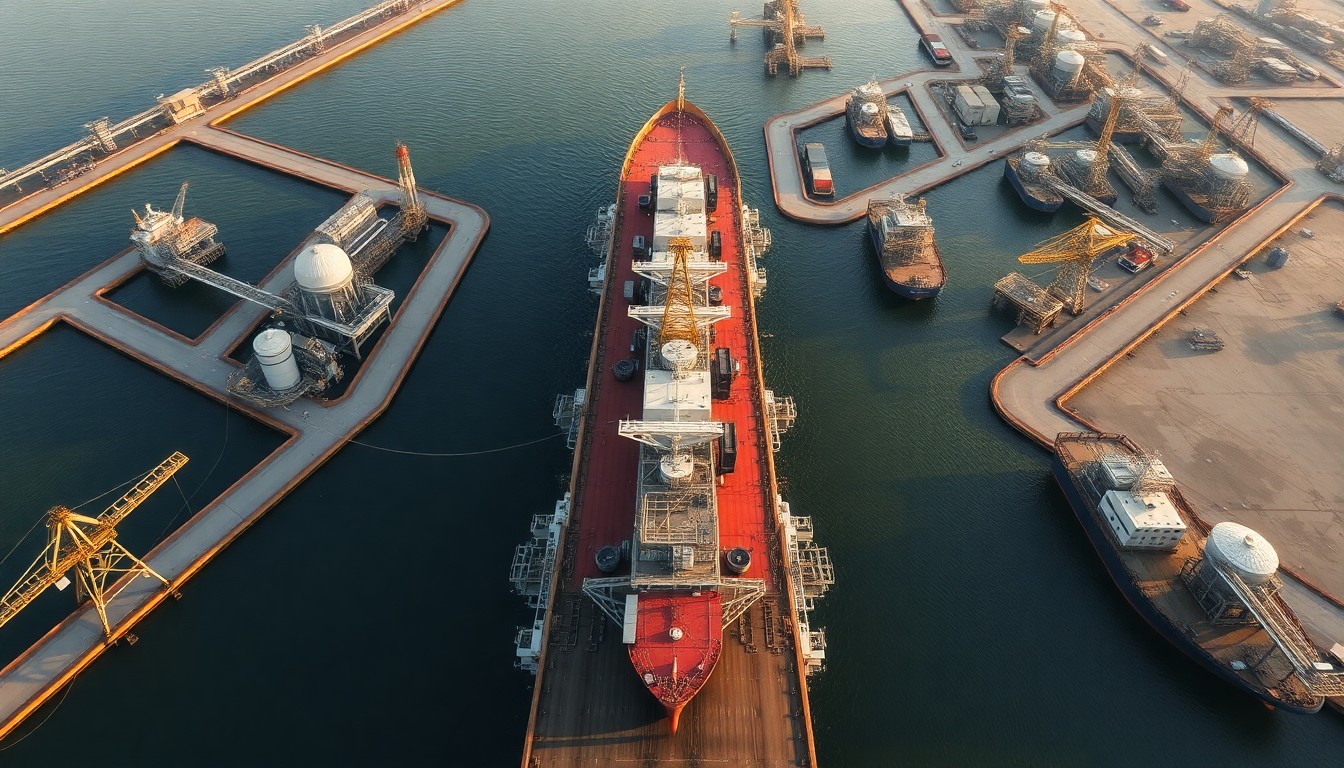
 As global energy flows shift, the U.S. supply chain adapts to increased Venezuelan crude imports.Pascagoula Today
Chevron is importing approximately 250,000 barrels of crude oil per day from Venezuela into the United States, according to reporting by the BBC and statements from company officials. The increase comes as Venezuela's overall crude exports have surpassed one million barrels per day in recent months, reflecting a shift in global energy supply dynamics.
Why it matters
The developments follow a January 3 U.S. law enforcement operation in Caracas that resulted in the arrest of Venezuelan leader Nicolás Maduro. Since then, Venezuela's government has begun cooperating with U.S. authorities and energy firms, allowing for increased crude exports to the U.S. as global supply chains adjust to geopolitical tensions.
The details
Chevron and other companies are now importing Venezuelan crude 'by the shipload,' in part due to disruptions linked to the Iran conflict and restrictions affecting the Strait of Hormuz. Venezuelan crude is classified as extra-heavy, meaning it is dense and high in sulfur content, but it aligns with the capabilities of many U.S. refineries.
- In recent months, Venezuela's overall crude exports have surpassed one million barrels per day.
- On January 3, a U.S. law enforcement operation in Caracas resulted in the arrest of Venezuelan leader Nicolás Maduro.
- Since Maduro's arrest, Venezuela's government, now led by acting president Delcy Rodríguez, has begun cooperating with U.S. authorities and energy firms.
The players
Chevron
An American multinational energy corporation that is one of the largest oil companies in the world.
Nicolás Maduro
The former president of Venezuela who was arrested in a U.S. law enforcement operation on January 3.
Delcy Rodríguez
The acting president of Venezuela following the arrest of Nicolás Maduro.
What they’re saying
“It's a big deal not only for Chevron but the entire Gulf region.”
— Tim Potter, Director of Chevron's refinery in Pascagoula, Mississippi
“While we're able to still get crude available here to this refinery because of our relatively local supply, the overall pricing of that crude has gone up because it's based off of world markets.”
— Tim Potter, Director of Chevron's refinery in Pascagoula, Mississippi
“We may raise volumes to between 350,000 and 400,000 barrels per day.”
— Andy Walz, Chevron's president of downstream, midstream, and chemicals
What’s next
Chevron and other companies are expected to continue increasing their imports of Venezuelan crude oil as global supply chains adjust to the shifting geopolitical landscape.
The takeaway
The expansion of Venezuelan crude oil imports by Chevron and other U.S. companies highlights the adaptability of the U.S. energy supply chain in the face of global disruptions, as well as the potential for increased cooperation between the U.S. and Venezuela's new government.