- Today
- Holidays
- Birthdays
- Reminders
- Cities
- Atlanta
- Austin
- Baltimore
- Berwyn
- Beverly Hills
- Birmingham
- Boston
- Brooklyn
- Buffalo
- Charlotte
- Chicago
- Cincinnati
- Cleveland
- Columbus
- Dallas
- Denver
- Detroit
- Fort Worth
- Houston
- Indianapolis
- Knoxville
- Las Vegas
- Los Angeles
- Louisville
- Madison
- Memphis
- Miami
- Milwaukee
- Minneapolis
- Nashville
- New Orleans
- New York
- Omaha
- Orlando
- Philadelphia
- Phoenix
- Pittsburgh
- Portland
- Raleigh
- Richmond
- Rutherford
- Sacramento
- Salt Lake City
- San Antonio
- San Diego
- San Francisco
- San Jose
- Seattle
- Tampa
- Tucson
- Washington
Mississippi Museums Confront State's Difficult History for America 250
Two-museum complex in Jackson highlights racial violence and injustice as part of state's commemoration of nation's 250th anniversary.
Apr. 14, 2026 at 4:04am
Got story updates? Submit your updates here. ›
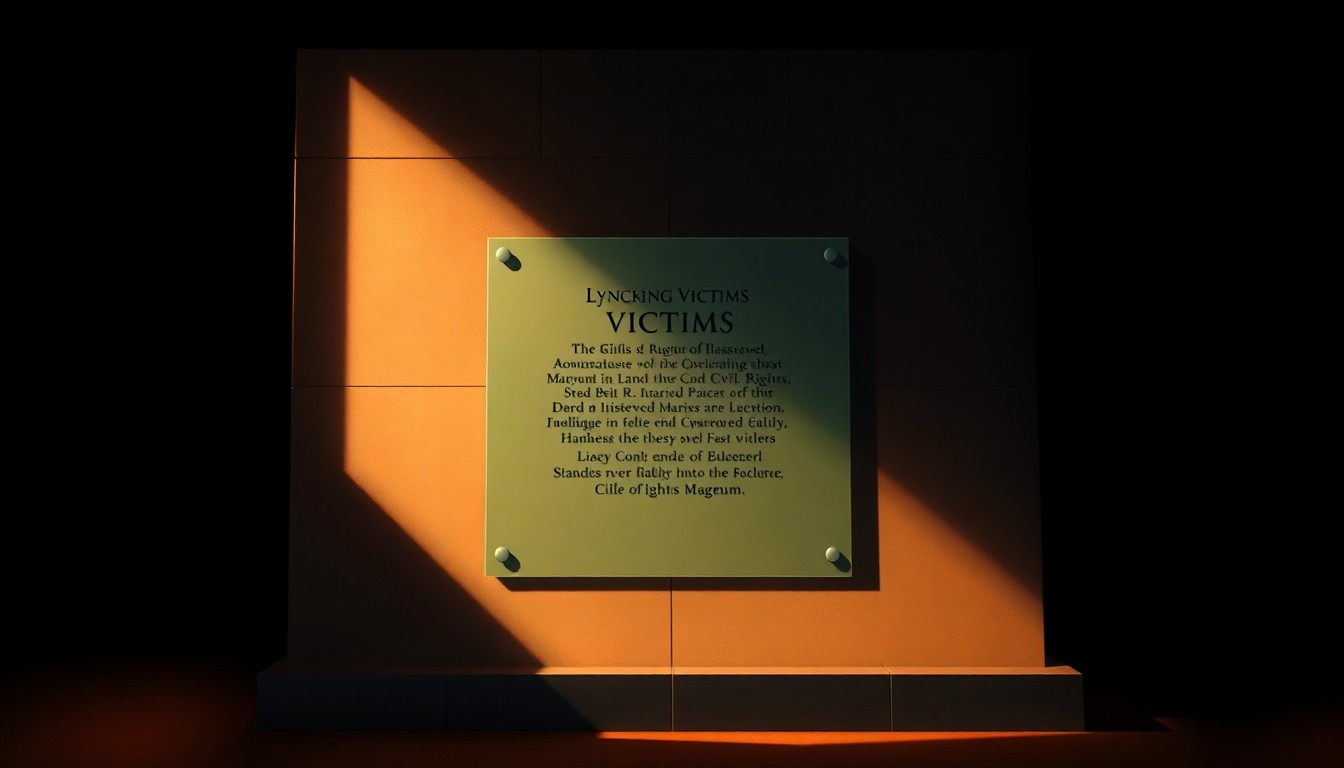 The somber glass panels of the Lynching Victims Monolith stand as a powerful reminder of Mississippi's difficult history of racial violence and injustice.Jackson Today
As the nation prepares to celebrate its 250th anniversary, Mississippi is taking a different approach by confronting its difficult history of racial violence and injustice head-on through its Two Mississippi Museums complex in Jackson. The museums, which include the Mississippi Civil Rights Museum and the Museum of Mississippi History, do not shy away from the state's dark past involving the mistreatment of Native Americans, enslaved people, and the Civil Rights era. The exhibits provide a stark contrast to the federal government's efforts to ease the discomfort of America's brutal history under the Trump administration.
Why it matters
Mississippi's willingness to fully acknowledge and display its history of racial violence and injustice sets it apart from the federal government's attempts to downplay or erase such narratives as part of the America 250 commemoration. This approach reflects a growing movement to confront the nation's difficult past, rather than gloss over it, in order to better understand the present and work towards a more just future.
The details
The Two Mississippi Museums complex in Jackson features exhibits that do not shy away from the state's dark history. The Mississippi Civil Rights Museum includes an opening audio exhibit that bombards visitors with phrases once commonplace in the nation's segregated past, as well as a display of the .45-caliber pistol used to kill Emmett Till, a 14-year-old who was kidnapped, tortured, and killed in 1955. The Museum of Mississippi History begins with a gallery exploring the removal of Native Americans from the land, which then led to the growth of the cotton industry and the use of enslaved labor. The museums' approach stands in contrast to the federal government's efforts under the Trump administration to ease the discomfort of America's brutal history, including the elimination of diversity, equity, and inclusion efforts and the alteration or removal of exhibits and exhibits at federal parks and institutions.
- The Two Mississippi Museums complex opened in 2017.
- President Donald Trump returned to the White House in January 2025.
- Trump signed an executive order his first day back in office eliminating diversity, equity and inclusion efforts in the federal government.
- In March 2025, Trump signed an executive order 'Restoring Truth and Sanity to American History' that has led to changes at federal parks, exhibits, and military bases.
The players
Kiama Johnson
A visitor from Monroe, Louisiana who was moved to tears while viewing the panels at the Lynching Victims Monolith exhibit.
Nan Prince
The director of collections for the Mississippi Department of Archives & History, who said the instructions for the museums were to 'don't brush over anything, don't whitewash anything' and 'just tell the absolute truth.'
John Horhn
The mayor of Jackson, Mississippi, who was a state senator when he began pushing for the Civil Rights Museum in 1999.
Haley Barbour
The former Republican National Committee chairman who became governor of Mississippi and helped with the plans for the museum complex.
Emmett Till
The 14-year-old who was kidnapped, tortured, and killed in 1955 after being accused of whistling at a white woman in a rural Mississippi grocery store, a pivotal moment in the Civil Rights Movement.
What they’re saying
“That's just the people that we know about. Just imagine the ones that we don't. Imagine the ones that's never going to be written in history books.”
— Kiama Johnson, Visitor from Monroe, Louisiana
“We said at the beginning we weren't going to hide anything. We weren't gonna try to justify what was done. That's what the people wanted — to say, 'Look, we're not proud of this, but we're not going to deny it.'”
— Haley Barbour, Former Republican National Committee chairman and governor of Mississippi
“We still have issues, we still have a lot of challenges. But it's a demonstration that progress has been made.”
— John Horhn, Mayor of Jackson, Mississippi
“It doesn't feel great, but it's important we understand what happened in the past.”
— Lindsay Ward, Visitor from Denver
“All we have is human narrative and that comes with bias. I do believe that no matter what sort of erasure the country might be doing, we know the stories. We know the truth.”
— Connor Lynch, History teacher and social justice advocate from Chicago
What’s next
The museums' approach to confronting Mississippi's difficult history is expected to continue as the state commemorates the nation's 250th anniversary, providing a stark contrast to the federal government's efforts to ease the discomfort of America's brutal past.
The takeaway
Mississippi's willingness to fully acknowledge and display its history of racial violence and injustice through the Two Mississippi Museums complex sets an important example for how states and the nation can confront their difficult pasts, rather than gloss over them. This approach reflects a growing movement to understand America's history in all its complexity in order to work towards a more just future.
Jackson top stories

Jackson events

Apr. 18, 2026
You Were Made For Me - The Stage Play