- Today
- Holidays
- Birthdays
- Reminders
- Cities
- Atlanta
- Austin
- Baltimore
- Berwyn
- Beverly Hills
- Birmingham
- Boston
- Brooklyn
- Buffalo
- Charlotte
- Chicago
- Cincinnati
- Cleveland
- Columbus
- Dallas
- Denver
- Detroit
- Fort Worth
- Houston
- Indianapolis
- Knoxville
- Las Vegas
- Los Angeles
- Louisville
- Madison
- Memphis
- Miami
- Milwaukee
- Minneapolis
- Nashville
- New Orleans
- New York
- Omaha
- Orlando
- Philadelphia
- Phoenix
- Pittsburgh
- Portland
- Raleigh
- Richmond
- Rutherford
- Sacramento
- Salt Lake City
- San Antonio
- San Diego
- San Francisco
- San Jose
- Seattle
- Tampa
- Tucson
- Washington
Towson Today
By the People, for the People
Former Power Four Swimmers Thrive at Mid-Major Programs
New NCAA rules and supportive environments help overlooked athletes find success
Apr. 10, 2026 at 3:54am
Got story updates? Submit your updates here. ›
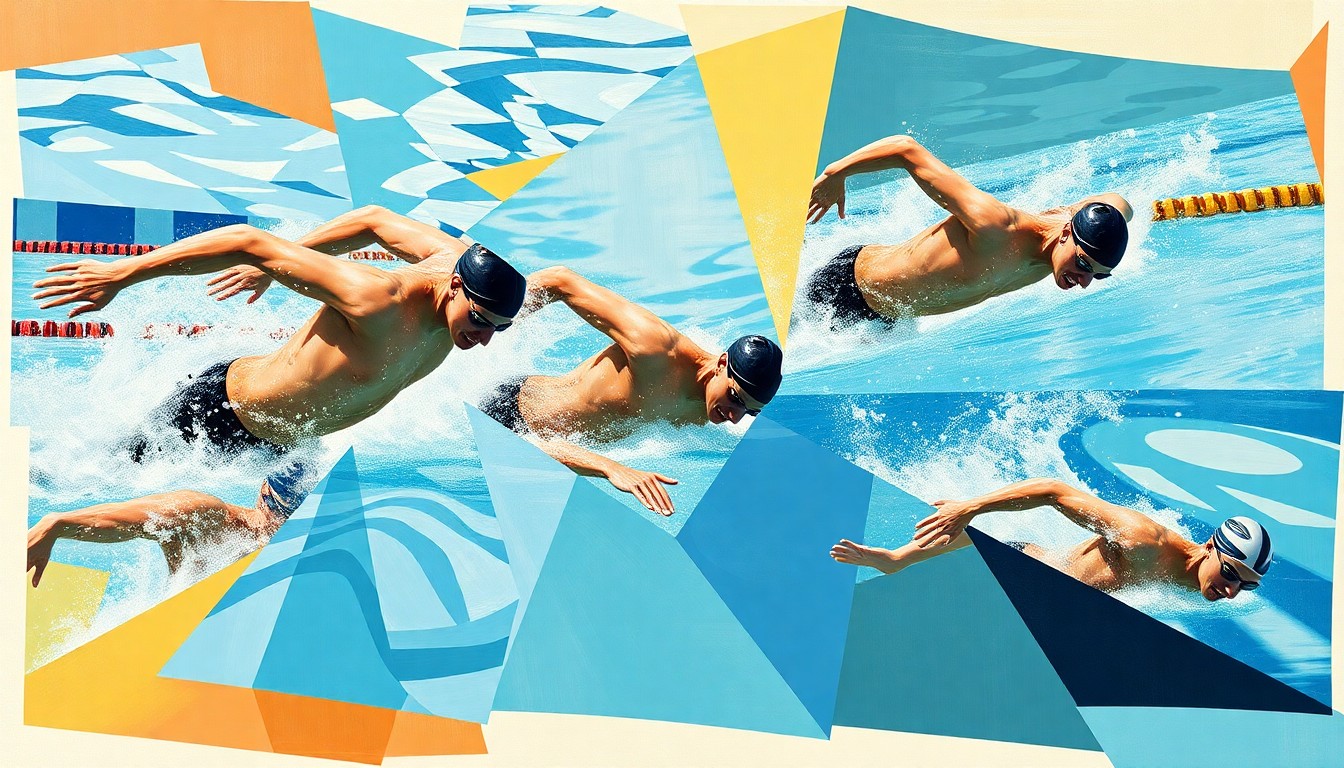 The geometric, fragmented style of this illustration captures the dynamic energy and shifting power dynamics in college swimming as mid-major programs challenge the traditional powerhouses.Towson Today
A growing number of former Power Four swimmers are finding unexpected success at mid-major college programs, thanks to rule changes and supportive team cultures that are allowing them to shine. Swimmers like Simon Casey, Jed Garner, and Yassin Abdelghany have transferred to smaller schools and achieved personal bests, challenging the traditional power dynamics in college swimming.
Why it matters
The rise of mid-major swimming programs is a refreshing shift in the sport, highlighting the talent and potential that can thrive outside of the traditional Power Four schools. This trend is a result of recent NCAA rule changes, like the automatic qualification for conference champions, which have opened doors for overlooked swimmers. It's a testament to the value of personalized training environments and the importance of creating a more inclusive and diverse college swimming landscape.
The details
After being cut from the team at LSU, Simon Casey qualified for the NCAA Championships with Wyoming, a mid-major program. Jed Garner, a former Power Four swimmer, found success at Towson by training alongside Brian Benzing, a standout mid-major swimmer. Yassin Abdelghany, who struggled with injuries at Louisville, transferred to IU-Indy and became the third-fastest mid-major freestyler ever. These stories illustrate how the smaller team sizes and more personalized attention at mid-major schools can be a game-changer for swimmers.
- The new NCAA championships automatic qualification rule, which allows individual conference champions to compete at the meet, was implemented in 2025.
- The House v. NCAA Supreme Court ruling, which imposed roster limits, was decided in 2024.
The players
Simon Casey
A former swimmer at LSU who found success at the NCAA Championships with Wyoming, a mid-major program.
Jed Garner
A former Power Four swimmer who transferred to Towson and trained alongside Brian Benzing, a successful mid-major swimmer.
Yassin Abdelghany
A swimmer who struggled with injuries at Louisville but found success and became the third-fastest mid-major freestyler ever after transferring to IU-Indy.
Brian Benzing
A successful mid-major swimmer at Towson who helped mentor Jed Garner.
What they’re saying
“The new NCAA championships automatic qualification rule has opened doors for swimmers like me who might have otherwise been overlooked.”
— Simon Casey, Former LSU swimmer, current Wyoming swimmer
“Training alongside Brian Benzing has pushed me to new heights and helped me find success at Towson.”
— Jed Garner, Former Power Four swimmer, current Towson swimmer
What’s next
As mid-major programs continue to make their mark on the national stage, the NCAA will likely evaluate the impact of the automatic qualification rule and roster limits to ensure a fair and competitive landscape for all teams.
The takeaway
The rise of mid-major swimming programs is a positive development for the sport, as it highlights the talent and potential that can thrive outside of the traditional Power Four schools. This trend is a testament to the value of personalized training environments and the importance of creating a more inclusive and diverse college swimming landscape.
Towson top stories



Towson events

Apr. 18, 2026
The Toasters