- Today
- Holidays
- Birthdays
- Reminders
- Cities
- Atlanta
- Austin
- Baltimore
- Berwyn
- Beverly Hills
- Birmingham
- Boston
- Brooklyn
- Buffalo
- Charlotte
- Chicago
- Cincinnati
- Cleveland
- Columbus
- Dallas
- Denver
- Detroit
- Fort Worth
- Houston
- Indianapolis
- Knoxville
- Las Vegas
- Los Angeles
- Louisville
- Madison
- Memphis
- Miami
- Milwaukee
- Minneapolis
- Nashville
- New Orleans
- New York
- Omaha
- Orlando
- Philadelphia
- Phoenix
- Pittsburgh
- Portland
- Raleigh
- Richmond
- Rutherford
- Sacramento
- Salt Lake City
- San Antonio
- San Diego
- San Francisco
- San Jose
- Seattle
- Tampa
- Tucson
- Washington
Hampstead Today
By the People, for the People
Farmers Scramble as Trump-Era Solar Policies Upend Rural Energy Grants
Cuts to federal renewable energy programs leave some farmers struggling to afford solar installations
Apr. 17, 2026 at 6:18pm
Got story updates? Submit your updates here. ›
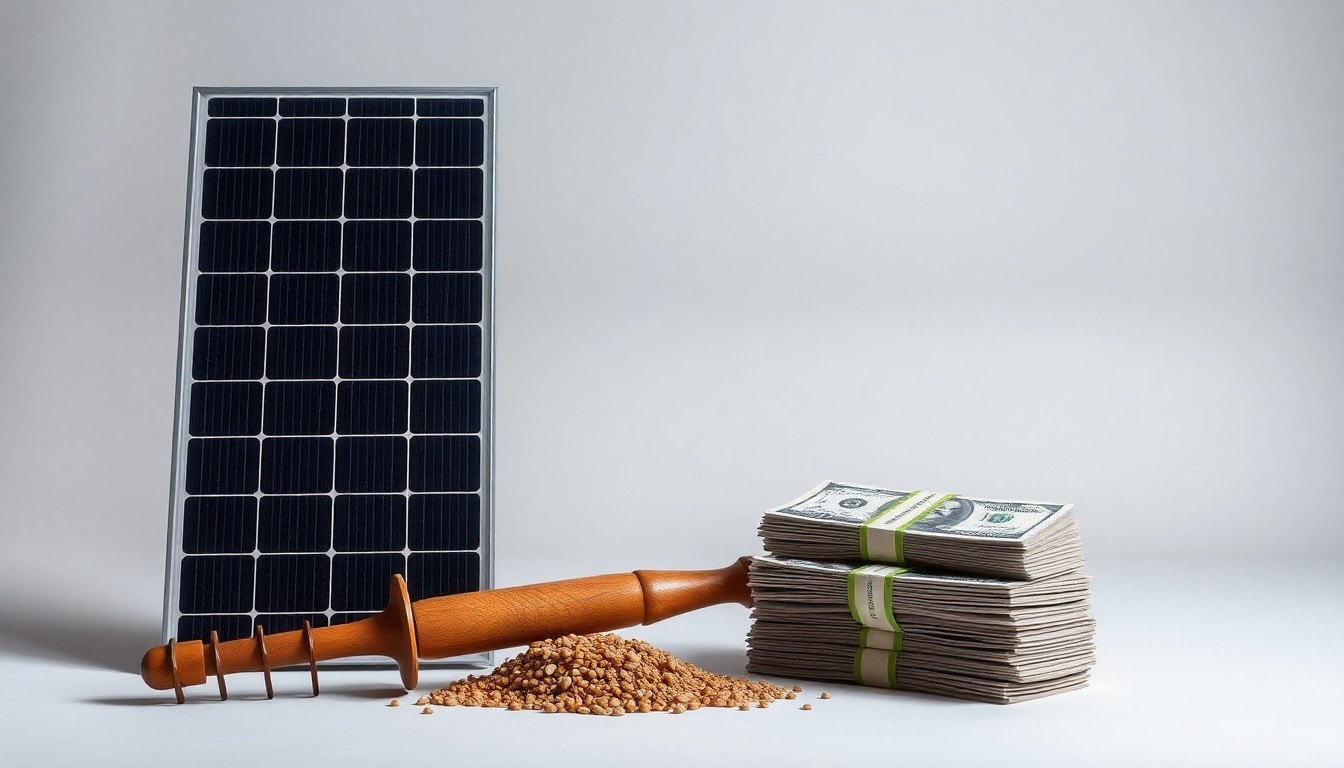 As federal support for agricultural solar projects dwindles, farmers must navigate a shifting policy landscape to harness renewable energy and control their energy costs.Hampstead Today
Over the past few years, many American farmers have turned to solar power to help cut their electricity costs, often relying on federal grants and tax credits to offset the upfront installation expenses. However, policy changes under the Trump administration have effectively halted these programs, forcing farmers to either abandon their solar plans or find alternative financing options.
Why it matters
The loss of federal support for rural solar projects could have significant impacts on farmers' bottom lines, as well as the broader transition to renewable energy in agricultural communities. Without access to grants and tax credits, the financial barriers to adopting solar may become too high for many small and mid-sized farms, potentially widening economic disparities in rural areas.
The details
The Trump administration rolled back two key federal programs that had supported the growth of solar energy production on farms and in rural areas: the USDA's Rural Energy for America Program (REAP) and the clean energy investment tax credit. As a result, the USDA has not awarded any REAP grants or loan guarantees so far this fiscal year, and some solar developers have had to abandon projects they couldn't complete before the tax credit deadlines. Farmers like Daniel Bell and Elisa Lane have had to get creative, either leasing their land to commercial solar operations or finding alternative ways to finance their own installations.
- In the first year of President Trump's second term, the REAP program and clean energy tax credit were rolled back.
- In March 2025, the USDA announced it would release already-awarded REAP grants and loans, but invited recipients to revise their proposals to align with Trump's executive orders.
- On March 31, 2026, the USDA announced a temporary suspension of all REAP grant awards to update the program's regulations.
- The new tax credit timeline requires commercial solar projects to be under construction by July 2026 and placed in service by the end of 2027 to remain eligible.
The players
Daniel Bell
A Kentucky sheep farmer who had planned to use a REAP grant to help pay for a new barn with rooftop solar, but was unable to do so after the program was effectively halted.
Elisa Lane
A flower and fruit farmer in Hampstead, Maryland, who was awarded a $30,576 REAP grant in 2024 to install solar panels, but experienced significant stress and disruption when the funding was temporarily frozen by the Trump administration.
Bogdan Micu
The CEO of the German solar developer Alpin Sun, who said the company had to abandon projects representing about $6 million in investments due to the new tax credit deadlines.
Robert Bonnie
The former undersecretary for farm production and conservation at the USDA under the Biden administration, who said any loss in REAP funding will be felt throughout rural America.
Tim Covert
A former dairy farmer in Sheridan, New York, who is leasing his land to a community solar project that has been impacted by the shifting federal policy landscape.
What they’re saying
“'For me, it's just been about freedom. Freedom to lower bills, freedom to control my own assets.'”
— Daniel Bell, Kentucky sheep farmer
“'Man, was that so stressful,' said Lane, who spent months worried she'd be 'on the hook' for the amount that she'd already contracted a solar company to install.”
— Elisa Lane, Flower and fruit farmer
“'Well. We lost our projects,' Micu said. The company simply couldn't speed up its projects to meet the deadlines, he said.”
— Bogdan Micu, CEO, Alpin Sun
“'In places like Iowa and Texas, renewables matter, not just for additional power, and lower power bills, and clean energy, but also matters for farmers' pocketbooks. Anything you do to pull back on that is hugely problematic.'”
— Robert Bonnie, Former USDA undersecretary
“'I don't think they're going to stop now, because they have quite a bit of time and money invested in this thing already. So I don't see them pulling the plug.'”
— Tim Covert, Former dairy farmer
What’s next
The judge in the case will decide on Tuesday whether or not to allow Walker Reed Quinn out on bail.
The takeaway
The collapse of federal support for solar energy has had a significant impact on farmers and rural communities across the country, forcing many to either abandon their plans for solar installations or find alternative financing options. This highlights the broader challenges facing the renewable energy transition, particularly in areas that have historically relied on fossil fuels and traditional agricultural practices.