- Today
- Holidays
- Birthdays
- Reminders
- Cities
- Atlanta
- Austin
- Baltimore
- Berwyn
- Beverly Hills
- Birmingham
- Boston
- Brooklyn
- Buffalo
- Charlotte
- Chicago
- Cincinnati
- Cleveland
- Columbus
- Dallas
- Denver
- Detroit
- Fort Worth
- Houston
- Indianapolis
- Knoxville
- Las Vegas
- Los Angeles
- Louisville
- Madison
- Memphis
- Miami
- Milwaukee
- Minneapolis
- Nashville
- New Orleans
- New York
- Omaha
- Orlando
- Philadelphia
- Phoenix
- Pittsburgh
- Portland
- Raleigh
- Richmond
- Rutherford
- Sacramento
- Salt Lake City
- San Antonio
- San Diego
- San Francisco
- San Jose
- Seattle
- Tampa
- Tucson
- Washington
Gaithersburg Today
By the People, for the People
Salubris Biotherapeutics Presents Promising Phase 1/2 Data for 5T4-Targeted Cancer Drug
JK06 antibody drug conjugate shows partial response rates of up to 44% in non-small cell lung and breast cancer patients
Apr. 20, 2026 at 7:05am
Got story updates? Submit your updates here. ›
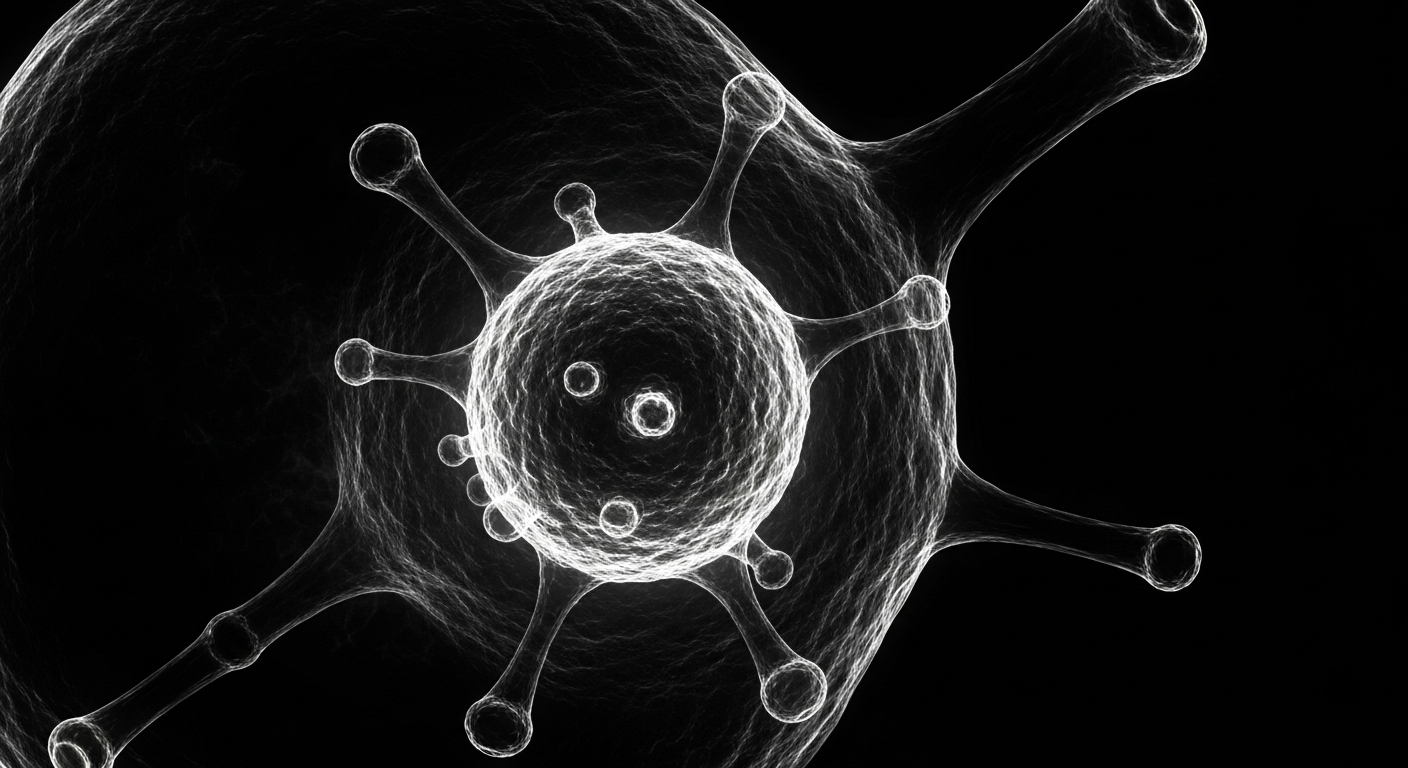 An X-ray-like visualization of the molecular structure of a cancer cell, highlighting the potential of a targeted antibody drug conjugate to selectively disrupt its inner workings.Gaithersburg Today
Salubris Biotherapeutics announced expansion cohort data from the Phase 1/2 study of its 5T4-targeted antibody drug conjugate JK06, showing partial response rates of up to 44% in heavily pre-treated patients with non-small cell lung cancer and breast cancer. The data also demonstrated a favorable safety profile for the investigational therapy.
Why it matters
The positive results for JK06 in advanced solid tumors provide hope for a potential new treatment option for patients with limited therapeutic choices. The 5T4 target is associated with more aggressive cancer progression, making it an important focus for novel drug development.
The details
The data presented at the AACR Annual Meeting included 112 patients with advanced relapsed/refractory solid tumors treated with JK06 every three weeks. Among 38 response-evaluable non-small cell lung cancer patients, 10 achieved confirmed partial responses (ORR 26%), including 3 of 7 squamous cell NSCLC patients (ORR 43%). In breast cancer, 5 of 19 response-evaluable patients had partial responses (ORR 26%), with 4 of 9 hormone receptor-positive patients responding (ORR 44%). JK06 also showed activity in other tumor types like gastric and cervical cancer. The therapy was generally well-tolerated, with a low frequency of adverse events.
- The data cutoff was March 29, 2026.
- The AACR Annual Meeting where the data was presented took place on April 17-22, 2026 in San Diego.
The players
Salubris Biotherapeutics
A clinical-stage biotechnology company dedicated to discovering and developing novel complex biologic therapeutics.
JK06
A first-in-class quadrivalent, biparatopic antibody drug conjugate that selectively targets the 5T4 oncofetal protein, which is overexpressed in a wide range of solid tumors.
Sam Murphy
Chief Executive Officer of Salubris Biotherapeutics.
Omar Saavedra, M.D.
Presenter of the AACR data and affiliated with the Vall d'Hebron Institute of Oncology (VHIO) in Barcelona, Spain.
What they’re saying
“JK06 continues to demonstrate encouraging and durable efficacy among heavily pre-treated metastatic solid tumors. Partial responses have now been observed across four different cancers, including NSCLC and breast cancer, at multiple dose levels. These data are complemented by a consistently favorable safety profile, underscoring our belief that JK06 has the potential to be an important new first-in-class ADC that can address the unmet needs of patients with 5T4-expressing cancers.”
— Sam Murphy, Chief Executive Officer of Salubris Biotherapeutics
What’s next
The Phase 1/2 open-label study of JK06 is ongoing, and Salubris plans to progress the program into the next stages of expansion cohorts, including additional monotherapy cohorts and evaluation of JK06 in combination therapy regimens.
The takeaway
The promising efficacy and safety results for Salubris' 5T4-targeted ADC JK06 in advanced solid tumors, including non-small cell lung cancer and breast cancer, provide hope for a potential new treatment option for patients with limited therapeutic choices. Further development of this first-in-class therapy is warranted to address the unmet need in these difficult-to-treat cancers.