- Today
- Holidays
- Birthdays
- Reminders
- Cities
- Atlanta
- Austin
- Baltimore
- Berwyn
- Beverly Hills
- Birmingham
- Boston
- Brooklyn
- Buffalo
- Charlotte
- Chicago
- Cincinnati
- Cleveland
- Columbus
- Dallas
- Denver
- Detroit
- Fort Worth
- Houston
- Indianapolis
- Knoxville
- Las Vegas
- Los Angeles
- Louisville
- Madison
- Memphis
- Miami
- Milwaukee
- Minneapolis
- Nashville
- New Orleans
- New York
- Omaha
- Orlando
- Philadelphia
- Phoenix
- Pittsburgh
- Portland
- Raleigh
- Richmond
- Rutherford
- Sacramento
- Salt Lake City
- San Antonio
- San Diego
- San Francisco
- San Jose
- Seattle
- Tampa
- Tucson
- Washington
Experts Warn of Bioterrorism Threat and Need for Stronger Pandemic Preparedness
New report highlights how advances in genetic engineering could enable terrorist groups to create or modify viruses with pandemic potential.
Apr. 19, 2026 at 8:35am
Got story updates? Submit your updates here. ›
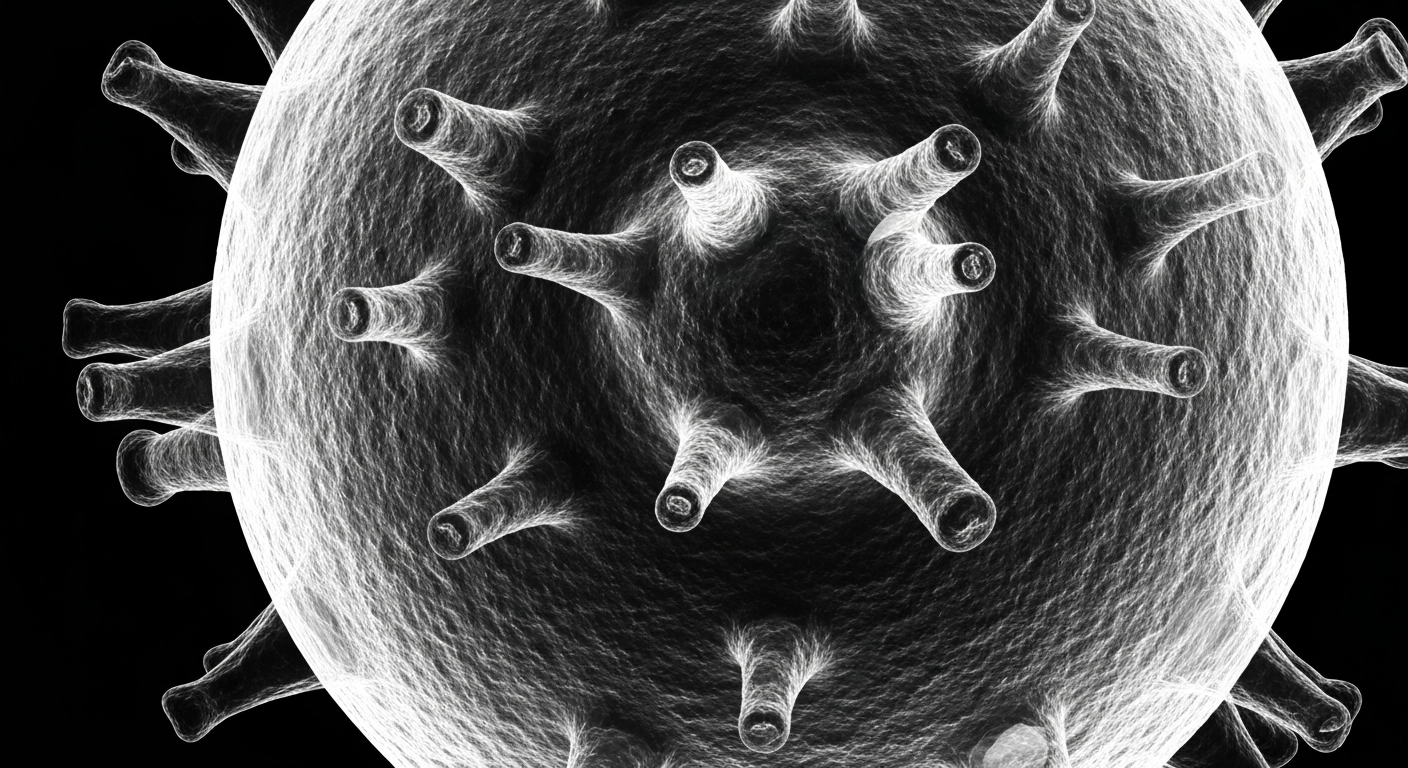 An X-ray view of a potentially dangerous virus, highlighting the growing concerns over the misuse of genetic engineering technology.Baltimore Today
As global health officials continue to monitor emerging infectious disease threats, concerns are growing about the potential misuse of synthetic biology and gain-of-function research by non-state actors. A recent analysis published in the journal Health Security warns that the accessibility of gene-editing tools like CRISPR-Cas9, combined with publicly available genomic sequences of high-consequence pathogens, lowers the technical barrier for malicious actors seeking to weaponize biological agents.
Why it matters
The COVID-19 pandemic demonstrated how a single biological threat can overwhelm health systems and destabilize societies. Experts stress that the risk of terrorist groups engineering pandemic-capable viruses, while currently low, is not theoretical and warrants proactive mitigation strategies to strengthen biosecurity, oversight of dual-use research, and global pandemic preparedness.
The details
The study, conducted by researchers at the Johns Hopkins Center for Health Security and the Nuclear Threat Initiative, warns that the accessibility of gene-editing tools like CRISPR-Cas9, combined with publicly available genomic sequences of high-consequence pathogens, lowers the technical barrier for malicious actors seeking to weaponize biological agents. While no credible evidence currently exists of terrorist organizations possessing the capability to engineer and deploy such pathogens at scale, experts stress that the risk is not theoretical and warrants proactive mitigation strategies.
- The report was published on April 19, 2026.
The players
Dr. Anita Cicero
Deputy director of the Johns Hopkins Center for Health Security and co-author of the study.
Dr. Gregory Koblentz
Director of the Biodefense Graduate Program at George Mason University and a contributor to the analysis.
What they’re saying
“We are entering an era where the tools to manipulate life are increasingly democratized. That brings tremendous promise for medicine and public health, but it also means we must strengthen safeguards against misuse. The same techniques that could lead to breakthrough vaccines could, in the wrong hands, be adapted to enhance transmissibility, evade immunity, or increase virulence.”
— Dr. Anita Cicero, Deputy director of the Johns Hopkins Center for Health Security
“The likelihood of a terrorist group successfully engineering and releasing a virus capable of causing millions of deaths is currently low—but not zero. Our focus should be on reducing that probability through prevention, preparedness, and resilience, not on assuming it cannot happen.”
— Dr. Gregory Koblentz, Director of the Biodefense Graduate Program at George Mason University
What’s next
The report recommends a multi-layered approach to biodefense, including strengthening the oversight of dual-use life science research, expanding international cooperation under frameworks like the Biological Weapons Convention (BWC), and investing in rapid-response capabilities such as universal vaccine platforms, broad-spectrum antivirals, and real-time genomic surveillance networks.
The takeaway
The COVID-19 pandemic has underscored the devastating impact a highly transmissible biological threat can have on global health, economies, and social systems. Experts warn that the increasing accessibility of genetic engineering tools raises the risk of bioterrorism, and call for a renewed commitment to strengthening biosecurity, oversight of dual-use research, and global pandemic preparedness to mitigate this emerging threat.
Baltimore top stories



Baltimore events

Apr. 19, 2026
Shen Yun
Apr. 19, 2026
Baltimore Symphony Orchestra
Apr. 22, 2026
Bear Chicks Vendor Yard