- Today
- Holidays
- Birthdays
- Reminders
- Cities
- Atlanta
- Austin
- Baltimore
- Berwyn
- Beverly Hills
- Birmingham
- Boston
- Brooklyn
- Buffalo
- Charlotte
- Chicago
- Cincinnati
- Cleveland
- Columbus
- Dallas
- Denver
- Detroit
- Fort Worth
- Houston
- Indianapolis
- Knoxville
- Las Vegas
- Los Angeles
- Louisville
- Madison
- Memphis
- Miami
- Milwaukee
- Minneapolis
- Nashville
- New Orleans
- New York
- Omaha
- Orlando
- Philadelphia
- Phoenix
- Pittsburgh
- Portland
- Raleigh
- Richmond
- Rutherford
- Sacramento
- Salt Lake City
- San Antonio
- San Diego
- San Francisco
- San Jose
- Seattle
- Tampa
- Tucson
- Washington
Woburn Today
By the People, for the People
Revere's Midnight Ride: How a Legend Sparked a Revolution
The true story behind Paul Revere's famous 1775 ride and how it continues to inspire protest and dissent today
Apr. 18, 2026 at 9:07am
Got story updates? Submit your updates here. ›
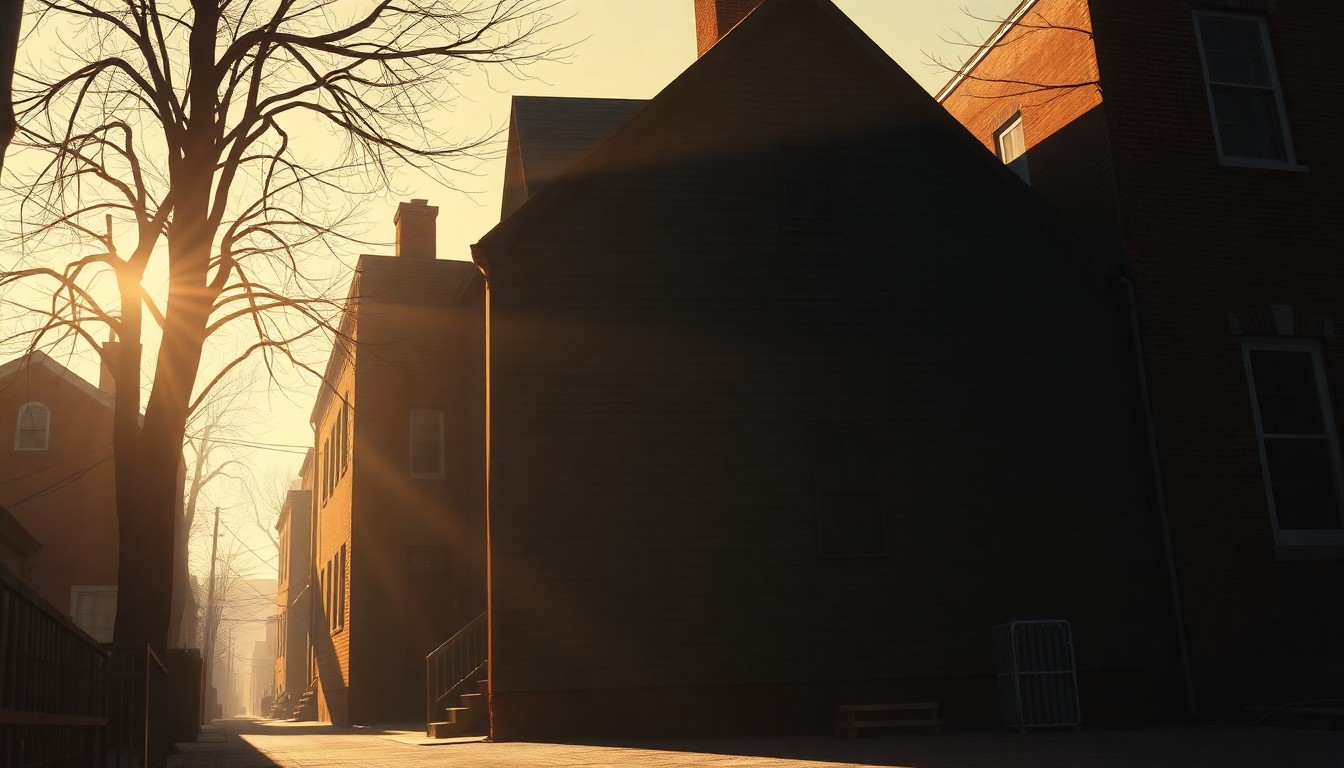 The modest home where Paul Revere lived serves as a quiet, nostalgic reminder of the complex history behind his famous midnight ride.Woburn Today
The story of Paul Revere's midnight ride on April 18, 1775, is a well-known American legend, immortalized in Henry Wadsworth Longfellow's famous poem. But the true events of that night were far more complex, involving a network of riders, lamplighters, farmers, and minutemen whose collective actions sparked the American Revolution. As the nation marks its 250th anniversary, the legacy of Revere's ride lives on, inspiring social movements and political protest that echo the spirit of rebellion from over two centuries ago.
Why it matters
The myth of Revere as a lone hero has become ingrained in the American zeitgeist, shaping how we understand the origins of the Revolutionary War and the power of individual action. Examining the real story behind the ride reveals how history is often simplified and mythologized, while also showing how Revere's legacy continues to inform modern-day dissent against perceived tyranny and injustice.
The details
Revere was part of a larger network of riders, lamplighters, and minutemen who worked together to spread the alarm about the British army's movements that night. While Revere and William Dawes rode out to warn colonial leaders Samuel Adams and John Hancock, dozens of other messengers fanned out across the countryside. Revere himself was captured by British troops and never made it to Concord as the Longfellow poem describes. The first shots of the war were fired on Lexington Green, where Revere returned after his release to help remove incriminating letters from a local tavern.
- On April 18, 1775, Revere left Boston around midnight to warn Adams and Hancock of the British army's movements.
- Around 1 a.m., Revere arrived at the home of Reverend Jonas Clarke, where Adams and Hancock were staying.
- Shortly after, William Dawes also arrived, and the two men met up with Samuel Prescott to alert farmers in Concord.
- Revere was captured by British troops just outside of Lexington and never made it to Concord.
- After his release, Revere returned to Lexington Green, where the first shots of the American Revolution were fired.
The players
Paul Revere
A businessman, political leader, and member of the Sons of Liberty who is best known for his midnight ride to warn colonial leaders of the British army's movements on April 18, 1775.
William Dawes
Another rider who accompanied Revere on the midnight ride, taking a different route to also warn Adams and Hancock.
Samuel Prescott
A man who joined Revere and Dawes to alert farmers in Concord, but was the only one of the three to successfully make it to the town.
Samuel Adams
A colonial leader and one of the key figures Revere and the other riders were trying to warn about the British army's movements.
John Hancock
Another colonial leader who was staying with Adams and was the intended target of the riders' warning.
What they’re saying
“Noise? We'll have noise enough before long. The regulars are out.”
— Paul Revere
“It's a story about how you put together collective action, and while the poem makes for a single hero, it's also important to think … about each individual mattering and making a difference.”
— Nina Zannieri, Executive Director, Paul Revere Memorial Association
“I'm an immigrant. I became a United States citizen because I believe in the values of this country. And I still believe it. It's the people who have the power, not any government. We need to show up and show, we the people have the power to voice our concern.”
— Mei-Hua Hall, Director, Psychosis Neurobiology Laboratory, McLean Hospital
What’s next
The judge in the case will decide on Tuesday whether or not to allow Walker Reed Quinn out on bail.
The takeaway
The myth of Paul Revere as a lone hero has become deeply ingrained in American culture, but the true story of his midnight ride reveals how history is often simplified and how individual actions can spark broader movements. Revere's legacy continues to inspire protest and dissent, as people seek to embody the spirit of rebellion that ignited the American Revolution.