- Today
- Holidays
- Birthdays
- Reminders
- Cities
- Atlanta
- Austin
- Baltimore
- Berwyn
- Beverly Hills
- Birmingham
- Boston
- Brooklyn
- Buffalo
- Charlotte
- Chicago
- Cincinnati
- Cleveland
- Columbus
- Dallas
- Denver
- Detroit
- Fort Worth
- Houston
- Indianapolis
- Knoxville
- Las Vegas
- Los Angeles
- Louisville
- Madison
- Memphis
- Miami
- Milwaukee
- Minneapolis
- Nashville
- New Orleans
- New York
- Omaha
- Orlando
- Philadelphia
- Phoenix
- Pittsburgh
- Portland
- Raleigh
- Richmond
- Rutherford
- Sacramento
- Salt Lake City
- San Antonio
- San Diego
- San Francisco
- San Jose
- Seattle
- Tampa
- Tucson
- Washington
Medford Today
By the People, for the People
Meat Consumption Rises as Protein Trend Grows, Experts Warn
Survey shows growing interest in meat as 'healthy' food choice, despite health risks
Apr. 15, 2026 at 7:00pm
Got story updates? Submit your updates here. ›
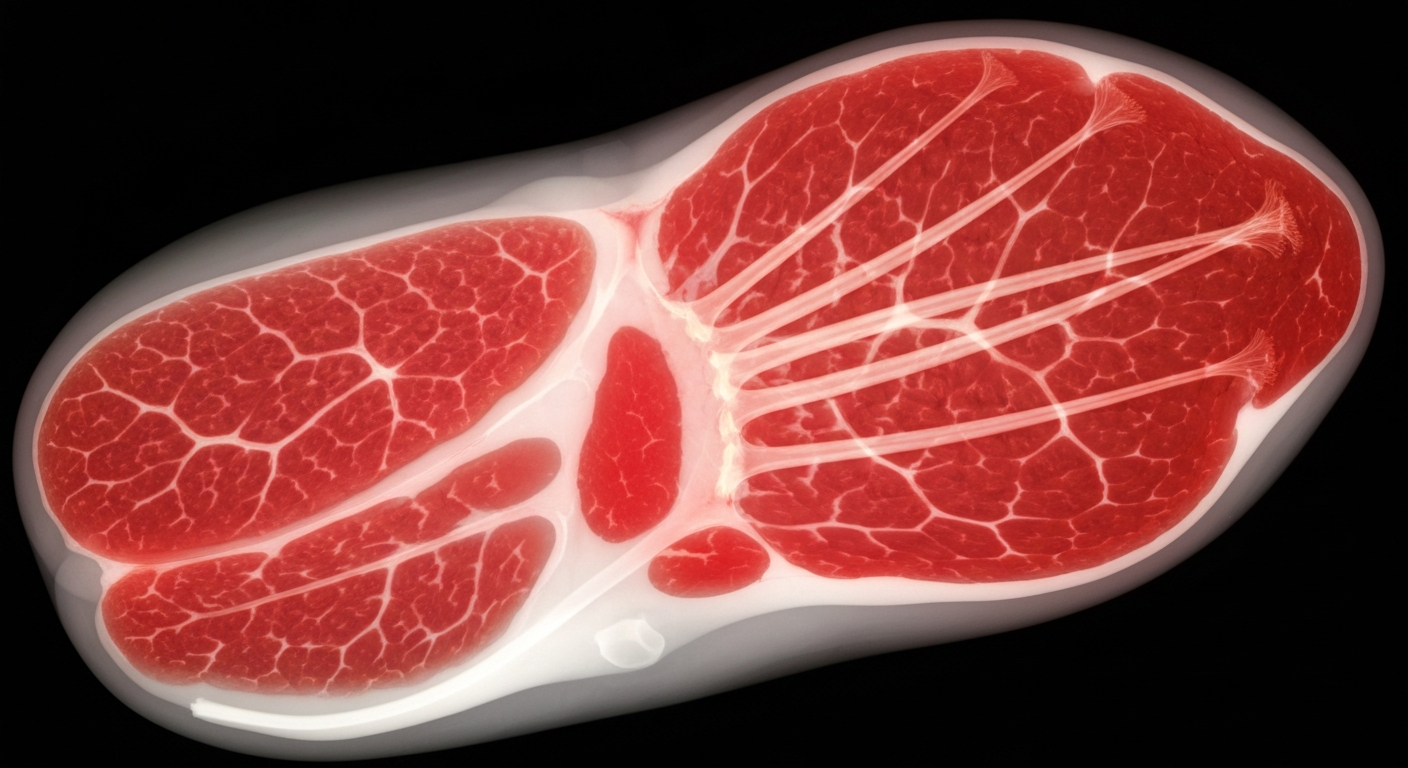 An X-ray view of meat reveals the complex internal structure, highlighting the potential health risks of overconsumption.Medford Today
A new survey from two food industry groups shows growing interest in meat as a 'healthy' food choice, even as doctors warn that too much red meat can raise health risks. The report found that more than 75% of U.S. consumers now see meat and poultry as part of a healthy diet, up from 64% in 2020. However, health experts caution that while protein is important, most people already get enough, and consuming too much protein can cause dehydration, stress the kidneys, and contribute to other health problems.
Why it matters
The growing popularity of meat as a 'healthy' food choice is concerning, as excessive consumption of red meat has been linked to increased risks of heart disease, certain cancers, and type 2 diabetes. This trend highlights the need for better public education on the potential health risks of overconsumption of meat and the benefits of plant-based protein sources.
The details
The report, from FMI - The Food Industry Association and the Meat Institute, found that 45% of U.S. consumers are actively trying to cook more meals with meat, and 31% say they do so occasionally. The report also noted that protein is 'firmly at the center of consumer interest.' However, health experts warn that while protein is important, most people are already getting enough, and consuming too much protein can lead to dehydration, kidney stress, and other health problems. Doctors also point to the downsides of meat, including its high saturated fat content, potential to raise cholesterol and increase the risk of heart attack and stroke, and possible links to certain cancers and type 2 diabetes.
- The report was published on April 15, 2026.
- The survey data showed an increase in meat consumption from 64% in 2020 to over 75% in 2026.
The players
FMI - The Food Industry Association
A trade association representing the food industry, including grocery stores, food manufacturers, and other food-related businesses.
Meat Institute
A trade association representing the meat and poultry industry in the United States.
Erin Hennessy
A nutritionist at Tufts University in Medford, Massachusetts.
Dr. Sarah Hull
A cardiologist at Yale Medicine in New Haven, Connecticut.
Health Secretary Robert F. Kennedy Jr.
The current U.S. Secretary of Health and Human Services.
What they’re saying
“Most people are hitting their recommendations, by and large.”
— Erin Hennessy, Nutritionist at Tufts University
“Once you reach your personal maximum benefit based on your age, your activity level and your body weight, eating above that is actually going to cause harm. It's not going to confer more benefits.”
— Erin Hennessy, Nutritionist at Tufts University
“Saturated fat we've known about for decades.”
— Dr. Sarah Hull, Cardiologist at Yale Medicine
“Meat can also raise cholesterol and increase the risk of a heart attack or stroke.”
— Dr. Sarah Hull, Cardiologist at Yale Medicine
What’s next
The new dietary recommendations from Health Secretary Robert F. Kennedy Jr. are expected to be officially released and implemented in the coming months, which may further impact consumer perceptions and behaviors around meat consumption.
The takeaway
This trend highlights the need for better public education on the potential health risks of overconsumption of meat and the benefits of plant-based protein sources. As protein remains a central focus for many consumers, it's crucial that they understand the nuances and potential downsides of relying too heavily on meat as their primary protein source.
Medford top stories


Medford events

Apr. 15, 2026
Melissa Etheridge: RISE
Apr. 18, 2026
Nick Offerman: Big Woodchuck
Apr. 18, 2026
Nick Offerman: Big Woodchuck