- Today
- Holidays
- Birthdays
- Reminders
- Cities
- Atlanta
- Austin
- Baltimore
- Berwyn
- Beverly Hills
- Birmingham
- Boston
- Brooklyn
- Buffalo
- Charlotte
- Chicago
- Cincinnati
- Cleveland
- Columbus
- Dallas
- Denver
- Detroit
- Fort Worth
- Houston
- Indianapolis
- Knoxville
- Las Vegas
- Los Angeles
- Louisville
- Madison
- Memphis
- Miami
- Milwaukee
- Minneapolis
- Nashville
- New Orleans
- New York
- Omaha
- Orlando
- Philadelphia
- Phoenix
- Pittsburgh
- Portland
- Raleigh
- Richmond
- Rutherford
- Sacramento
- Salt Lake City
- San Antonio
- San Diego
- San Francisco
- San Jose
- Seattle
- Tampa
- Tucson
- Washington
Achilles Injuries Pose Biggest Threat to Footballers' Careers
Experts explain why Achilles tendon ruptures are the most challenging injuries for elite players to recover from and return to top form.
Apr. 18, 2026 at 4:12am
Got story updates? Submit your updates here. ›
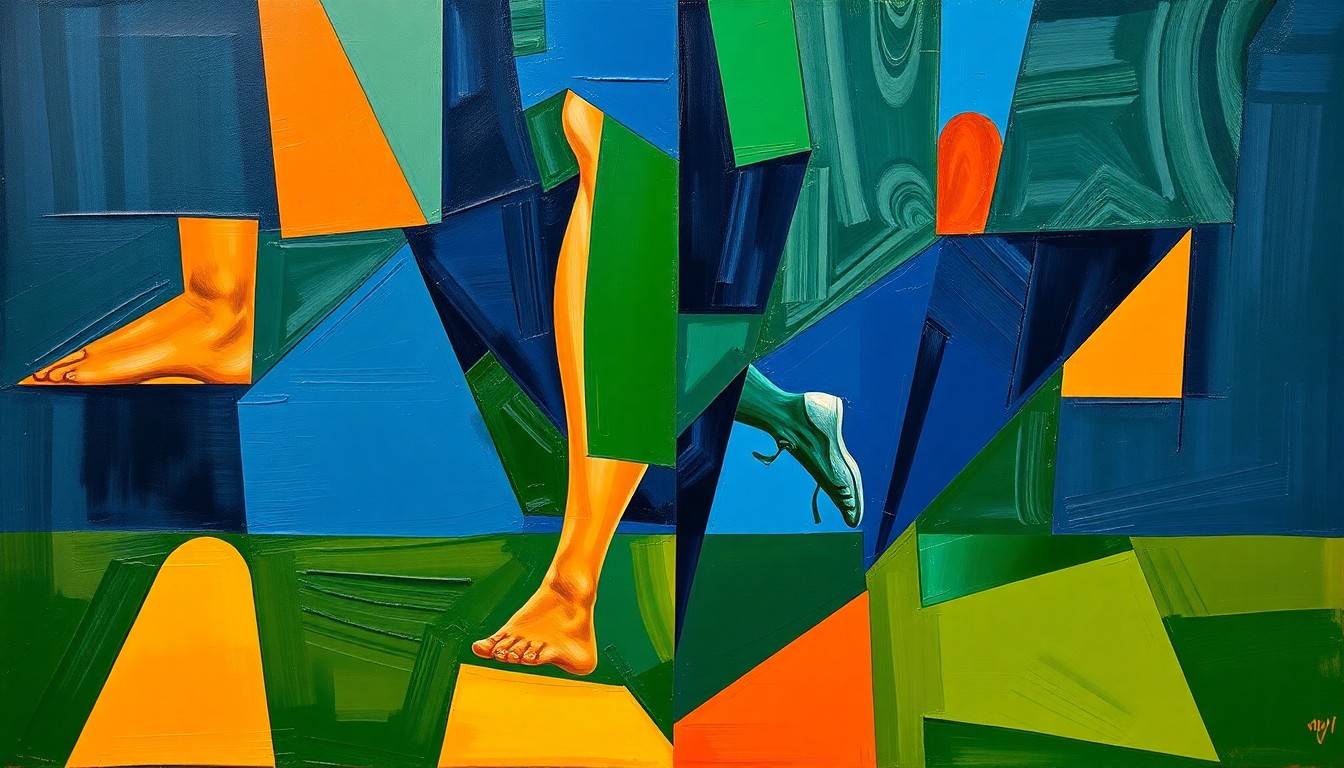 The complex, career-threatening nature of Achilles tendon injuries is captured in this cubist-inspired illustration.Boston Today
Achilles tendon ruptures are considered the worst injuries in football, with up to 20% of elite players failing to return to their pre-injury levels after surgery and rehabilitation. Experts explain the complex nature of the Achilles tendon and the immense forces it must withstand, as well as the lengthy recovery process that can take 6-12 months or more to restore the tendon's strength and elasticity. Players like Callum Hudson-Odoi and Ruben Loftus-Cheek have struggled to regain their previous speed and explosiveness after Achilles injuries, highlighting the difficulty in fully recovering.
Why it matters
Achilles injuries are devastating for footballers because the tendon is crucial for acceleration, deceleration, and explosive movements required at the elite level. Even after successful surgery and rehabilitation, many players never fully regain their pre-injury abilities, putting their careers in jeopardy. Understanding the challenges of Achilles recovery is important for fans, teams, and medical staff to have realistic expectations and provide the best support for players going through this difficult process.
The details
Achilles tendon ruptures often occur in innocuous situations, with players feeling a sudden, intense pain and hearing a "pop" as the tendon snaps. The tendon needs a delicate balance of elasticity and tension to function properly, and once ruptured, it can be extremely difficult to restore those mechanical properties. Surgery is the preferred treatment, but even then, only about 75-80% of elite players are able to return to their previous performance levels. The rehabilitation process is slow and arduous, with players initially non-weight-bearing for 6-12 weeks before gradually progressing to functional movements and plyometrics over several months. Experts warn that the first year back is the most crucial, with a 9% re-rupture rate, as the tendon must fully mature and regain its strength.
- In April 2019, Chelsea's Callum Hudson-Odoi ruptured his Achilles.
- A few weeks later, his teammate Ruben Loftus-Cheek suffered the same injury while playing in a charity match in Boston.
- In the recent Champions League quarter-final, Liverpool's Hugo Ekitike suffered an Achilles tendon rupture, ending his season and World Cup hopes.
The players
Callum Hudson-Odoi
A Chelsea player who ruptured his Achilles in 2019 and struggled to regain his previous speed and explosiveness after the injury.
Ruben Loftus-Cheek
A Chelsea player who also ruptured his Achilles in 2019, taking 9 months to return to play and feeling he lost a lot of muscle and power.
Hugo Ekitike
A Liverpool striker who recently suffered an Achilles tendon rupture during a Champions League match, ending his season and World Cup hopes.
What they’re saying
“People don't realise how difficult it is to regain the same fitness, speed and sharpness. It takes a lot of muscle out of your calf and other areas of your body. You don't feel the same. I don't think you ever will.”
— Callum Hudson-Odoi, Chelsea player
“I came back from injury but didn't feel myself, didn't feel powerful, wasn't running past people and felt like I lost a lot of muscle and power.”
— Ruben Loftus-Cheek, Chelsea player
What’s next
The judge in the case will decide on Tuesday whether or not to allow Walker Reed Quinn out on bail.
The takeaway
This case highlights growing concerns in the community about repeat offenders released on bail, raising questions about bail reform, public safety on SF streets, and if any special laws to govern autonomous vehicles in residential and commercial areas.
Boston top stories

Boston events

Apr. 19, 2026
Wild Kratts Live 2.0 - Activate Creature Power!
Apr. 19, 2026
Disney's Beauty and the Beast (Touring)
Apr. 19, 2026
Wild Kratts Live 2.0 - Activate Creature Power!