- Today
- Holidays
- Birthdays
- Reminders
- Cities
- Atlanta
- Austin
- Baltimore
- Berwyn
- Beverly Hills
- Birmingham
- Boston
- Brooklyn
- Buffalo
- Charlotte
- Chicago
- Cincinnati
- Cleveland
- Columbus
- Dallas
- Denver
- Detroit
- Fort Worth
- Houston
- Indianapolis
- Knoxville
- Las Vegas
- Los Angeles
- Louisville
- Madison
- Memphis
- Miami
- Milwaukee
- Minneapolis
- Nashville
- New Orleans
- New York
- Omaha
- Orlando
- Philadelphia
- Phoenix
- Pittsburgh
- Portland
- Raleigh
- Richmond
- Rutherford
- Sacramento
- Salt Lake City
- San Antonio
- San Diego
- San Francisco
- San Jose
- Seattle
- Tampa
- Tucson
- Washington
Kansas Lawmakers Struggle to Address Water Crisis in 2026
Governor Kelly expresses disappointment over lack of progress on water legislation during legislative session.
Apr. 17, 2026 at 5:55pm
Got story updates? Submit your updates here. ›
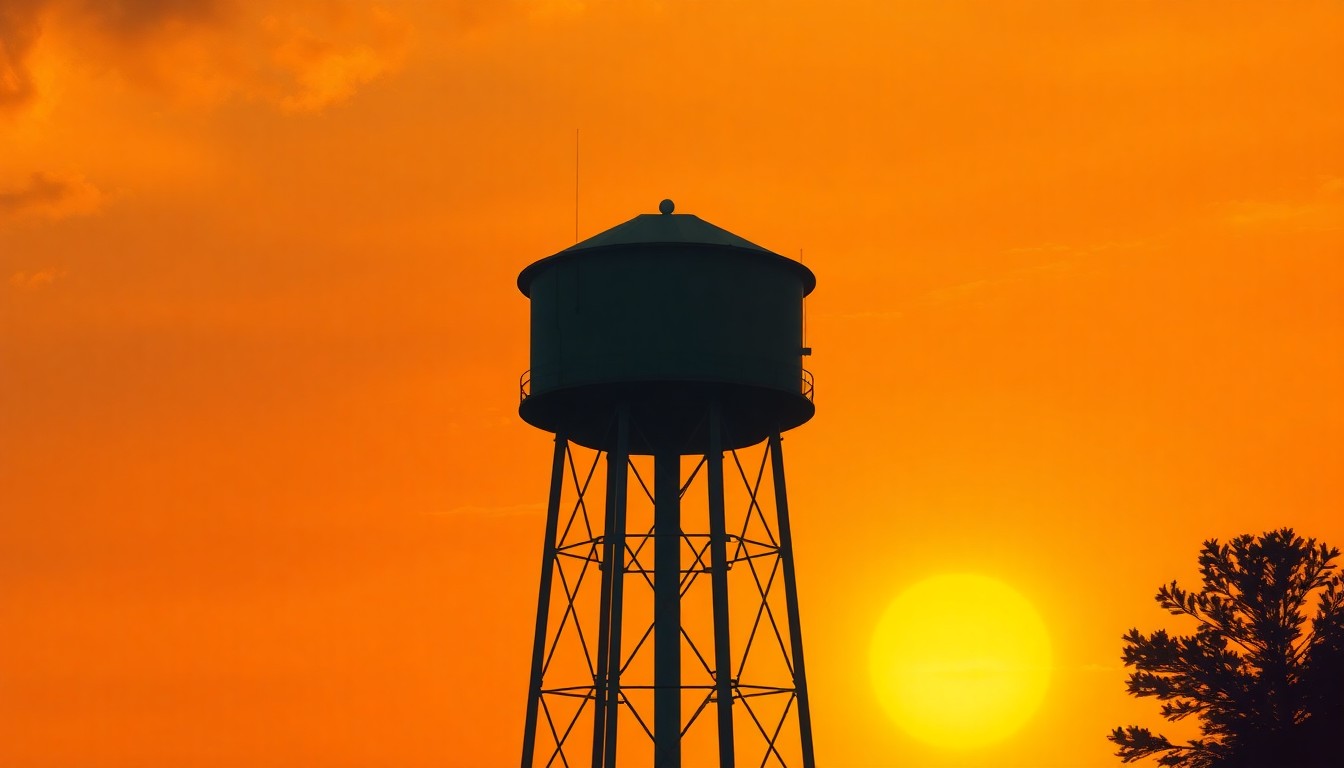 As Kansas grapples with dwindling water supplies, a solitary water tower stands as a symbol of the state's struggle to find sustainable solutions to its looming crisis.Topeka Today
Kansas Governor Laura Kelly has expressed dissatisfaction over the lack of progress made on water legislation in the state legislature during the 2026 session. Water supply issues, including the drying up of the Ogallala Aquifer and sediment buildup in reservoirs, have become a major concern, with some communities potentially running out of fresh water in as little as 25 years. While lawmakers passed a bill to help communities invest in reusable water technology and established a Water Program Task Force, Kelly said 'not as much got done as I wanted' in terms of creating a dedicated funding source and long-term plan to address the crisis.
Why it matters
Water scarcity is a growing problem in Kansas, with the state's main water sources, including the Ogallala Aquifer, facing depletion. Failure to address this issue could have significant economic and social consequences for communities across the state. The lack of progress on water legislation during the 2026 session highlights the challenges lawmakers face in developing effective solutions to this complex and pressing issue.
The details
During the 2026 legislative session, Kansas lawmakers passed a bill that puts guardrails in place for communities to invest in reusable water technology. Governor Kelly also established a Water Program Task Force to work on developing a long-term funding plan to help address the state's water shortage problems. However, Kelly expressed disappointment that the legislature did not do more to create a dedicated funding source and comprehensive plan to tackle the water crisis.
- The 2026 legislative session in Kansas recently came to a close.
- The Water Program Task Force plans to meet throughout the spring and summer of 2026 to work on proposals for the 2027 legislative session.
The players
Governor Laura Kelly
The governor of Kansas who has identified water as a top priority but expressed dissatisfaction with the lack of progress made on water legislation during the 2026 legislative session.
Senator Kenny Titus
The chair of the Water Program Task Force, which plans to develop long-term funding proposals to address Kansas' water shortage problems.
What they’re saying
“'Not as much got done as I wanted. I was really hoping that the legislature would come up with a process and the dedicated funding source. You know, it wasn't a complete disaster related to water. They've got more to do and I think they will come back and do that.'”
— Governor Laura Kelly
“'You know, all of us that are involved in water really want to move forward with long term plans, but the water problem has never really lended itself to 'ah, here's the silver bullet solution.' We need time as a task force to work through our process and for me as a legislator it doesn't make sense to get too far in front of the task force.'”
— Senator Kenny Titus, Chair of the Water Program Task Force
What’s next
The Water Program Task Force plans to meet throughout the spring and summer of 2026 to work on proposals for the 2027 legislative session, with the goal of bringing concrete solutions to lawmakers to address Kansas' long-term water shortage problems.
The takeaway
The lack of progress on water legislation during the 2026 Kansas legislative session highlights the ongoing challenges the state faces in addressing its water crisis. While some steps were taken, such as establishing a task force, the failure to create a dedicated funding source and comprehensive plan underscores the need for lawmakers to prioritize this critical issue and work towards sustainable, long-term solutions.