- Today
- Holidays
- Birthdays
- Reminders
- Cities
- Atlanta
- Austin
- Baltimore
- Berwyn
- Beverly Hills
- Birmingham
- Boston
- Brooklyn
- Buffalo
- Charlotte
- Chicago
- Cincinnati
- Cleveland
- Columbus
- Dallas
- Denver
- Detroit
- Fort Worth
- Houston
- Indianapolis
- Knoxville
- Las Vegas
- Los Angeles
- Louisville
- Madison
- Memphis
- Miami
- Milwaukee
- Minneapolis
- Nashville
- New Orleans
- New York
- Omaha
- Orlando
- Philadelphia
- Phoenix
- Pittsburgh
- Portland
- Raleigh
- Richmond
- Rutherford
- Sacramento
- Salt Lake City
- San Antonio
- San Diego
- San Francisco
- San Jose
- Seattle
- Tampa
- Tucson
- Washington
Jewell Today
By the People, for the People
Avian Flu Spreads to Five More States, Impacting Poultry Farms and Wildlife
Experts scramble to contain outbreaks as the highly contagious virus claims thousands of birds across the U.S.
Apr. 13, 2026 at 6:56am
Got story updates? Submit your updates here. ›
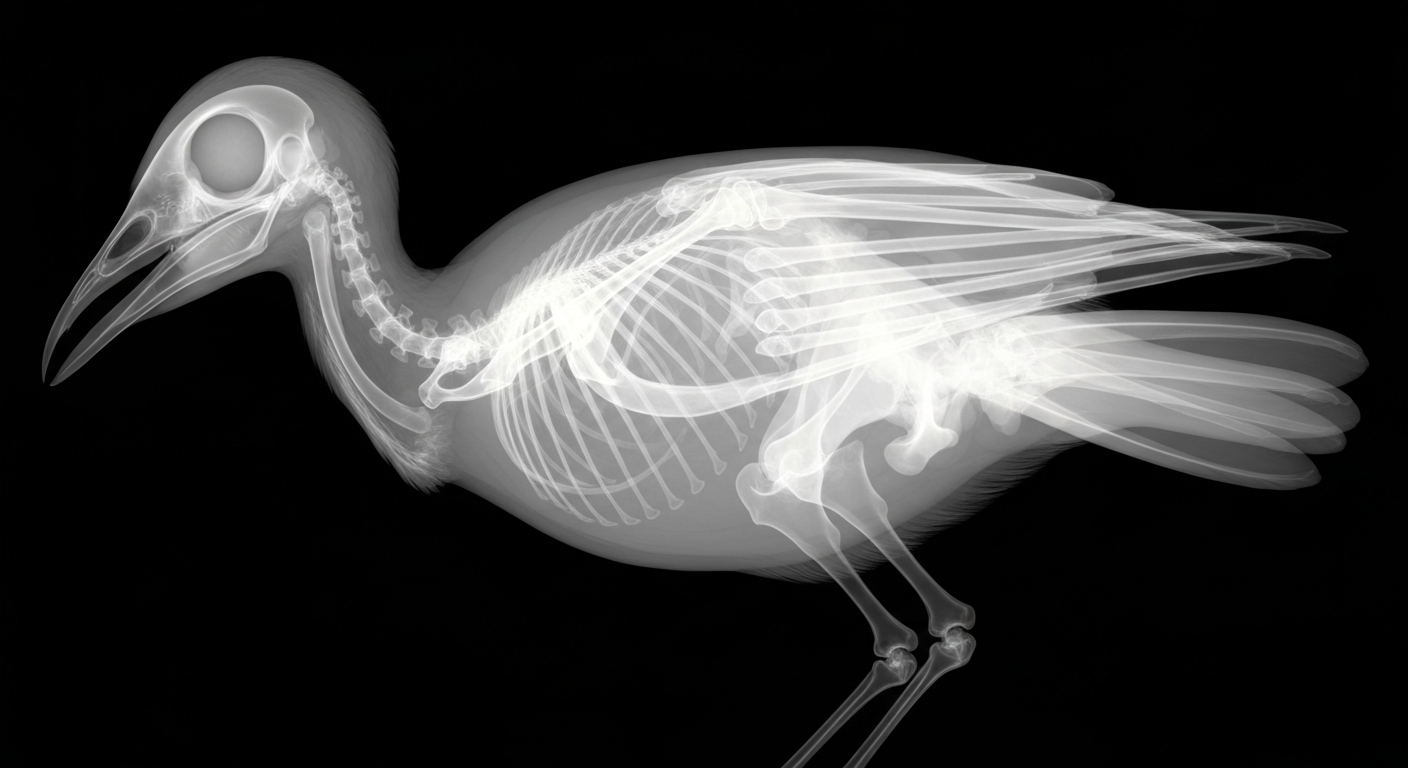 An x-ray image of a bird's skeletal structure highlights the fragility of avian populations amid the spread of highly contagious avian flu.Jewell Today
Avian flu, also known as bird flu, has now affected over 128,000 birds in five additional states, according to the USDA's Animal and Plant Health Inspection Service. The latest outbreaks have hit commercial poultry farms and backyard flocks hard, with significant losses reported in Arkansas, Kansas, Maryland, Nebraska, and New York. Suspected cases have also emerged in wild bird populations, raising concerns about the virus's impact on ecosystems. Experts are working to contain the spread, but the unpredictable nature of the disease and potential links to human activity have sparked controversy.
Why it matters
Avian flu outbreaks can have far-reaching consequences, from devastating economic losses for farmers to disruptions in the food supply and potential risks to human health. The spread of the virus to wild bird populations also raises concerns about the broader ecological impact and the need for more robust wildlife monitoring to prevent zoonotic disease jumps. These incidents highlight the importance of proactive measures to address the complex factors driving the emergence and spread of infectious diseases.
The details
The latest confirmed cases of avian flu include a broiler breeder farm in Drew County, Arkansas, that lost 19,400 birds; a game bird farm in Jewell County, Kansas, with 13,100 affected birds; a small backyard flock in Wabaunsee County, Kansas, that lost 40 birds; a broiler farm in Queen Anne's County, Maryland, that suffered the largest single loss at 96,200 birds; a tiny backyard flock in Washington County, Nebraska, with 20 birds lost; and a live-bird market in Kings County, New York, that lost just 4 birds. These incidents underscore the virus's ability to impact both large commercial operations and small, backyard flocks.
- The latest outbreaks were reported just yesterday, April 12, 2026.
The players
US Department of Agriculture's Animal and Plant Health Inspection Service (APHIS)
The federal agency responsible for monitoring and responding to animal health issues, including avian flu outbreaks.
Iowa Department of Natural Resources (DNR)
The state agency that oversees natural resources and wildlife in Iowa, including investigating suspected avian flu cases in wild bird populations.
Patty Sheehan
Orlando City Commissioner who held a press conference about over a dozen swans dying in downtown Orlando's Lake Eola Park, potentially due to avian flu.
What they’re saying
“While she speculated avian flu might be the culprit, no tests have been done, and state officials are silent on the matter. This raises eyebrows: Are these isolated events, or part of a larger pattern?”
— Patty Sheehan, Orlando City Commissioner
What’s next
The Iowa Department of Natural Resources has not yet issued a public statement on the suspected avian flu cases at the Dale Maffitt Reservoir, leaving some to question the transparency of the investigation. Officials will need to conduct further testing and monitoring to determine the full extent of the outbreak and its impact on wild bird populations.
The takeaway
These avian flu outbreaks highlight the need for more robust disease surveillance and response systems, both in domestic poultry operations and wild bird populations. Addressing the complex factors driving the emergence and spread of infectious diseases, such as the potential role of human activity and climate change, will be crucial in preventing future zoonotic disease outbreaks and protecting the health of our food systems and ecosystems.