- Today
- Holidays
- Birthdays
- Reminders
- Cities
- Atlanta
- Austin
- Baltimore
- Berwyn
- Beverly Hills
- Birmingham
- Boston
- Brooklyn
- Buffalo
- Charlotte
- Chicago
- Cincinnati
- Cleveland
- Columbus
- Dallas
- Denver
- Detroit
- Fort Worth
- Houston
- Indianapolis
- Knoxville
- Las Vegas
- Los Angeles
- Louisville
- Madison
- Memphis
- Miami
- Milwaukee
- Minneapolis
- Nashville
- New Orleans
- New York
- Omaha
- Orlando
- Philadelphia
- Phoenix
- Pittsburgh
- Portland
- Raleigh
- Richmond
- Rutherford
- Sacramento
- Salt Lake City
- San Antonio
- San Diego
- San Francisco
- San Jose
- Seattle
- Tampa
- Tucson
- Washington
Wheatfield Today
By the People, for the People
Tornado Devastates Indiana Solar Farm, Spares Nearby Coal Plant
A billion-dollar solar facility was reduced to toxic debris, raising concerns about the vulnerability of green infrastructure.
Apr. 3, 2026 at 1:26pm
Got story updates? Submit your updates here. ›
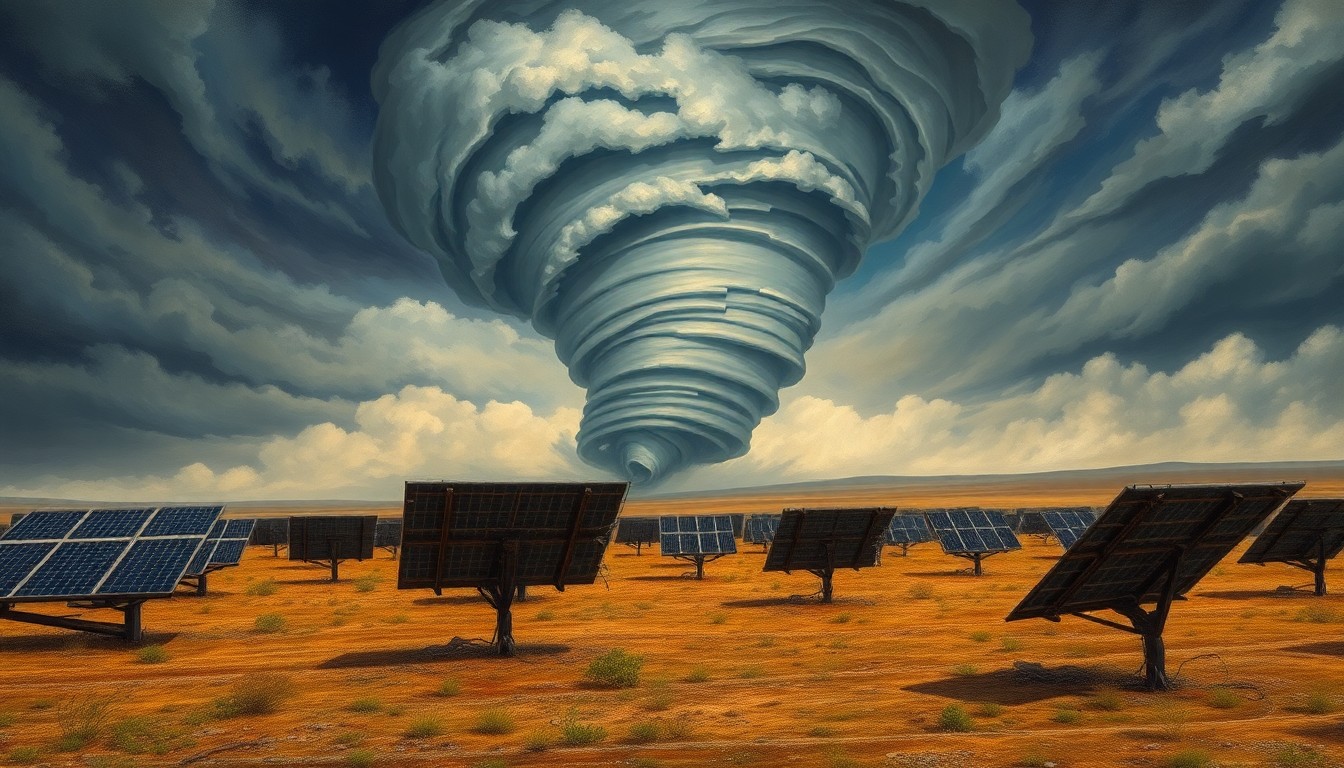 The aftermath of a tornado's destruction serves as a sobering reminder of the vulnerabilities of large-scale solar projects in the face of extreme weather.Wheatfield Today
A powerful tornado ripped through a solar farm in Wheatfield, Indiana, causing catastrophic damage and leaving behind a hazardous debris field. The 700-megawatt Dunns Bridge I & II solar facility, worth an estimated $1 billion, was completely destroyed, with rows of solar panels torn from the ground and scattered for miles. In contrast, a nearby coal-fired power plant remained unscathed, highlighting the fragility of renewable energy infrastructure compared to traditional fossil fuel plants.
Why it matters
This incident underscores the potential risks and vulnerabilities of large-scale solar projects, which can be susceptible to severe weather events. The destruction of the solar farm raises concerns about the environmental impact of the scattered toxic materials and the financial burden that will fall on taxpayers to rebuild the facility. It also reignites the debate about the reliability and resilience of renewable energy sources compared to conventional power plants.
The details
The tornado, classified as an EF1 on the Fujita scale, swept through the Wheatfield community on March 10, 2026, causing significant damage to 10-15 homes. However, the real devastation was reserved for the nearby solar farm, where the tornado ripped apart the 2.4 million solar panels, bending metal frames and shattering the modules into countless fragments. The resulting debris field stretches for miles, and the operator, NIPSCO, is now tasked with assessing the environmental risks posed by the scattered materials, which may contain toxic substances and heavy metals.
- The tornado struck the Dunns Bridge I & II solar farm on March 10, 2026.
- The solar facility was a $1 billion investment that had been operational for several years prior to the disaster.
The players
NIPSCO
The operator of the Dunns Bridge I & II solar farm, which is now responsible for securing the site and assessing the environmental risks posed by the scattered debris.
What’s next
NIPSCO will need to work with local authorities and environmental agencies to safely clean up the site and determine the extent of any environmental damage caused by the scattered solar panel debris.
The takeaway
This incident highlights the potential vulnerabilities of large-scale renewable energy projects, particularly in regions prone to severe weather events. It raises questions about the long-term reliability and resilience of solar power infrastructure compared to traditional fossil fuel plants, and the financial and environmental costs associated with rebuilding after a disaster.