- Today
- Holidays
- Birthdays
- Reminders
- Cities
- Atlanta
- Austin
- Baltimore
- Berwyn
- Beverly Hills
- Birmingham
- Boston
- Brooklyn
- Buffalo
- Charlotte
- Chicago
- Cincinnati
- Cleveland
- Columbus
- Dallas
- Denver
- Detroit
- Fort Worth
- Houston
- Indianapolis
- Knoxville
- Las Vegas
- Los Angeles
- Louisville
- Madison
- Memphis
- Miami
- Milwaukee
- Minneapolis
- Nashville
- New Orleans
- New York
- Omaha
- Orlando
- Philadelphia
- Phoenix
- Pittsburgh
- Portland
- Raleigh
- Richmond
- Rutherford
- Sacramento
- Salt Lake City
- San Antonio
- San Diego
- San Francisco
- San Jose
- Seattle
- Tampa
- Tucson
- Washington
Pope and President Clash Over Iran Conflict
Trump and Pope Leo XIV exchange heated rhetoric over the war in Iran and the role of faith in global affairs.
Apr. 14, 2026 at 4:18am
Got story updates? Submit your updates here. ›
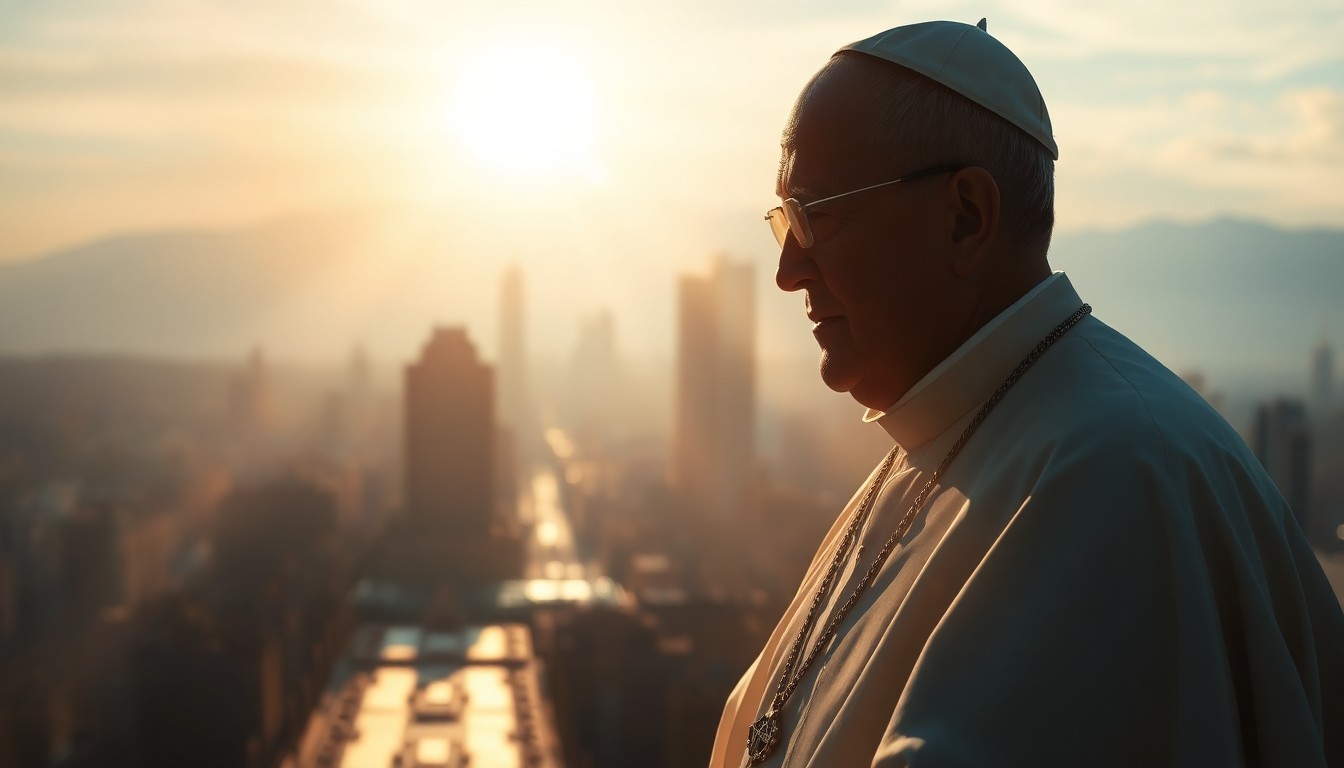 As tensions escalate between the papacy and the presidency, a contemplative scene evokes the timeless struggle between spiritual and political authority.Chicago Today
Pope Leo XIV, the first American pope, and former President Donald Trump have engaged in a public war of words over the ongoing conflict in Iran and the role of the Catholic Church in global politics. Trump has accused Leo of being 'weak' and beholden to the 'Radical Left', while Leo has condemned Trump's bellicose rhetoric and threats toward Iran as 'truly unacceptable'. The two leaders' vastly different worldviews and approaches to faith and foreign policy have come to a head, sparking an unprecedented clash between the world's two most prominent American voices.
Why it matters
This clash between the pope and the former president highlights the growing tension between religious and political authority, as well as the divergent perspectives on the use of force in international affairs. It also underscores the unique position of the papacy as a global moral authority that is not beholden to any single nation or political agenda.
The details
As bishop in Peru, the future Pope Leo XIV was outspoken in his criticism of Russia's invasion of Ukraine in 2022, describing it as an 'imperialist invasion'. After being elected pope in 2025, Leo has continued to emphasize the message of peace, quoting Jesus' call to be 'peacemakers' and washing the feet of others in a symbolic gesture. In contrast, Trump has escalated threats toward Iran, comparing himself to the persecuted Jesus and welcoming conservative religious leaders to the White House. Leo has directly named Trump and called his threats 'truly unacceptable', while Trump has accused the pope of being 'weak' and beholden to the 'Radical Left'.
- In 2022, then-Bishop Prevost criticized Russia's invasion of Ukraine.
- On May 8, 2025, Cardinal Prevost was elected as Pope Leo XIV.
- In his first public remarks, Pope Leo XIV emphasized the message of peace.
- Around Easter 2026, Trump escalated threats toward Iran.
- On Palm Sunday 2026, Pope Leo XIV called Jesus the 'King of Peace' and said God 'does not listen to the prayers of those who wage war'.
The players
Pope Leo XIV
The first American pope, formerly known as Cardinal Robert Francis Prevost, who has taken a strong stance against the use of force in international affairs and emphasized the message of peace.
Donald Trump
The former President of the United States who has escalated threats toward Iran and accused Pope Leo XIV of being 'weak' and beholden to the 'Radical Left'.
What they’re saying
“'I'm not afraid of the Trump administration, or of speaking out loudly about the message of the Gospel, which is what the Church works for.'”
— Pope Leo XIV
“'Congratulations to Cardinal Robert Francis Prevost, who was just named Pope. It is such an honor to realize that he is the first American Pope. What excitement, and what a Great Honor for our Country. I look forward to meeting Pope Leo XIV. It will be a very meaningful moment!'”
— Donald Trump
“'He wasn't on any list to be Pope, and was only put there by the Church because he was an American, and they thought that would be the best way to deal with President Donald J. Trump.'”
— Donald Trump
“'Peace with you all … the first greeting of the risen Christ, the Good Shepherd who gave his life for the flock of God.'”
— Pope Leo XIV
“'In the Sermon on the Mount, Jesus proclaimed: 'Blessed are the peacemakers.''”
— Pope Leo XIV
What’s next
The ongoing tensions between Pope Leo XIV and former President Trump are likely to continue, as the two leaders have starkly different views on the role of faith in global affairs and the use of force. It remains to be seen whether they will be able to find common ground or if their clash will escalate further.
The takeaway
This clash between the pope and the former president highlights the growing divide between religious and political authority, as well as the divergent perspectives on the use of force in international affairs. It underscores the unique position of the papacy as a global moral authority that is not beholden to any single nation or political agenda, and the challenges that can arise when that authority comes into conflict with the agenda of a powerful political leader.
Chicago top stories



Chicago events
Apr. 14, 2026
Des Rocs, ROMES, King Falcon

Apr. 14, 2026
*SOLD OUT* Gilmore Girls, but Chicago