- Today
- Holidays
- Birthdays
- Reminders
- Cities
- Atlanta
- Austin
- Baltimore
- Berwyn
- Beverly Hills
- Birmingham
- Boston
- Brooklyn
- Buffalo
- Charlotte
- Chicago
- Cincinnati
- Cleveland
- Columbus
- Dallas
- Denver
- Detroit
- Fort Worth
- Houston
- Indianapolis
- Knoxville
- Las Vegas
- Los Angeles
- Louisville
- Madison
- Memphis
- Miami
- Milwaukee
- Minneapolis
- Nashville
- New Orleans
- New York
- Omaha
- Orlando
- Philadelphia
- Phoenix
- Pittsburgh
- Portland
- Raleigh
- Richmond
- Rutherford
- Sacramento
- Salt Lake City
- San Antonio
- San Diego
- San Francisco
- San Jose
- Seattle
- Tampa
- Tucson
- Washington
Chapin Today
By the People, for the People
Illinois Farmer Finds Solutions for No-Till Soybean Challenges
Adjustments to equipment and planting techniques help overcome cover crop overgrowth and accuracy issues.
Apr. 18, 2026 at 6:40am
Got story updates? Submit your updates here. ›
 An abstract visual representation of the intricate natural and technological systems that enable successful no-till soybean production.Chapin Today
John Werries, a no-till farmer in Chapin, Illinois, has made improvements to his implement guidance and air seeder setup to address challenges with cover crop overgrowth and planting accuracy when growing no-till soybeans. Werries, along with his son Dean and one employee, have had to adapt their practices year-over-year to combat the unpredictable conditions on their farm.
Why it matters
No-till farming practices can provide significant benefits like improved soil health and reduced erosion, but also come with unique challenges that farmers must overcome through innovative solutions. Werries' story highlights the ongoing efforts required to make no-till soybean production successful, which is an important crop for many Midwest farmers.
The details
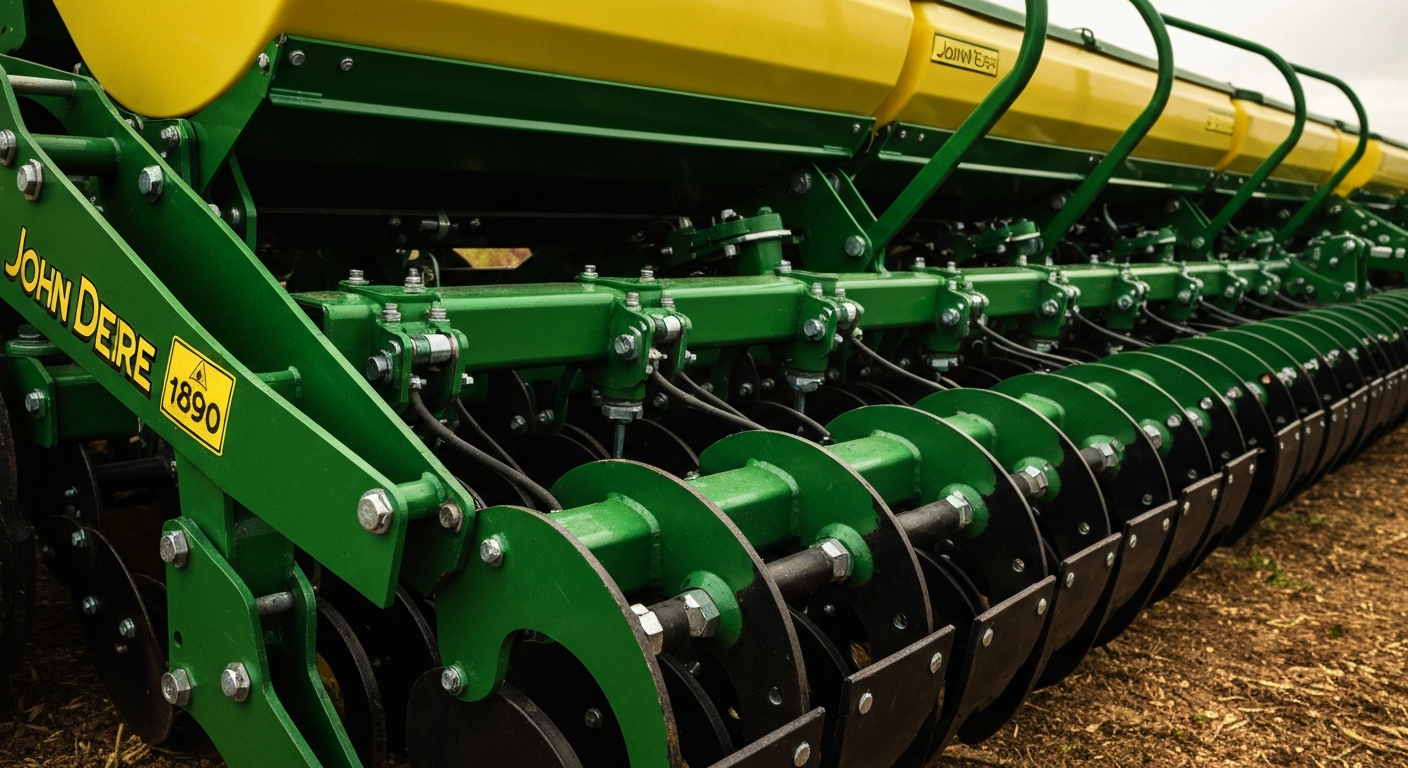
Werries has found that making adjustments to his implement guidance and air seeder setup has helped him better manage cover crop overgrowth and improve planting accuracy when no-tilling soybeans. These changes have allowed him to more effectively plant the soybeans into the cover crop residue without sacrificing yield potential.
- Werries has been no-tilling soybeans and strip-tilling corn on his Chapin, Illinois farm for an unspecified number of years.
The players
John Werries
A no-till farmer in Chapin, Illinois who grows soybeans and corn.
Dean Werries
John Werries' son who works on the family farm.
The takeaway
Werries' story demonstrates the ongoing innovation and problem-solving required to make no-till soybean production successful, even for experienced farmers. His willingness to experiment with equipment adjustments and planting techniques highlights the dedication needed to overcome the unique challenges of no-till farming.