- Today
- Holidays
- Birthdays
- Reminders
- Cities
- Atlanta
- Austin
- Baltimore
- Berwyn
- Beverly Hills
- Birmingham
- Boston
- Brooklyn
- Buffalo
- Charlotte
- Chicago
- Cincinnati
- Cleveland
- Columbus
- Dallas
- Denver
- Detroit
- Fort Worth
- Houston
- Indianapolis
- Knoxville
- Las Vegas
- Los Angeles
- Louisville
- Madison
- Memphis
- Miami
- Milwaukee
- Minneapolis
- Nashville
- New Orleans
- New York
- Omaha
- Orlando
- Philadelphia
- Phoenix
- Pittsburgh
- Portland
- Raleigh
- Richmond
- Rutherford
- Sacramento
- Salt Lake City
- San Antonio
- San Diego
- San Francisco
- San Jose
- Seattle
- Tampa
- Tucson
- Washington
Lahaina Today
By the People, for the People
Wildfires Burn Longer as Climate Change Extends Fire Season
Flames now last later into the night and start earlier in the morning, making them harder to fight
Apr. 17, 2026 at 6:54pm
Got story updates? Submit your updates here. ›
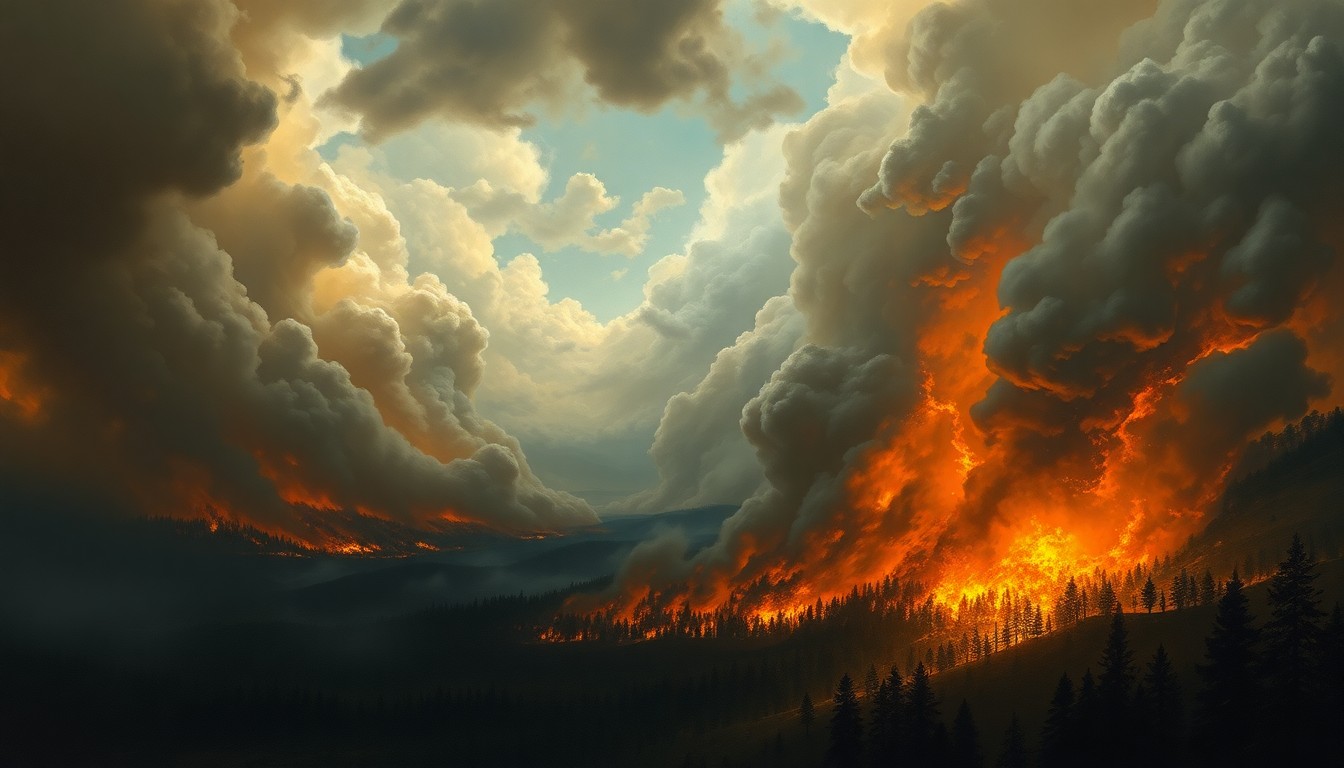 As climate change extends the fire season, wildfires now burn later into the night, posing an escalating threat to communities across North America.Lahaina Today
A new study has found that climate change is extending the hotter and drier conditions that feed wildfires, causing them to burn for longer periods. Fires used to die down or even extinguish at night as temperatures dropped and humidity increased, but that is happening less often. The number of hours in North America when the weather is favorable for wildfires has increased by 36% over the past 50 years, with some regions seeing as much as 2,000 more potential burning hours annually.
Why it matters
Wildfires that continue burning through the night are much more difficult for firefighters to control and contain. This trend of longer-burning fires is exacerbating the wildfire crisis across North America, with the average annual area burned in the U.S. and Canada more than doubling since the 1980s.
The details
The study, published in Science Advances, analyzed nearly 9,000 larger wildfires from 2017 to 2023 using weather satellite data and other tools to track hourly changes in atmospheric conditions like humidity, temperature, wind, and fuel moisture levels. The researchers found that the number of days with fire-prone weather has increased by 44% over the past 50 years, effectively adding 26 more days per year when conditions are ripe for wildfires. This is primarily due to warmer and drier nighttime weather, which prevents the fires from slowing down or extinguishing as they once did.
- Since 1975, summers in the contiguous U.S. have seen nighttime lowest temperatures warm by 2.6°F (1.4°C), while daytime highest temperatures have gone up 2.2°F (1.2°C).
- From 2016 to 2025, wildfires in the United States on average burned an area the size of Massachusetts each year, slightly more than 11,000 square miles (28,500 square kilometers) - 2.6 times the average burn area of the 1980s.
- Canada's land burned on average for the last 10 years is 2.8 times more than during the 1980s.
The players
Xianli Wang
A fire scientist with the Canadian Forest Service and co-author of the study.
John Abatzoglou
A fire scientist at the University of California Merced who was not part of the study.
Nicholai Allen
A wildland firefighter who also founded a firm that makes home fire prevention tools.
Kaiwei Luo
The lead author of the study and a fire science researcher at the University of Alberta.
Jacob Bendix
A fire scientist at Syracuse University who was not part of the research.
What they’re saying
“Fires normally slow down during the night, or they just stop. But under extreme fire hazard conditions, fire actually burns through the night or later into the night.”
— Xianli Wang, Fire scientist, Canadian Forest Service
“Nights aren't what they used to be — that is, more reliable breaks for wildfire. Widespread warming and lack of humidity is keeping fires up at night.”
— John Abatzoglou, Fire scientist, University of California Merced
“You have to understand that you have snakes and bears and mountain lions and all the stuff you have in daytime. But at night, they're really scared and they're running away from the fire.”
— Nicholai Allen, Wildland firefighter and founder of home fire prevention tools firm
What’s next
Scientists warn that as climate change continues to worsen, the trend of longer-burning wildfires is likely to get even worse, posing an increasing threat to communities and ecosystems across North America.
The takeaway
This study serves as a sobering reminder of the profound impact that climate change is having on the frequency, intensity, and duration of wildfires. As nighttime conditions become hotter and drier, wildfires are able to burn for longer periods, making them much more difficult for firefighters to control and contain. Addressing the root causes of climate change is crucial to mitigating this growing threat to public safety and the environment.