- Today
- Holidays
- Birthdays
- Reminders
- Cities
- Atlanta
- Austin
- Baltimore
- Berwyn
- Beverly Hills
- Birmingham
- Boston
- Brooklyn
- Buffalo
- Charlotte
- Chicago
- Cincinnati
- Cleveland
- Columbus
- Dallas
- Denver
- Detroit
- Fort Worth
- Houston
- Indianapolis
- Knoxville
- Las Vegas
- Los Angeles
- Louisville
- Madison
- Memphis
- Miami
- Milwaukee
- Minneapolis
- Nashville
- New Orleans
- New York
- Omaha
- Orlando
- Philadelphia
- Phoenix
- Pittsburgh
- Portland
- Raleigh
- Richmond
- Rutherford
- Sacramento
- Salt Lake City
- San Antonio
- San Diego
- San Francisco
- San Jose
- Seattle
- Tampa
- Tucson
- Washington
Tampa woman sentenced for Microsoft certificate trafficking
Heidi Richards received 22 months in prison and a $50,000 fine for selling counterfeit software labels.
Apr. 13, 2026 at 12:27pm
Got story updates? Submit your updates here. ›
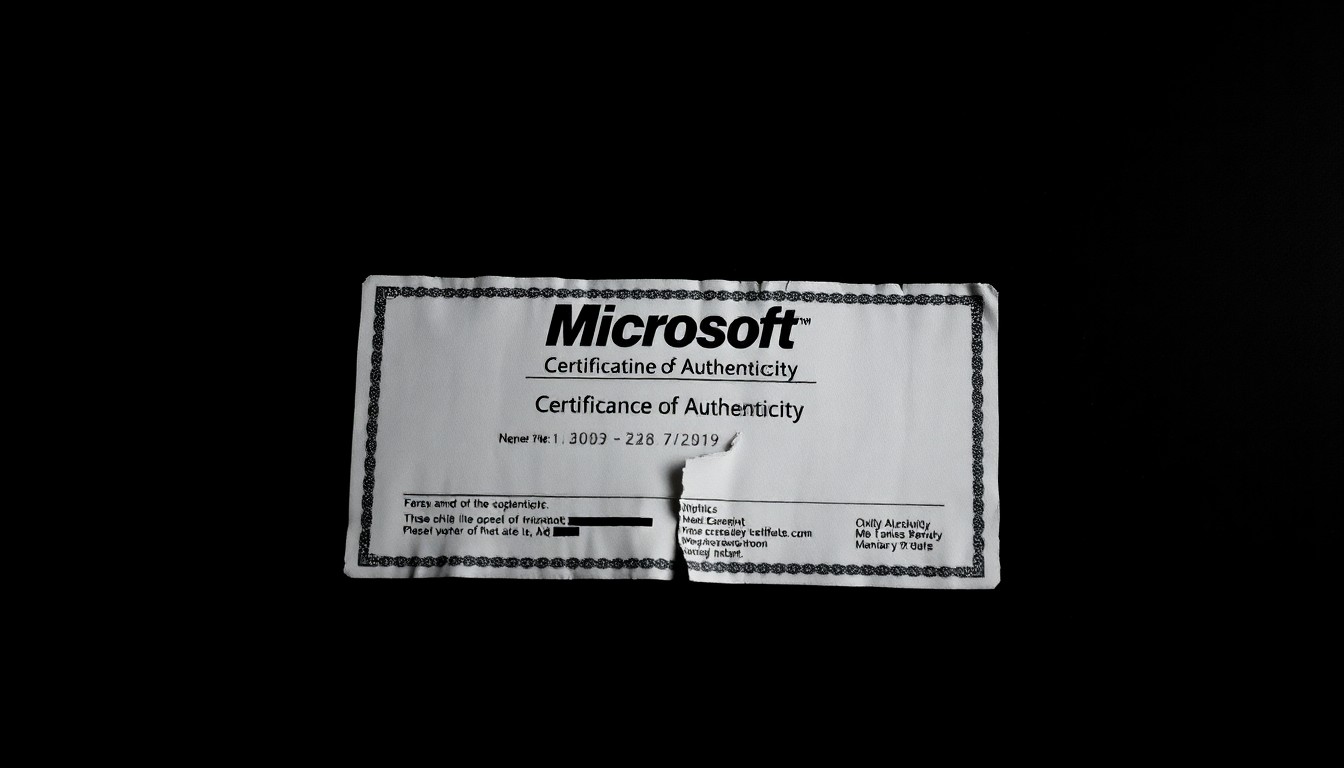 A close-up view of a counterfeit Microsoft software label, a physical symbol of the cybercrime that undermines innovation and exposes consumers to potential harm.Today in Tampa
Heidi Richards, a 52-year-old Tampa resident, has been sentenced to 22 months in prison and fined $50,000 for trafficking in counterfeit Microsoft certificate of authenticity labels. The sentence follows her conviction by Homeland Security Investigations and the Department of Justice for her role in the illicit distribution of the labels.
Why it matters
The trafficking of counterfeit software labels is a serious crime that undermines the intellectual property rights of major technology companies like Microsoft. It also poses risks to consumers who may unknowingly purchase pirated software. This case highlights the ongoing efforts by law enforcement to crack down on these types of cybercrimes.
The details
According to authorities, Richards was involved in the distribution of illegitimate Microsoft certificate of authenticity labels, which are used to verify the legitimacy of software purchases. She was convicted of trafficking in these counterfeit labels, which enabled the sale of pirated Microsoft products.
- On April 13, 2026, Heidi Richards was sentenced to 22 months in prison and fined $50,000.
The players
Heidi Richards
A 52-year-old Tampa resident who was convicted of trafficking in counterfeit Microsoft certificate of authenticity labels.
Homeland Security Investigations
The federal law enforcement agency that investigated the case against Heidi Richards.
Department of Justice
The federal agency that prosecuted Heidi Richards for her role in the counterfeit software label trafficking scheme.
What they’re saying
“Trafficking in counterfeit goods undermines innovation, robs businesses of their intellectual property, and exposes consumers to potential harm.”
— Homeland Security Investigations, Statement
The takeaway
This case highlights the ongoing battle against cybercrime and the importance of protecting intellectual property rights. It serves as a warning to others who may be tempted to engage in the distribution of counterfeit goods, which can have serious legal and financial consequences.
Tampa top stories



Tampa events

Apr. 14, 2026
USF Concert Band
Apr. 15, 2026
Tampa Bay Lightning vs. New York Rangers
Apr. 15, 2026
Holly Drive Collective