- Today
- Holidays
- Birthdays
- Reminders
- Cities
- Atlanta
- Austin
- Baltimore
- Berwyn
- Beverly Hills
- Birmingham
- Boston
- Brooklyn
- Buffalo
- Charlotte
- Chicago
- Cincinnati
- Cleveland
- Columbus
- Dallas
- Denver
- Detroit
- Fort Worth
- Houston
- Indianapolis
- Knoxville
- Las Vegas
- Los Angeles
- Louisville
- Madison
- Memphis
- Miami
- Milwaukee
- Minneapolis
- Nashville
- New Orleans
- New York
- Omaha
- Orlando
- Philadelphia
- Phoenix
- Pittsburgh
- Portland
- Raleigh
- Richmond
- Rutherford
- Sacramento
- Salt Lake City
- San Antonio
- San Diego
- San Francisco
- San Jose
- Seattle
- Tampa
- Tucson
- Washington
Monticello Today
By the People, for the People
Archaeologists Uncover Historic Brick Kiln at Monticello
Discovery provides new insights into construction of Thomas Jefferson's famous estate
Apr. 11, 2026 at 3:30am
Got story updates? Submit your updates here. ›
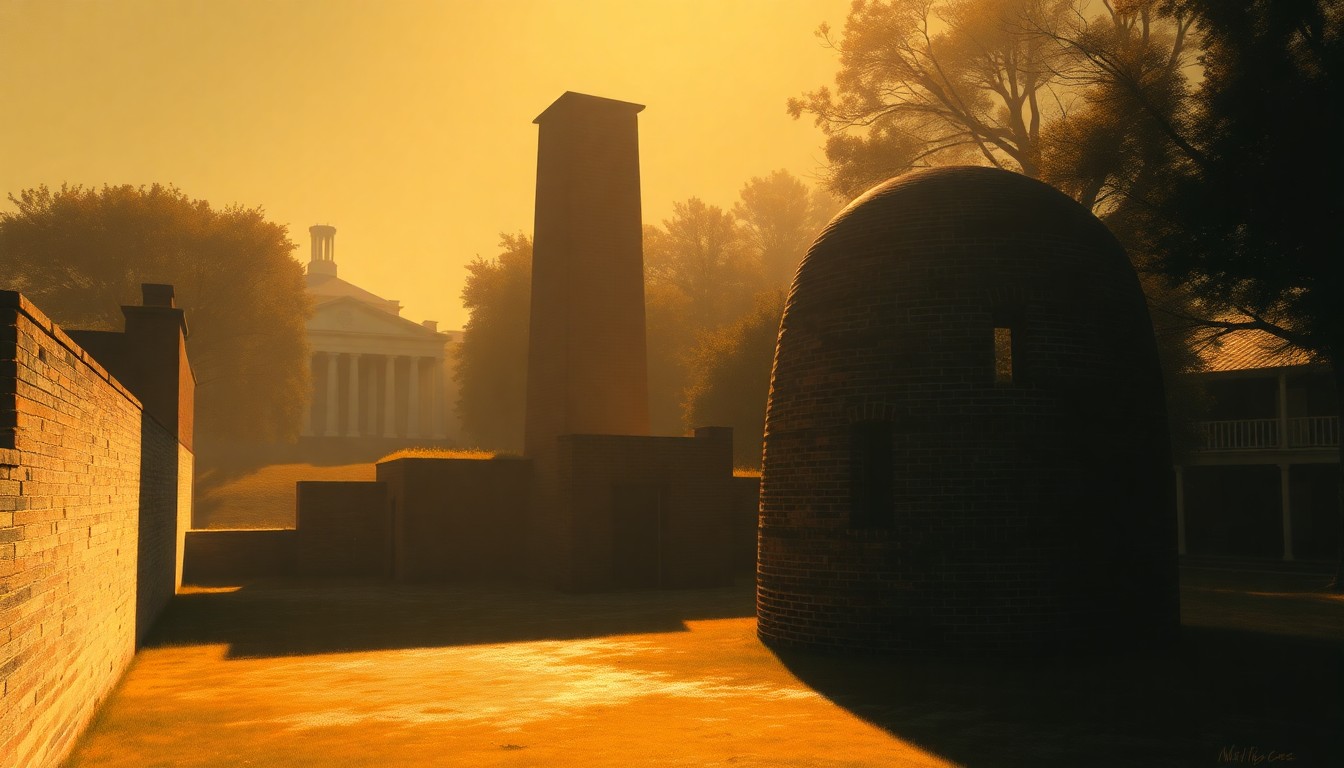 The unearthing of a historic brick kiln at Monticello offers a rare glimpse into the construction methods behind one of America's most famous estates.Monticello Today
Archaeologists have unearthed a brick kiln from the 1700s at Thomas Jefferson's Monticello home in Virginia. The structure, located just feet from the former president's residence, was used to make bricks for the construction of Monticello. The discovery is providing new historical insights into the building process of the iconic estate.
Why it matters
The brick kiln discovery offers a rare glimpse into the construction methods and materials used to build Monticello, one of America's most famous historical homes. It also raises questions about the potential involvement of enslaved laborers in the brick-making process, an important part of the estate's complex history that is still being explored and interpreted.
The details
The archaeological team, led by Crystal O'Connor, uncovered the brick kiln structure about a month and a half ago as they began excavation work ahead of a construction project at Monticello. 'We immediately started hitting brick,' O'Connor said. 'What we actually have here on Monticello's east lawn is a brick kiln, which is an oven where brick makers would have burned bricks for the house.' The team found original inscriptions from the brick makers still engraved on the recovered bricks.
- The brick kiln dates back to the 1700s, when it was used to produce bricks for the construction of Monticello.
- The archaeological team began excavating the site about a month and a half ago in preparation for an upcoming construction project at Monticello.
The players
Crystal O'Connor
The archaeological field research manager who led the team that uncovered the historic brick kiln at Monticello.
Thomas Jefferson
The third President of the United States, who commissioned the construction of his famous Monticello estate in Virginia.
What they’re saying
“'We immediately started hitting brick. What we actually have here on Monticello's east lawn is a brick kiln, which is an oven where brick makers would have burned bricks for the house.'”
— Crystal O'Connor, Archaeological Field Research Manager
“'I think it helps us, again, remember that we're not done learning about the past and reinterpreting the past and understanding it. I think there's stories that are still out there waiting to be told, and hopefully we can get this out there to guests and visitors and incorporate it into the interpretation here of Monticello.'”
— Crystal O'Connor, Archaeological Field Research Manager
What’s next
The archaeological team plans to further investigate the brick kiln and incorporate its findings into the interpretation and visitor experience at Monticello. The discovery provides new insights into the construction methods and materials used to build the iconic estate.
The takeaway
The unearthing of this historic brick kiln at Monticello offers a rare window into the building process behind one of America's most famous historical homes. It also raises important questions about the potential involvement of enslaved laborers in the construction, underscoring the complex history that continues to be explored and understood at this significant site.